
I remember the first time I tried growing a lotus (an aquatic perennial known for its round leaves and showy blooms), I made a huge mess dragging heavy pots of muddy clay soil across my patio. My neighbor watched me struggle and asked why I didn’t just skip the soil altogether. That question sent me down a rabbit hole of research and backyard experiments, and I’ve been growing lotus without soil ever since.
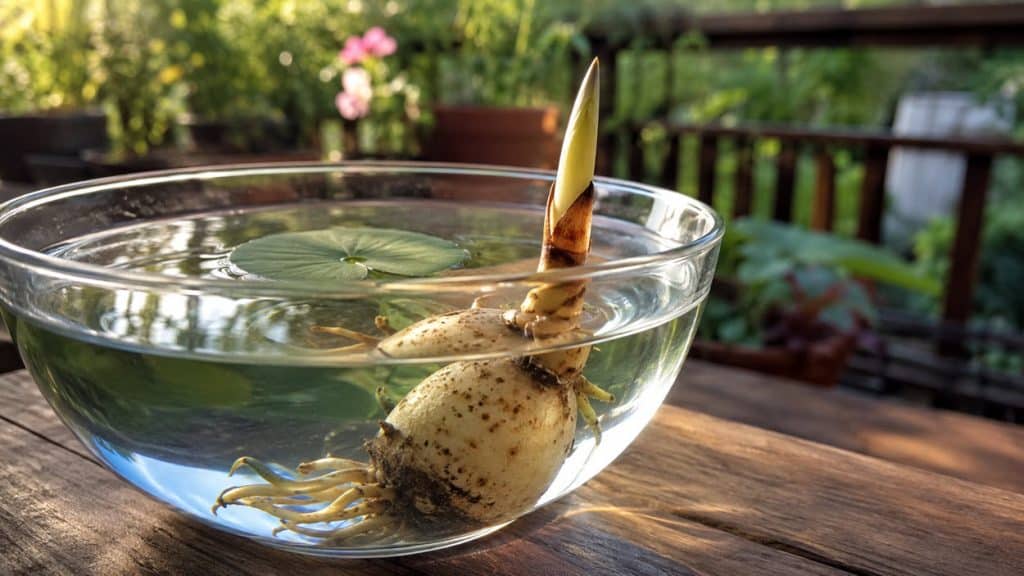
I set up my first soil-free lotus in an old glass fish bowl on my back porch in Ohio, right in Zone 6. It worked so well that I now keep three soil-free lotus containers going every summer, one on the porch and two near my small backyard pond. If you’ve ever wondered whether you can really pull off a soilless lotus setup, I’m going to walk you through exactly how I do it, step by step.
Why Grow Lotus Without Soil
Traditional lotus growing calls for heavy clay soil packed into a submerged pot, but that’s not the only option. Lotus tubers actually store enough starch and nutrients to sprout and grow for weeks using just water and light, similar to how you’d force a hyacinth bulb in a vase.
This matters because soil-free growing means less mess, easier cleaning, and a much better view of the roots as they develop, which is honestly half the fun for me.
I first learned this trick after reading about how lotus plants can survive drought conditions by relying on stored tuber energy, and I realized that same stored energy is what makes soilless starts possible.
It also solves a real problem for apartment dwellers and renters who don’t have space for a full pond setup. If you’re curious whether soil is even necessary long-term, I’ve covered that question directly in can we grow lotus in soil.
Pro Tip: I’ve found that beginners often assume any lotus tuber will work for a soilless start, but only firm, plump tubers with an intact growing tip actually sprout reliably. Skip any tuber that feels soft or smells musty.
What You’ll Need
Before you start, gather these basic supplies. None of this requires a trip to a specialty store, and most of it I already had lying around my garage.
- A clear glass or plastic container at least 12 inches wide and 6 inches deep
- A healthy lotus tuber with at least one visible growing tip
- Dechlorinated tap water (let it sit out for 24 hours) or rainwater
- A sunny spot that gets 5 to 6 hours of direct light daily
- A small rock or ceramic weight to anchor the tuber gently
Step-by-Step: Growing Lotus Without Soil
Step 1: Choose the Right Tuber
Pick a tuber that’s firm, cream-colored, and roughly the size of a banana with a pointed growing tip on one end. This tip is where the first leaf will emerge, so handle it carefully because a broken tip often means the tuber won’t sprout at all. I always order mine in early spring so it has time to establish before the heat of June sets in.
Step 2: Fill Your Container With Water
Add dechlorinated water until it’s about 4 to 5 inches deep in your container. Chlorine can damage the delicate root hairs on a lotus tuber, which is why letting tap water sit out for a full day, or using rainwater, makes a real difference.
I learned this the hard way after losing a tuber to leaf yellowing within a week, an issue I now recognize thanks to what I read about lotus leaves turning yellow.
Step 3: Position the Tuber
Lay the tuber horizontally at the bottom of the container with the growing tip angled slightly upward. Place a smooth rock nearby, not directly on top, to keep it from floating away when the water shifts.
Avoid burying it in gravel or substrate since the whole point of this method is skipping any soil-like medium.
Step 4: Set It in Bright, Warm Light
Move the container to a spot with 5 to 6 hours of direct sun, or under a grow light if you’re starting this indoors during cooler months.
Lotus tubers need water temperatures between 70 and 80 degrees Fahrenheit to break dormancy and sprout, so a cold windowsill in early spring won’t cut it.
This is nearly identical to the approach I outline in indoor lotus growing techniques for US winter months, where light and warmth matter more than any growing medium.
Pro Tip: In my experience, a south-facing window paired with a simple aquarium heater set to 75°F speeds up sprouting dramatically, especially if you’re starting tubers in March before outdoor temps cooperate.
Step 5: Watch for the First Floating Leaf
Within 10 to 14 days, you should see a small, round leaf float to the surface. This is the lotus signaling it’s using stored tuber energy to grow, exactly like the survival mechanism described in do lotus plants need full sun.
Don’t panic if nothing happens in the first week; some tubers take up to three weeks depending on water temperature.
Step 6: Add Light Liquid Fertilizer Once Leaves Appear
Once you see two or three floating leaves, add a diluted aquatic plant fertilizer at quarter strength. The tuber’s stored nutrients run out fast once true leaves start photosynthesizing, and lotus plants are heavy feeders overall, a pattern I detail more in lotus plant fertilizer recommendations for USA water gardens.
Skipping this step is the number one reason people see stunted growth after a promising start.
Step 7: Transition or Maintain Long-Term
At this stage, you have two options: keep the lotus in its soil-free container indefinitely with regular fertilizing, or eventually transfer it to a pond setup once it outgrows the bowl.
I personally keep my porch lotus soil-free all season long, refreshing the water every 5 to 7 days to prevent algae buildup and stagnation. If you decide to expand into a backyard pond later, my guide on how deep to plant lotus in garden ponds walks through that transition well.
Things to Keep in Mind
- Water quality matters more than soil ever did: Chlorinated or overly hard water stresses lotus roots fast, so always dechlorinate or use rainwater when possible, a detail covered further in water quality requirements for lotus plants.
- Temperature drops stall growth: Anything below 65°F will slow or completely halt sprouting, so wait until nighttime temps stabilize before starting tubers outdoors.
- Algae builds up quickly in still water: Change or top off the water weekly and keep the container out of overly stagnant, shaded corners.
- Overcrowding stunts leaf size: One tuber per container is plenty; lotus roots spread wide even without soil to anchor them.
- Pests still find their way in: Aphids and mosquito larvae can show up in open water containers, so check my notes on protecting lotus plants from American wildlife pests if you notice unwanted visitors.
- Companion plants need careful selection: If you eventually want to pair your lotus with other aquatics, review companion plants for lotus before combining species in the same container.
Frequently Asked Questions
Can a lotus really grow without any soil at all?
Yes, a lotus tuber has enough stored starch to sprout and grow leaves in plain water for several weeks. Long-term growth benefits from added liquid fertilizer since the tuber’s nutrient reserves eventually run out.
How long does it take for a lotus tuber to sprout in water?
Most tubers sprout within 10 to 14 days when water stays between 70 and 80 degrees Fahrenheit. Cooler water can delay sprouting by a week or more.
Do I need special water for soil-free lotus growing?
Dechlorinated tap water or rainwater works best since chlorine damages young root hairs. Let tap water sit out for 24 hours before use.
Will my soil-free lotus eventually need a bigger container?
Yes, as the plant matures, it will need more room for roots and leaves to spread. Many gardeners eventually move mature lotus into a pond setting once container growth slows.
Can I keep a lotus in water year-round without transferring it to soil?
You can, especially indoors with consistent light and warmth, but growth tends to be smaller-scale compared to pond-grown lotus. Regular fertilizing becomes essential for sustained blooming.
Why are my lotus leaves turning brown in a water-only setup?
Brown leaves usually point to poor water quality, inconsistent temperatures, or nutrient deficiency once the tuber’s stored energy runs low. Check my article on lotus plants’ leaves turning brown for a full troubleshooting rundown.
Growing a lotus without soil comes down to picking a healthy tuber, keeping water warm and clean, and feeding it once true leaves appear. It’s a surprisingly low-mess way to enjoy this striking plant, whether on a porch or windowsill. I hope you found this article helpful.
You May Also Like
- Grow a lotus flower in a bowl
- Grow lotus plants from seeds
- DIY lotus container garden for apartment balconies
- Lotus varieties for small backyard ponds
- Why is my lotus plant dying

Hello there! I’m Elsa, and gardening is my passion. As an avid gardener, I created GardeningElsa.com to share my knowledge and experience with fellow enthusiasts. My website is a comprehensive resource for gardeners of all levels, offering expert advice on a wide range of topics, including plants, flowers, herbs, and vegetable gardening. Whether you’re a beginner looking to start your first garden or a seasoned pro seeking to expand your knowledge, GardeningElsa.com has something for everyone. Read more about me.
