
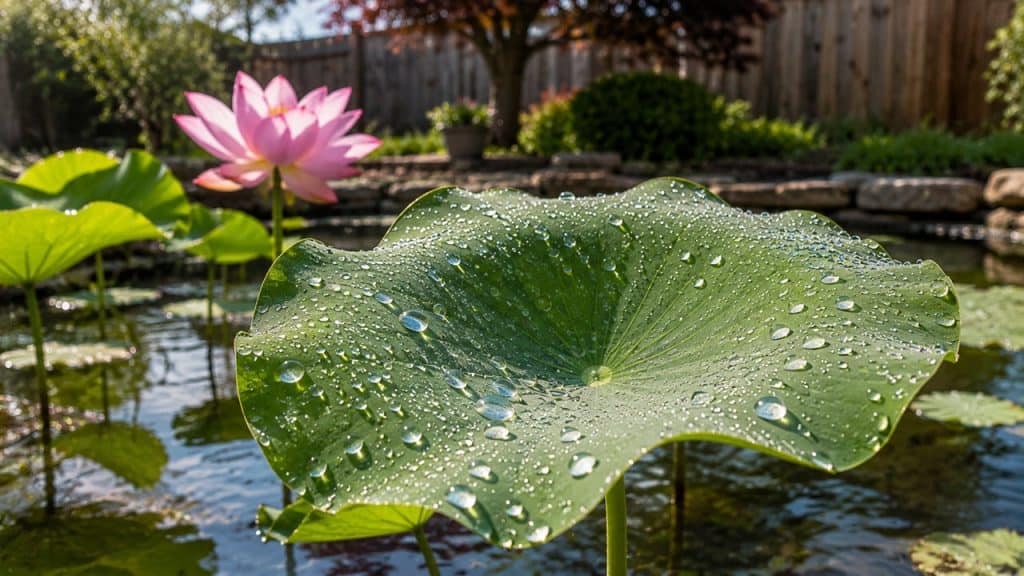
After a summer rain, I always stop beside my backyard lotus tub for a minute. The big, round lotus leaves do not stay wet like hostas, squash, or the herbs in my container garden. Instead, raindrops sit on top like tiny glass marbles, then roll away at the lightest breeze.
That dramatic water-shedding trick is more than pretty. It helps a lotus plant stay cleaner, healthier, and better suited to life in warm, sunny pond water. Here is why lotus leaves repel water and what that tells you about growing them well.
Why Lotus Leaves Repel Water
Lotus leaves repel water because their surfaces combine a waxy coating with an extremely rough microscopic texture. Gardeners often call this effect the lotus effect: water beads up instead of spreading flat across the leaf.
A lotus leaf may look smooth from a few feet away, but it is anything but smooth. Its surface has countless tiny bumps and waxy crystals that trap small pockets of air. Water touches the raised points rather than fully wetting the leaf, so each drop retains its rounded shape.
Think about water on a freshly waxed car compared with water on bare glass. On glass, water spreads into a thin film. On a lotus leaf, the drop stays round because the leaf’s surface makes it difficult for water to grip.
That feature matters in a pond garden. A mature sacred lotus leaf can grow 12 to 24 inches across, giving rain, dew, and splashing pond water plenty of surface area to land on. If that large leaf held moisture for long periods, it would collect more dirt, algae, and fungal spores.
Pro Tip: I have found that the strongest beading happens on clean, healthy new leaves. When a leaf looks dull, dusty, or coated with algae, do not assume the plant has lost its natural protection. Check your pond water and gently rinse the leaf instead.
The same surface behavior explains why water trickles off lotus leaves. The leaf does not absorb or “push away” water in the usual sense. Its texture and waxy surface simply give water almost nothing to hold onto.
The Lotus Effect Up Close
The lotus effect describes a plant surface that is both hydrophobic and self-cleaning. Hydrophobic means “water-repelling.” On a lotus leaf, water forms rounded drops because the surface resists wetting.
Each tiny surface bump on the leaf is far smaller than what you can see with your eyes. A layer of natural wax covers those bumps. Together, they create an uneven landscape that holds air beneath a water droplet.
Because the droplet rests mostly on air and tiny raised points, it cannot spread easily. It stays round, and gravity, wind, or the next raindrop sends it rolling across the leaf.
Waxy Crystals Create a Water Barrier
The outer skin of a lotus leaf, called the cuticle, contains waxy compounds. The cuticle is the plant’s protective outer layer. Many land plants have one, but lotus leaves take the idea much further.
The wax coating makes the leaf surface naturally water-repellent. Water and wax do not mix well, so a droplet resists spreading across that surface. The microscopic roughness makes that repellency even stronger.
You may notice a similar but weaker effect on cabbage, kale, broccoli, and some succulents. Their leaves often have a bluish, chalky, or waxy bloom that causes water to bead. Lotus leaves stand out because their surface structure makes the effect unusually strong.
When I grow vegetables near my pond, I often compare the leaves after rain. A cabbage leaf may bead water for a while, but the water eventually spreads or leaves moisture behind. A lotus leaf clears itself much faster.
Tiny Bumps Trap Air
The surface bumps on lotus leaves create air pockets beneath each water drop. Those pockets reduce contact between the water and leaf. Less contact means less sticking.
This is why droplets roll so easily. They sit high on the leaf rather than flattening into every tiny groove. A light gust of wind, a passing dragonfly, or another falling raindrop can knock them loose.
The raised leaf position also helps. Lotus leaves often stand above the water on stiff stems, unlike many water lily leaves that float flat. The angle lets water run toward the edge instead of pooling in the center.
If you are deciding between aquatic plants, it helps to understand the difference between sacred lotus and American lotus. Both have water-repelling leaves, but they differ in native range, flower traits, and overall garden size.
Pro Tip: In my experience, leaves that sit above the pond surface stay cleaner than leaves constantly splashed by fish, fountains, or heavy rain. Place a lotus container away from the direct path of a strong waterfall if you want the foliage to look its best.
How Water Beads Clean Lotus Leaves
The most useful part of the lotus effect is not simply that water rolls off. As water moves, it carries away dust, pollen, small bits of decaying plant matter, and tiny particles that could otherwise stay on the leaf.
This is called self-cleaning. The leaf does not become perfectly spotless every time it rains, but the rolling drops remove a surprising amount of debris.
Picture a dusty lotus leaf during a dry July week. The first rain may create dozens of bead-like drops. As they move, they gather loose dust and pull it toward the leaf edge. Once the drops fall into the pond, much of that dirt goes with them.
Less Standing Water Means Fewer Problems
Standing water on a leaf can encourage algae, fungal growth, and surface staining. Lotus leaves avoid much of that trouble because moisture does not linger very long.
This does not mean lotus plants never develop leaf problems. Yellowing, browning, black spots, and damaged edges still happen when water quality, light, nutrients, pests, or temperature conditions are off. If your leaves look unhealthy rather than simply wet, review the causes of lotus leaves turning black and lotus leaves turning yellow.
A leaf with black, mushy, or spreading damaged areas needs more attention than a quick rinse. Remove severely damaged foliage with clean pruners, cutting the stem close to its base without cutting the growing tip. Then look at the plant’s growing conditions.
Healthy lotus plants usually need at least 6 hours of direct sunlight daily. In Zones 6 and 7, that often means placing the pond or container where it receives midday and afternoon sun. In hotter Zones 8 through 10, lotus plants still want full sun, although very intense summer heat may increase evaporation and warm the water quickly.
Dirt Does Not Stick Easily
Dirt, dust, and pollen often cling to wet leaves because moisture acts like glue. Lotus leaves avoid that problem because water does not spread into a sticky film.
The leaf’s waxy, textured surface also makes it harder for dry dust to stay in place. A strong rain can rinse the leaf better than a gentle mist because larger drops have enough weight to roll and gather debris.
Still, avoid trying to polish lotus leaves. Rubbing them with a cloth, soap, oil, or leaf-shine product can damage the natural waxy surface. A clean spray of pond-safe water is enough when leaves look dusty.
Pro Tip: I never scrub lotus foliage. If pollen or dry dust builds up, I use a gentle hose spray in the morning, then let the leaves dry naturally in the sun. Scrubbing can leave dull patches that trap dirt afterward.
Why Lotus Leaves Need Water Repellency
A lotus plant spends its life surrounded by water, yet its upper leaves and flowers need to exchange gases with the air. That makes water repellency more than an interesting party trick. It supports the plant’s daily survival.
Lotus leaves use tiny openings called stomata to take in carbon dioxide and release oxygen and water vapor. Stomata are especially concentrated on the upper leaf surface because lotus leaves rise above the water. Keeping that upper surface relatively dry helps those openings work effectively.
It Supports Photosynthesis
Photosynthesis is the process plants use to turn sunlight, water, and carbon dioxide into energy. Lotus plants need broad, exposed leaves to capture plenty of sunlight.
When water forms a film across a leaf, it can block some light and interfere with gas exchange. Lotus leaves quickly shed that water, helping the plant keep working after rain or pond splashes.
This is one reason lotus plants need sunny placement. Learn more about whether lotus plants need full sun before choosing a spot for a patio bowl, stock-tank pond, or in-ground water garden.
In my own small patio pond, I notice the difference most after a thunderstorm. The leaves may shine for a few minutes, but within an hour they look dry and upright again. The plant can get back to soaking up sun instead of carrying a sheet of water.
It Protects Leaves From Rot
Lotus foliage handles wet conditions, but it does not benefit from stale, dirty water sitting on the upper surface day after day. The water-repellent layer helps reduce that risk.
Rot usually begins when plant tissues stay damaged, shaded, crowded, or poorly aerated. A healthy lotus leaf sheds rainwater quickly, while a torn or dying leaf may hold water in damaged spots and decline faster.
Good water conditions also matter. Muddy water, excessive fertilizer, low oxygen, and rotting plant material can contribute to weak foliage. Follow these water quality requirements for lotus plants if your pond has cloudy water, algae, or recurring leaf issues.
It Helps in Heavy Rain
In rainy parts of the United States, pond plants may face days of repeated showers. A 20-inch lotus leaf can catch a lot of water, so fast drainage helps prevent the leaf from sagging under extra weight.
The center of a lotus leaf attaches to its stem, creating a nearly level, umbrella-like shape. Water can collect briefly near the middle, then slide outward as more drops land or the leaf moves. The smooth beading action keeps the leaf from staying soaked.
This design helps explain why lotus plants look so striking during summer rain. Their leaves seem to hold dozens of silver beads, but the beads soon merge and tumble away.
Lotus Leaves Versus Water Lily Leaves
Gardeners often mix up lotus and water lilies, especially when shopping for pond plants. Both offer large, attractive leaves and colorful flowers, but their leaf habits differ.
Water lilies generally have leaves that float on the water’s surface. Many have a visible notch or split from the edge toward the center. Lotus leaves usually stand above the water on sturdy stems and attach near the center without that obvious edge notch.
| Feature | Lotus Leaves | Water Lily Leaves |
|---|---|---|
| Leaf position | Usually rise above the water | Usually float on the surface |
| Water behavior | Strong beading and rolling droplets | Water may bead, but leaves remain wetter |
| Leaf attachment | Stem attaches near the center | Stem attaches at the leaf notch |
| Typical look | Round, umbrella-like leaf | Round or oval floating pad |
| Self-cleaning action | Very strong | Less dramatic |
The water-repelling surface gives lotus a clear advantage for keeping above-water foliage clean. Water lily pads benefit from their floating habit, but they often hold droplets, debris, and algae more easily.
If you want lotus in a smaller setup, start with a variety suited to the space. Some dwarf types work well in tubs and large containers, while vigorous varieties need room to spread. This guide to lotus varieties for small backyard ponds can help you match the plant to your water feature.
Pro Tip: I always check the mature spread before planting. A lotus that sounds “medium-sized” can quickly dominate a 3-foot container. Choose a dwarf lotus for a patio tub and reserve larger varieties for ponds with open water.
What the Lotus Effect Means for Gardeners
You cannot add the true lotus effect to ordinary leaves with a spray or homemade coating. It is built into the living leaf’s waxy cuticle and microscopic texture. Still, you can protect that natural surface by giving your lotus the conditions it needs.
Start with a wide, sturdy container without drainage holes. Plant the lotus tuber horizontally in heavy garden soil or aquatic soil, not fluffy potting mix. Cover the soil with 2 to 3 inches of pea gravel to keep soil from clouding the water and to stop fish from digging.
For many container-grown lotus plants, keep 4 to 8 inches of water above the soil when the plant is small. Once it grows strongly, deeper water may work depending on the variety. Read how deep to plant lotus in garden ponds before lowering a container into a larger pond.
Keep Leaves Clean Without Damaging Them
Let rain do most of the cleaning. If you need to remove dust, tree pollen, or mud splashes, use a gentle stream of clean water early in the day. Morning cleaning gives leaves time to dry before cooler evening conditions.
Avoid detergents, household cleaners, oils, and leaf-shine products. They can damage the waxy outer layer and may harm fish, frogs, or other pond life.
Remove leaves that turn mostly yellow, brown, black, or mushy. Cut the stem below the waterline only if you are removing a dead stem from the pond, and avoid leaving decaying foliage floating. Dead material adds nutrients that encourage algae.
For more help with declining plants, see why your lotus plant may be dying. The answer often comes down to sunlight, water depth, fertilizer timing, or a damaged tuber.
Feed Without Clouding the Water
Lotus plants are heavy feeders during active summer growth. They usually need aquatic fertilizer tablets pushed into the soil near the root zone, not sprinkled into open pond water.
Begin feeding when the plant has several leaves and warm weather has arrived. In most areas, that means waiting until water temperatures hold near 60 F or warmer. Add fertilizer every 3 to 4 weeks through midsummer, following the tablet directions and the needs of your variety.
Too much fertilizer can cause leaf burn, algae, and murky pond water. Too little may lead to small leaves and few blooms. Use this guide to lotus plant fertilizer for water gardens to create a steady feeding plan.
Plan for Winter
Lotus leaves die back after frost, and the water-repelling surface disappears with them. That is normal. The tuber rests below the water and soil until spring warmth wakes it up.
In Zones 4 through 6, protect the tuber from freezing solid. Move a container into a frost-free garage, basement, or deeper pond area where the water stays above 32 F. In Zones 7 through 10, many lotus plants can remain outdoors if the tuber stays below the freeze line.
California gardeners often face mild but variable winter conditions, so check this advice on caring for lotus plants in winter in California. Do not fertilize a dormant lotus, and do not divide or disturb tubers until spring growth begins.
Pro Tip: I stop fertilizing as summer fades and let the foliage die back naturally. Cutting green leaves too early robs the tuber of energy it needs for next year’s blooms.
Things to Keep in Mind
- Do not scrub the leaf surface: Rough wiping, soap, oil, or leaf-shine sprays can damage the natural waxy coating that helps lotus leaves repel water.
- Give plants enough sun: Aim for at least 6 hours of direct sunlight daily, because weak, shaded growth often produces smaller and less vigorous leaves.
- Keep debris out of the pond: Rotting leaves and excess fertilizer feed algae, which can coat foliage and reduce the leaf’s self-cleaning ability.
- Watch water depth: A container placed too deeply may slow growth, especially in spring when water stays cool.
- Protect tubers from hard freezes: In cold climates, water must not freeze solid around the buried tuber.
- Expect seasonal leaf loss: Yellowing and dieback in fall are normal, but yellow leaves during peak summer may signal a light, water, or nutrient problem.
Frequently Asked Questions
Why do water droplets roll off lotus leaves?
Water droplets roll off because lotus leaves have a waxy surface covered in microscopic bumps. The texture traps air and keeps water from spreading into a flat layer, so droplets remain rounded and mobile.
Are lotus leaves waterproof?
Lotus leaves are highly water-repellent, but they are living plant tissue rather than waterproof plastic. Their upper surface sheds water quickly, while the leaf still carries out normal gas exchange and plant functions.
Can I make other plant leaves repel water like lotus leaves?
No simple home treatment recreates the true lotus effect. It depends on the plant’s natural wax chemistry and microscopic leaf structure, so sprays and oils may harm the leaf instead.
Why is water not beading on my lotus leaves?
Dust, algae, mineral deposits, age, or surface damage can make droplets spread more than usual. Gently rinse the leaf with clean water, improve pond cleanliness, and watch new leaves for stronger beading.
Do water lily leaves repel water too?
Some water lily leaves show mild water beading, but they do not usually shed water as dramatically as lotus leaves. Their leaves float on the water, while lotus leaves commonly rise above it and have a stronger self-cleaning surface.
Does water beading mean my lotus plant is healthy?
Strong water beading often suggests a clean, intact leaf surface, but it does not prove the whole plant is healthy. Also check leaf color, new growth, sunlight, water clarity, and whether the plant blooms in season.
Lotus leaves repel water through a remarkable combination of wax, microscopic texture, trapped air, and a raised leaf shape. Give your lotus full sun, clean water, proper depth, and gentle care so its leaves can keep performing this natural self-cleaning job. I hope you found this article helpful.
You May Also Like
- How to grow lotus plants from seeds
- Can you grow lotus without soil at home?
- How to grow a lotus flower in a bowl
- How much backyard pond space lotus plants need
- How to protect lotus plants from wildlife pests

Hello there! I’m Elsa, and gardening is my passion. As an avid gardener, I created GardeningElsa.com to share my knowledge and experience with fellow enthusiasts. My website is a comprehensive resource for gardeners of all levels, offering expert advice on a wide range of topics, including plants, flowers, herbs, and vegetable gardening. Whether you’re a beginner looking to start your first garden or a seasoned pro seeking to expand your knowledge, GardeningElsa.com has something for everyone. Read more about me.
