
Lotus seeds will sprout in a bowl of plain water, and the seedlings can live there for a few weeks. After that, the plant needs real soil to keep going.
You can start a lotus without soil, but to grow tubers and get flowers, you need to move it into heavy clay loam under shallow water.
That’s the honest picture most “water-only” videos skip.
If you know how to grow lotus the way it grows in nature, rooted in pond mud with warm water on top, you’ll stop losing seedlings at the four-week mark and start getting plants that come back every spring.
The Short Answer: Water Starts Lotus, but Soil Sustains It
Water handles the sprouting stage well, and soil handles everything after it. If you are stocking up, a balanced liquid fertilizer is the first thing I would pick up.
Plain water gives a seed moisture and warmth, while a dense, muddy base gives the plant something to anchor into, food to draw on, and space to form lotus tubers that store energy for next year.
What Can You Accomplish in Plain Water?
In clear water, you can wake up a dormant seed and grow a seedling with a few small leaves. The seed carries its own food supply, so it doesn’t need anything from the water except warmth and oxygen. If you are stocking up, a balanced liquid fertilizer is the first thing I would pick up.
Here’s what a water-only bowl can realistically do:
- Sprout scarified lotus seeds, usually within about 10 days
- Grow thin stems and a few floating “coin” leaves
- Keep a newly arrived tuber hydrated for a few days before you pot it
That’s the limit. Once the seed’s stored food runs low, the seedling stalls and slowly fades.
What Does a Lotus Need to Grow Tubers and Flowers?
To make lotus flowers, a plant has to build up a network of runners and fat tubers first. That takes a heavy base to root into, steady nutrients, full sun, and weeks of warm water.
I’d plan on these basics for any lotus you want to keep:
- Heavy clay loam or aquatic planting soil
- A wide container with no drainage holes
- 6 or more hours of direct sun
- Water between 75 and 87°F, with about 3 months above 75°F
Seed-grown plants often skip blooming in their first year because they put that energy into tubers underground.
What Does Soil Provide That Water Does Not?
Soil gives a lotus a place to hold on and a pantry to feed from. Water carries warmth and oxygen, but it holds almost no food, and it gives roots nothing to grip.
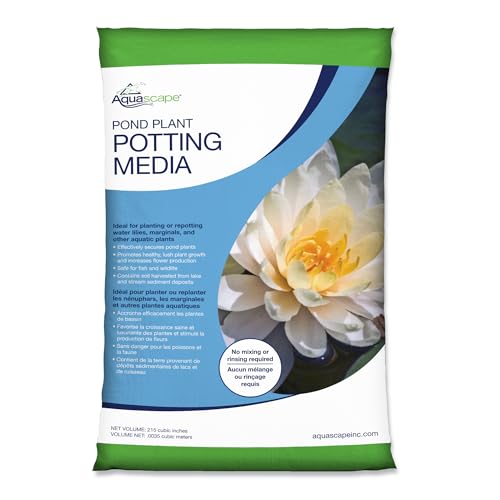
Anchorage and Room for Growing Tubers
A lotus tuber is a runner that wants to dig sideways through mud. Without a dense base, it floats, drifts around the container, and never settles in to root.
Heavy soil does two jobs here. Its weight keeps the plant steady as tall leaves catch wind, and its depth gives new tubers space to swell.

Many aquatic plants can get by with light gravel, but lotus is a vigorous spreader that pushes the soil upward as runners fill the pot.
That’s also why light mixes fail. Bagged potting soil, peat, and perlite float the moment you flood the pot, so the tuber loses its anchor and your water turns murky.
Nutrients Without Overloading the Water
Soil holds nutrients down where roots can reach them. Good aquatic planting soil or garden clay keeps fertilizer locked in place, so the plant feeds slowly and the water above stays fairly clear.
If you try to feed a lotus through the water alone, you’re also feeding algae. Fertilizer dissolved in open water turns green fast, especially in a sunny bowl.
Clay soil with low organic content acts as a buffer between the food and the water. For more on picking a base, see my notes on the best soil for lotus.
How to Sprout Lotus Seeds in Water
Sprouting lotus seeds in water is the one part of this process that works well without soil. The hard seed coat is the only real obstacle, and you get past it with a little filing and warm water changed every day.

Scarify the Seed Coat with a Nail File
Lotus seeds have a shell so tough that untreated seeds can sit in water for months without doing anything. You need to wear a small opening through it so water can get in.
- Hold the seed and find the slightly pointed end and the rounded end.
- Rub the rounded end against a nail file or coarse sandpaper.
- Stop as soon as you see a lighter, cream-colored layer under the dark brown coat.
- Avoid filing the pointed end, since that’s where the sprout grows from.
Go slowly. You only need to remove a couple of millimeters, and filing into the soft core can kill the seed.
Soak the Seeds and Change the Water Daily
Drop the scarified seeds into a clear glass or jar of warm water, around 75 to 85°F. Viable seeds sink, while seeds that float after a day are usually duds.
Change the water every day. Old water clouds up and grows bacteria that can rot the seeds.
Use dechlorinated tap water or rainwater at about the same temperature, and keep the jar somewhere warm and bright. Within a day or two, the seeds will swell to roughly twice their size.
Watch for Sprouts Without Damaging Them
Most seeds send out a green shoot within about a week to 10 days. Thin stems follow, topped by tiny rolled leaves that open into small floating pads.
Those stems are fragile. When you change the water, tip it out gently or use a turkey baster, and avoid grabbing the seedlings by their shoots.
If you want a full seed-to-flower walkthrough, my guide on how to grow lotus from seeds covers it in more detail.
How Long Can Seedlings Stay in Water Alone?
Plan on about two to four weeks in plain water. After that, the seedling has used up most of the food stored in the seed and needs soil to keep growing.
Use the First Few Weeks for Germination, Not Long-Term Growth
Think of the water jar as a nursery stage. It lets you see which lotus seeds are viable and gives sprouts a clean, warm start.
Leaving seedlings in water longer than about a month only makes them weaker. Stems get long and spindly as they stretch, and the leaves stay small.
Some growers keep seedlings in water for six weeks or more, but they almost always end up with plants that struggle after transplanting.
Recognize When a Seedling Needs Planting
Your seedling is ready for soil when you see these signs:
- Stems roughly 4 inches long or longer
- One or two small leaves open on the surface
- White roots starting to show near the seed
Warning signs that you’ve waited too long include pale leaves, stems that flop over, and leaves that yellow from the edges. At that point, plant right away. A struggling seedling often recovers once it has mud to root into.
When and How Should You Move Seedlings into Soil?
Move seedlings into soil once roots appear and the stems reach about 4 inches. Pot them in a wide container with heavy clay loam, start with shallow water, and raise the level as leaves grow.
Choose a Wide Container with No Drainage Holes
A lotus container should be wide and fairly shallow. Runners travel sideways, and a tip that hits the wall of a narrow pot circles and stalls.
| Plant type | Container width | Notes |
|---|---|---|
| Seedlings and bowl lotus | 12 to 16 inches | A large ceramic bowl or plastic tub works |
| Dwarf varieties | About 24 inches | Better blooms in the wider size |
| Standard varieties | 24 inches or more | Half barrels lined with pond-safe plastic work well |
Round containers are best. Square corners can pinch growing tubers. Drainage holes have to go, since they let soil and water leak out and give runners an escape route.
Set Seedlings in Heavy Clay Loam and Start with Shallow Water
Fill the container with 4 to 6 inches of heavy clay loam or bagged aquatic planting soil. Wet it until it’s a thick mud.
- Press each seed, with its sprout attached, gently into the mud about half an inch deep.
- Keep the leaves and the tip of the shoot above the soil.
- Add a thin layer of coarse sand or pea gravel to hold the soil down, keeping it off the seedling.
- Pour water slowly against the side of the pot until it sits about 2 inches over the soil.
Shallow water warms up fast, which speeds early growth.
Raise the Water Level as Leaves Grow
As new floating leaves open and stems lengthen, add water a little at a time. Aim to keep the leaves resting on the surface.
Once standing leaves rise above the water, you can work up to 4 to 6 inches over the soil for dwarf types.
Standard lotus can handle up to about 12 to 18 inches in a pond once mature, but deep water stays colder and slows everything down.
Can Tubers Grow in Gravel, Sand, or Clay Pebbles?
A lotus tuber can sit in gravel, sand, or clay pebbles for a while, but it won’t thrive there long-term. These materials hold the tuber in place without giving it any food.
Why Inert Materials Can Hold a Tuber but Cannot Feed It
Gravel and clay pebbles are inert, meaning they don’t hold nutrients. A tuber planted in them lives off its stored starch, sends up a few leaves, and then runs low.
Some pond keepers grow lotus in pea gravel inside filter areas of large ponds, where fish waste supplies food. A home bowl with clean water doesn’t have that steady nutrient source.
You could push fertilizer tablets into the gravel, but the food leaks into the water and feeds algae far faster than it would in clay.
Where gravel and sand earn their place is as a top layer. A 1 to 2 inch cap of coarse sand or pea gravel over clay soil keeps the water clear and stops fish or raccoons from digging.