
Lotus can get through a cold US winter just fine, as long as the tubers in the mud stay unfrozen and wet from fall until spring.
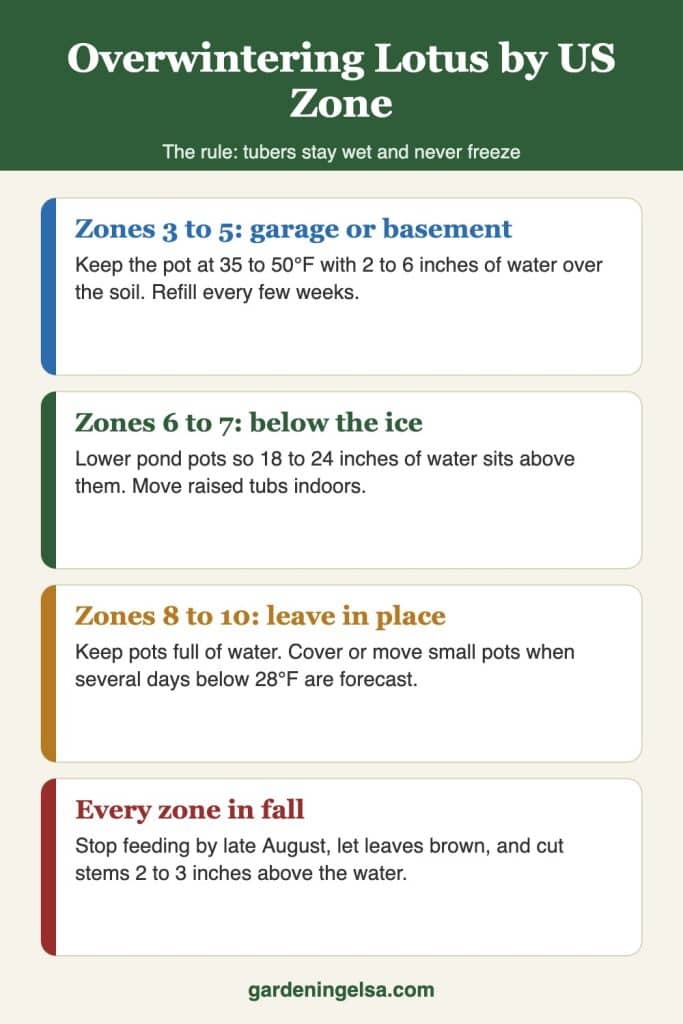
In zones 3 to 7, I’d either sink the pot below the ice in a pond that never freezes solid or move it, still full of water, into a garage or basement that stays between 35°F and 50°F.
The leaves and stems can freeze, brown, and collapse without any harm. What kills lotus plants over winter is a frozen tuber, a dried-out tuber, or water rushing into stems cut too low.
Get those three things right and overwintering lotus becomes a short fall chore.
The Winter Rule: Keep Lotus Tubers Unfrozen and Moist
Every method in this guide follows one rule. Lotus tubers (also called lotus rhizomes) must stay below the freeze line and stay wet through the whole dormant season.
Even a hardy lotus is only hardy because its tubers sit in mud the ice never reaches. The plant above the water is expected to die back each fall.
What Happens When a Lotus Tuber Freezes or Dries Out?
A lotus tuber is a lot like a fresh vegetable. It’s full of water and stored starch, and the growing tips at each node are soft.
When ice forms inside the tuber, it breaks the cells apart. After the thaw, the tuber turns mushy and dark, then rots. The growing tips go first, and without them the tuber can’t sprout.
Drying does similar damage, just slower. A tuber left in dry soil shrinks, wrinkles, and hardens until the tips die. That’s why a pot left to evaporate dry in a garage fails even though it never froze.
How Do You Know Which Winter Storage Method Is Safe?
A method is safe if you can say yes to both of these questions:
- Will the mud around the tubers stay above 32°F? Ice on the surface is fine. Ice reaching the bottom of the pot isn’t.
- Will the soil stay wet all winter? Water over the soil, or damp packing for bare tubers, needs checking every few weeks.
If you can’t answer yes to both, pick a different method. A cheap pond thermometer dropped to pot depth tells you more than air temperature does.
Which Winter Method Fits Your USDA Zone?
Your USDA hardiness zone tells you how hard your winters hit, and that decides how much protection your lotus needs.
Hardy lotus grows in zones 4 to 10 when the tuber never freezes, and you can check your exact zone in my guide to lotus hardiness zones.

| USDA zone | Typical regions | My first choice | Backup method |
|---|---|---|---|
| 3 to 5 | Upper Midwest, northern New England, Northern Plains | Garage or basement storage | Bare tubers in damp sand |
| 6 to 7 | Lower Midwest, Mid-Atlantic, much of the Northeast | Deep pond below the ice | Pot sunk in the ground and mulched |
| 8 to 10 | Southeast, Gulf Coast, Southwest, California | Leave in place, full of water | Cover pots during cold snaps |
Zones 3–5: Plan for Reliable Freeze Protection
Small backyard ponds and patio tubs in zones 3 to 5 can freeze very deep in a long cold spell. I wouldn’t trust a small water garden here unless it’s at least 3 feet deep and you know the ice stays thin.
For most gardeners up north, the garage or basement is the safest bet. Zone 3 sits below the usual hardy range, so indoor storage is the only method I’d suggest there.
Zones 6–7: Check Pond Depth and Local Ice Conditions
In zones 6 and 7, ponds rarely freeze solid, so dropping the pot to the pond floor works for many gardeners. Ice in these zones often stays a few inches thick.
A shallow pond, a raised tub, or a windy, exposed site changes that. Measure how thick your ice gets in a normal winter, and if a container sits above ground, move it into storage.
Zones 8–10: Account for Mild Winters and Cold Snaps
Most lotus in zones 8 to 10 can stay right where it grew. The water in the pot keeps the tubers safe through short frosts.
The risk is the rare hard freeze that lasts two or three days, which hits the South every few years. Keep pots full and have a plan to cover or move them when a cold snap is forecast.
How Should You Prepare Lotus for Dormancy in Fall?
Fall prep comes down to two jobs: stop feeding in late summer so the plant can harden off, then trim the dead stems while leaving the cut ends above the water. Both protect the energy stored in the tubers for next year’s growth.
When to Stop Fertilizing and Let Foliage Die Back
Stop all lotus fertilizer tablets by late August. Feeding later pushes soft new leaves when the plant should be sending sugars down into the tubers.
Once nights cool and days shorten, the leaves yellow, then brown. Let this happen on its own. Those fading leaves are still moving energy into the tubers, and a stronger tuber means a stronger plant in spring.
Wait until the first frost has browned most of the foliage before you trim anything. Trimming green stems is one of the most common fall mistakes.
Where to Cut Hollow Stems Without Submerging the Cut Ends
Lotus stems are hollow tubes that connect to the tuber. If you cut them below the water, water runs down inside and the tuber can rot.
Cut every stem at least 2 to 3 inches above the water surface. If you plan to lower the pot later, leave the stems longer so the cut tips still sit above the new waterline.
Pull out fallen dead leaves too. Rotting debris in a small pot fouls the water over winter.
How Do You Keep Pond Lotus Safe Below the Ice?
Pond lotus stays safe when the pot sits deep enough that ice never reaches the soil, with plenty of water above it. You don’t need to sink it to the deepest spot possible, just past the ice.
Check Water Depth at the Tubers, Not Just the Pond Surface
The tubers usually coil around the bottom of the pot, not near the top. That means the depth that counts is from the water surface down to the pot floor.
A pot sitting on a shallow shelf might have only 6 inches of water over its rim. If your ice gets 8 inches thick, the whole root zone freezes. Measure with a yardstick at the pot itself.
Lower the Pot Below the Local Freeze Line
Move the lotus container off its summer shelf and set it on the pond floor, or on bricks if the floor is too deep to reach in spring.
In most zone 6 and 7 ponds, 18 to 24 inches of water over the pot is plenty.
Lift carefully, since a wet clay pot can weigh 40 pounds or more. Two people and a rope sling through the handles make it easier. My page on how deep to plant lotus in a pond covers summer depths for when you raise it again.
Monitor Winter Water Levels Without Disturbing the Tubers
Ponds lose water to evaporation and leaks even in winter. Check the level every few weeks and top it up with a hose when the ice is open.
A small floating deicer keeps a hole open for gas exchange if you have fish. Don’t break ice by hitting it, since the shock waves stress fish. Leave the lotus pot alone until spring.
How Do You Store a Potted Lotus in a Garage or Basement?
A potted lotus stores well in any spot that stays between 35°F and 50°F, as long as the soil stays under water. It needs no light while dormant, so a dark corner is fine.
Choose a Cool Location That Stays Above Freezing
An unattached garage, an unheated basement, or a crawl space all work. A good test is your pipes: if water lines in that space never freeze, your lotus won’t either.
Pick an inside wall, away from the garage door, where it stays warmest. Avoid a heated room above 55°F, which tempts tubers to sprout too early.
To move a heavy pot, pour off most of the water first. Set it in place, then refill so the soil is covered again.
Keep the Soil Wet and Check the Container Through Winter
Keep 2 to 6 inches of water over the soil all winter. If your wide lotus tub has drainage holes, set it inside a larger watertight bucket.
Check every two to three weeks and add water as it evaporates. Garages are dry places, and a pot can lose an inch or more a month.
A stale smell is normal for still water. A sour, rotten-egg smell plus slimy floating debris means something is rotting, so scoop out the debris and replace some of the water.
Can You Grow Lotus Indoors Through Winter?
You can keep a lotus growing indoors, but I don’t recommend it for hardy types. Hardy lotus plants are built to rest each winter, and they come back stronger after a cool, dark dormancy.
Why Cool Dormancy Is Usually Better Than Forcing Growth
Lotus needs 6 or more hours of strong direct sun and warm water, about 75 to 87°F, to grow well. A sunny window in January can’t give it that, and grow lights big enough get expensive fast.
Forced indoor growth produces small, weak leaves that drain the tuber. When spring comes, that plant is tired and blooms late, if at all. For more on what lotus needs in season, see my lotus care guide.
What to Do If Stored Lotus Starts Sprouting Early
Pale shoots in February usually mean your storage spot is too warm. Move the pot somewhere cooler, closer to 40°F, to slow it down.
If leaves have already reached the surface, give the pot the brightest spot you have and keep the water topped up. Don’t fertilize yet, and move it outside as soon as frost danger passes.
How Do You Store Bare Lotus Tubers?
Storing bare tubers is the space-saving backup when you can’t keep the whole pot. It’s riskier, because a lotus rhizome out of the mud rots or dries within weeks if conditions slip, so use it only when other methods aren’t possible.
Lift and Handle Tubers Without Breaking Growing Tips
Wait until late fall so the tubers are fully mature. Tip the pot upside down so the bottom faces up, since new tubers coil there.
Wash soil away gently with a hose. Cut sections with at least two growing tips and two swollen segments, cutting through the middle of the third segment. The growing tips snap off easily, so handle each piece like an egg.
Some growers soak the cut tubers for about an hour in 1 tablespoon of bleach per gallon of water to cut down on rot. Rinse and let the surface dry for an hour before packing.
Use Damp Sand or Peat Moss and Check for Rot
Pack tubers in a plastic tub of damp sand or peat moss so they don’t touch. “Damp” means it holds together when squeezed but drips no water.
Store at 40 to 50°F in the dark. A refrigerator crisper in a closed zip-top bag also works.
Check every two to three weeks. Firm, tan tubers are healthy. Toss any piece that turns soft, black, or smelly before the rot spreads, and mist the packing if it starts to dry.
What Changes in California and Other Mild-Winter Regions?
In mild-winter areas, lotus winter care is mostly about water levels and the occasional freeze. Your lotus still goes dormant as days shorten, even if it never sees ice.
California: Match Care to Your Local Frost Risk
Coastal California, from San Diego up to the Bay Area, rarely sees a hard freeze, so pots can stay outside all winter. Trim dead stems above the water and keep the pot full.
The Central Valley and foothills get frosty nights that can drop into the mid-20s. A full pot handles a night or two, but cover it if a multi-day freeze is forecast. Mountain areas in the Sierra follow the cold-zone advice above.
Gulf Coast and Southwest: Watch for Dry Containers and Sudden Freezes
In the Southwest, dry air and wind pull water from containers fast, even in winter. Check pots in Phoenix or Tucson weekly and refill when the level drops.
The Gulf Coast and the Southeast face rare but serious freezes, like the ones that hit Texas in recent years. When the forecast shows several days below 28°F, move small pots into a garage or cover them with a tarp and blankets.
Bare soil showing above the water is a warning sign in any warm region. Refill it right away.
When Should You Wake Lotus Up in Spring?
Wake your lotus up once nights stay above 50°F and hard-freeze risk is over. Lotus waits for warm water, so rushing it gains little.
Move Pots Outside After Hard-Freeze Risk Passes
For most of the Northeast and Midwest, that means mid to late May. In the Mid-Atlantic, late April often works, and the South can start in March.
Set the pot in full sun and keep about 2 inches of water over the soil at first. Shallow water warms faster, and you’ll raise the level as leaves grow.
Raise Pond Pots and Let the Water Warm
Lift sunken pond pots back to their summer shelf once the pond is ice-free and warming. A pond thermometer helps here: tubers start moving once water reaches the mid-60s.

Lotus grows best with water at 75°F or higher, so expect a slow start until early summer. Spring is also a good time to divide crowded pots, about every two to three years.
Resume Feeding Only After Standing Leaves Appear
The first leaves float flat on the water. Hold off on feeding until the tall standing leaves rise above the surface.
Then push aquatic fertilizer tablets into the soil, away from the tubers. Feeding too early burns young roots, and if your plant leafs out but stays bloomless, my guide on why a lotus is not blooming walks through the causes.
Which Lotus Varieties Make Sense for Cold Climates?
The best hardy lotus varieties for cold areas are American lotus and hardy cultivars of sacred lotus. Both handle zones 4 to 10 with tuber protection.
American Lotus and Hardy Sacred Lotus
American lotus (Nelumbo lutea) is native to much of the eastern US, with pale yellow flowers. It’s my top pick for hardy lotus for cold climates, since it already survives Midwest winters in the wild.
Sacred lotus (Nelumbo nucifera) comes in pink, white, and red forms. Its hardy cultivars do well up north when the tubers stay protected. My page on sacred lotus vs American lotus compares the two in detail.
Both plants are large, with leaves that can reach 4 to 6 feet tall, so they suit ponds better than patios.
Compact Cultivars Such as Momo Botan for Movable Pots
If you’ll be carrying a pot into the garage each fall, go small. Momo Botan is a popular dwarf sacred lotus with full, double pink blooms that stays about 2 to 3 feet tall.
It grows happily in a 20-inch tub, which is much easier to move than a 30-inch pond pot. It also blooms over a long season, which helps up north where summers are short.
Common Winter Mistakes and Signs of Tuber Damage
Most winter losses come from a few avoidable mistakes, and the damage shows up in the tubers by spring. Shallow water and dry storage cause most of the trouble, so you’ll want to know what each looks like.
Why Shallow Water and Exposed Pots Fail
A pot on a pond shelf with only a few inches of water above it freezes through in a long cold spell. Raised tubs and patio containers are even worse, since cold air hits them from every side.
Other common mistakes:
- Cutting green stems below the waterline in early fall
- Storing a pot in a garage that drops below 28°F
- Forgetting to refill evaporated water for two months
- Packing bare tubers soaking wet in sealed bags
How to Spot Drying, Rot, or Freeze Damage
Each problem leaves its own signs:
- Drying: shriveled, wrinkled, hard skin with brown, brittle tips
- Rot: soft, slimy, dark brown or black flesh with a bad smell
- Freeze damage: mushy, water-soaked tissue that collapses when pressed
Healthy tubers feel firm, like a raw potato, with plump, pale tips.
What to Check Before Discarding a Slow-to-Sprout Lotus
Lotus is slow in spring. Many pots show nothing until water stays above 70°F, which may be June in the North.
Before giving up, gently dig at the pot’s edge and feel a tuber. If it’s firm, put the soil back and wait.
If every piece is mush, the plant is gone, and my guide on why a lotus plant is dying can help you figure out what went wrong.
Frequently Asked Questions
Can lotus survive winter outside?
Yes, hardy lotus survives outside in zones 4 to 10 if the tubers sit below the ice line. In zones 6 to 10, a pond that doesn’t freeze solid or a full pot in a mild area works well. Raised tubs in zones 3 to 5 need indoor storage.
Can I keep my lotus in the garage over winter?
Yes, a garage works well if it stays between 35°F and 50°F. Keep 2 to 6 inches of water over the soil and refill every few weeks. No light is needed while the plant is dormant.
Do lotus need to go dormant?
Hardy lotus needs a winter rest to grow and bloom well. Shorter days and cooler water trigger dormancy, and skipping it leaves the tuber weak by spring. Even in warm regions, the leaves die back each winter.
How cold can a lotus tuber get?
Tubers do best between 35°F and 50°F and should never freeze. Air temperatures well below zero are fine if the mud around the tubers stays unfrozen. Once ice forms inside the tuber, it turns mushy and rots.
When should I bring my lotus back outside?
Bring it out once nighttime temperatures stay above 50°F and frost risk has passed. That’s mid to late May in much of the North and March or April in the South. Start with shallow water so it warms quickly.

Hello there! I’m Elsa, and gardening is my passion. As an avid gardener, I created GardeningElsa.com to share my knowledge and experience with fellow enthusiasts. My website is a comprehensive resource for gardeners of all levels, offering expert advice on a wide range of topics, including plants, flowers, herbs, and vegetable gardening. Whether you’re a beginner looking to start your first garden or a seasoned pro seeking to expand your knowledge, GardeningElsa.com has something for everyone. Read more about me.