
The money tree (Pachira aquatica) is my top pick if you want one plant with strong wealth symbolism, easy care, and no toxicity to cats and dogs, according to the ASPCA. Jade plant, lucky bamboo, and pothos round out the classic list, and each one suits a different light level and level of attention.
Luck and feng shui are cultural traditions, not science. A plant won’t put money in your bank account.
A healthy one does make a room feel cared for, and choosing indoor plants that bring wealth and good luck works best when you pick one you can keep thriving.
Money Tree: the Classic Pick for Prosperity
The money tree is the plant most people picture when they think of financial prosperity. Its braided trunk and glossy hand-shaped leaves carry a lot of symbolism, and its care needs fit a normal American living room with good indirect light.
Why Is Pachira aquatica Linked to Wealth?
The money tree (Pachira aquatica) is native to wetlands in Central and South America. Its link to fortune comes from Chinese tradition. Bronze “money tree” sculptures hung with coins date back to the Han Dynasty, long before this plant reached Asia.
The braided houseplant version is said to have started in Taiwan in the 1980s. Each leaf stem holds five leaflets, and five ties to the five elements of feng shui: wood, fire, earth, metal, and water. A stem with seven leaflets is considered especially lucky.
Many families give money trees as Lunar New Year or housewarming gifts. Some people tie red ribbons or coins to the trunk for extra luck.
How Do You Keep a Money Tree Healthy Indoors?
Give it bright indirect light, meaning near a window but out of the sun’s direct rays. Hot afternoon sun through a south or west window scorches the leaves.
Water thoroughly, then let the top 1 to 2 inches of soil dry before watering again. In most homes that works out to every 1 to 2 weeks. Use a pot with drainage holes and a light houseplant mix with added perlite.
Here’s what trips most people up:
- Moving it around. Money trees drop leaves when relocated or hit by drafts.
- Overwatering. Yellow leaves and soft stems point to soggy roots.
- Dry winter air. Crispy, curling leaves often mean the heat is running and humidity is low. A pebble tray helps.
- Short fall days. Some leaf drop in autumn is normal. Move it closer to light and wait for new growth.
Feed with liquid fertilizer at half strength every 2 to 4 weeks in spring and summer, and skip feeding from late fall to late winter.
Jade Plant: a Small Succulent with Coin-Shaped Leaves
Jade plant (Crassula ovata) is a slow-growing succulent whose round, fleshy leaves look like coins. It wants more sun than the money tree and far less water, so it fits a bright windowsill where tropical plants would struggle.

What Makes Jade a Traditional Money Plant?
Those plump green leaves remind people of jade coins and jade stone, which have long carried value in Chinese culture. That’s why jade is often called the “money plant” or “friendship tree.”
In feng shui, a jade plant near the front door is said to welcome money in. Business owners often set one by the cash register to invite financial success. It’s also a common gift for a new home or a new job.

Jade is native to South Africa and Mozambique. Its ability to store water and live for decades adds to its meaning of steady, lasting wealth.
How Much Light and Water Does Jade Need?
Jade needs at least 4 hours of bright light a day, and some direct sun is welcome. A south or east-facing window is ideal. In low light, stems get long and floppy, and red leaf edges fade back to plain green.
Water deeply, then let the soil dry out completely. That’s roughly every 7 to 14 days in summer and much less in winter, when the plant rests.
Use cactus or succulent mix, and I’d pick a terracotta pot because it dries out faster. Soft, squishy leaves mean too much water. Wrinkled, shriveled leaves mean too little.
Jade’s most common pest is the mealybug. If you spot cottony white clumps, my guide to tiny white bugs on plants explains treatment. Dab each bug with a cotton swab dipped in 70% rubbing alcohol.
Lucky Bamboo: a Compact Choice for Desks and Shelves
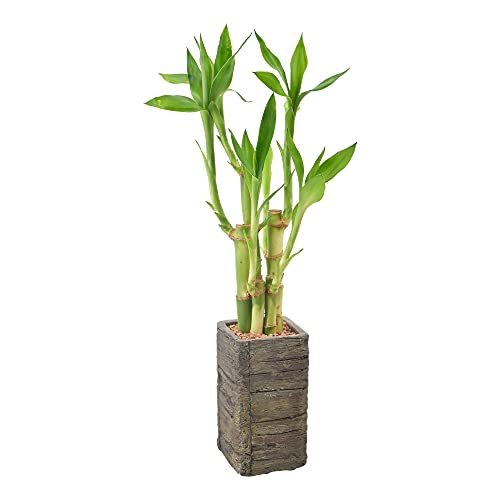
Lucky bamboo is the easiest lucky plant to fit on a crowded desk. It stays small, grows in a vase of water, and handles the medium indirect sunlight found in most offices.
What Do Lucky Bamboo Stalks Symbolize?
The number of stalks carries the meaning in feng shui tradition:
- 2 stalks: love
- 3 stalks: happiness
- 5 stalks: wealth or health
- 8 stalks: prosperity and growth
Four stalks are avoided in Chinese culture because the word for “four” sounds like the word for “death.” Tiered or spiraled arrangements stand for upward growth and success.
Should You Grow Lucky Bamboo in Water or Soil?
Both work. Lucky bamboo (Dracaena sanderiana) is a dracaena, not true bamboo, and it roots happily in water or potting mix.
In water, keep the roots covered by about an inch and change the water every week to prevent algae. Tap water with chlorine or fluoride turns leaf tips brown, so I use filtered, distilled, or rain water.
In soil, choose a well-draining mix and let the top inch dry between waterings. Soil-grown plants live longer and need fewer water changes.
Keep it out of direct sun, which bleaches the leaves. If stalks turn yellow from the bottom up, read how to save a dying dracaena before the rot spreads.
Pothos: the Trailing Vine Often Called a Money Plant
Golden pothos (Epipremnum aureum) is the “money plant” across much of India and South Asia. It trails from shelves, grows fast, and puts up with lower light than most lucky plants.

Why Does the Name “Money Plant” Cause Confusion?
At least four different plants share the name “money plant.” Pothos, jade, the money tree, and the Chinese money plant (Pilea peperomioides) all get sold under it.
They need very different care. Pothos is a tropical vine, jade is a sun-loving succulent, and pilea is a small leafy plant. Check the botanical name on the tag before you buy so you know which care rules to follow.
In Vastu tradition, pothos is grown climbing upward, since vines climbing up are said to bring rising fortune.
How Do You Prevent Yellow Leaves and Soggy Roots?
Most yellow pothos leaves come from overwatering. Water thoroughly only when the soil is almost dry, then empty the saucer.
Bright indirect light keeps the gold streaks on golden pothos. In low light, new leaves come in smaller and solid green. If your only spot is a north window, the solid-green ‘Jade’ pothos handles it better.
Watch for these signs:
- Several yellow leaves at once: soggy soil or poor drainage
- Brown, crispy tips: dry air or fertilizer buildup
- Long bare stems: too little light; trim them back to encourage fuller growth
Flush the pot with plain water every few months to clear out fertilizer salts.
Snake Plant and Peace Lily: Two Picks for Different Spaces
The snake plant suits dim corners and forgetful waterers, while the peace lily suits people who want flowers and don’t mind regular watering. Both carry positive energy meanings in feng shui, but their care is opposite in many ways.
Where Does a Snake Plant Grow Best?
A snake plant grows best in bright indirect light, though it survives low light better than almost any houseplant. Its upright, sword-like leaves are said in feng shui to protect a home and cut through obstacles.
Water every 2 to 4 weeks in summer and about once a month in winter. Let the soil dry completely each time. Rot at the base is the number one way people lose this plant.
You’ll often read that snake plants clean your home’s air. The 1989 NASA study tested plants in small sealed chambers.
A 2019 review by Cummings and Waring estimated you’d need 10 to 1,000 plants per square meter to match normal building ventilation. Enjoy it for its looks and toughness.
What Does a Peace Lily Need to Bloom?
A peace lily (Spathiphyllum) needs medium to bright indirect light to produce its white blooms. It survives in a dim room but rarely flowers there.
It likes evenly moist soil. When it droops dramatically, it’s thirsty, and it perks up within hours of watering. Don’t wait for that every time, since repeated wilting browns the leaf edges.
To encourage flowers, feed with a half-strength liquid fertilizer for indoor plants every 2 to 4 weeks in spring and summer. Plants that are crowded in their pots also bloom more.
Indoor Citrus: Fruit-Bearing Symbols of Abundance
Small citrus trees are the m