9 Mushroom Compost Benefits [Complete Guide]

Gardeners and farmers are always looking for ways to boost plant growth and improve soil health. Mushroom compost is a popular choice that offers many benefits for gardens and crops. This organic material comes from the waste products of mushroom farming.

Mushroom compost can help plants thrive by adding nutrients and improving soil structure. It’s packed with good stuff that plants need to grow strong and healthy. This article will explore nine key benefits of using mushroom compost in your garden or farm.

1. Improves soil structure

Mushroom compost is a great way to make your soil better. It adds organic matter to the soil, which helps it hold together better.

This improved structure makes it easier for plant roots to grow and spread. It also helps water move through the soil more evenly.

Soil with mushroom compost in it doesn’t get as hard or packed down. This means air and water can flow more freely, which plants need to thrive.

The compost also attracts earthworms and other helpful soil creatures. These animals create tunnels in the soil, which further improves its structure.

Better soil structure means less erosion too. The soil stays in place better when it rains or when the wind blows.

Plants grow stronger and healthier in soil that has good structure. They can reach more nutrients and water, which helps them grow bigger and produce more.

Gardeners often notice that their soil becomes easier to work with after adding mushroom compost. It’s less likely to clump or form hard crusts on top.


All Natural Mushroom Compost (4 Quarts), Low Odor Rich Supplement for Indoor/Outdoor Potted Plants and Gardening

Check out Mushroom Compost vs Manure

2. Enhances water retention

Mushroom compost helps soil hold more water. This is great for plants, especially in dry areas or sandy soils that drain quickly.

The organic matter in mushroom compost acts like a sponge. It soaks up water and releases it slowly to plant roots.

This means gardeners can water less often. Plants are less likely to dry out between waterings.

The improved water retention also helps prevent nutrient loss. When water stays in the soil longer, nutrients don’t wash away as easily.

Sandy soils benefit a lot from mushroom compost. It helps these fast-draining soils hold onto moisture better.

Even in rainy areas, mushroom compost is useful. It can help prevent waterlogging by improving soil structure.

Plants grown in soil with mushroom compost often handle drought better. They have access to more stored water in the soil.

The water-holding ability of mushroom compost can lead to healthier, more resilient plants. It creates a more stable environment for root growth.

Read Peat Moss vs Mushroom Compost

3. Increases nutrient availability

Mushroom compost boosts the nutrient content in soil. It contains important elements like nitrogen, phosphorus, and potassium. These nutrients are essential for plant growth and health.

The organic matter in mushroom compost breaks down slowly. This creates a steady supply of nutrients for plants over time. Plants can access these nutrients more easily compared to synthetic fertilizers.

Mushroom compost also improves the soil’s ability to hold onto nutrients. This prevents them from washing away when it rains. As a result, plants have access to nutrients for longer periods.

The compost increases helpful microbe activity in the soil. These microbes help convert nutrients into forms plants can use. This process is called nutrient cycling. It makes more nutrients available to plant roots.

Using mushroom compost can reduce the need for chemical fertilizers. This is good for the environment and can save gardeners money. Plants grown with mushroom compost often show better growth and yields.

Check out Worm Castings vs Mushroom Compost

4. Reduces soil compaction

Mushroom compost helps prevent soil compaction. It adds organic matter to the soil, creating more space between soil particles. This improved structure allows roots to grow more easily and water to flow through the soil.

Compacted soil can be a big problem for plants. It makes it hard for roots to spread out and access nutrients. Mushroom compost loosens up tight soil and creates tiny air pockets.

These air pockets are important for plant health. They let oxygen reach the roots and give space for beneficial microbes to live. The compost also attracts earthworms, which dig tunnels and further reduce compaction.

As mushroom compost breaks down, it continues to improve soil structure. It helps sandy soils hold together better and makes clay soils less dense. This makes the soil easier to work with for gardeners.

The loose soil structure from mushroom compost also helps with water drainage. Water can move through the soil more easily instead of pooling on top. At the same time, the compost helps the soil hold onto some moisture for plant roots.


All Natural Mushroom Compost (4 Quarts), Low Odor Rich Supplement for Indoor/Outdoor Potted Plants and Gardening

5. Promotes beneficial microorganisms

Mushroom compost is a powerhouse for promoting beneficial microorganisms in soil. It provides an ideal habitat for helpful bacteria, fungi, and other tiny organisms to thrive.

These microbes play a crucial role in breaking down organic matter. As they work, they release nutrients that plants can easily absorb.

The microorganisms in mushroom compost also help suppress harmful pathogens. They create a healthier environment for plants to grow by outcompeting bad bacteria and fungi.

Using mushroom compost can reduce the need for chemical fertilizers and pesticides. The beneficial microbes naturally improve soil health and plant resistance to diseases.

The diverse microbial community in mushroom compost supports nutrient cycling. This process ensures a steady supply of nutrients for plants throughout the growing season.

Beneficial fungi in the compost form symbiotic relationships with plant roots. These partnerships help plants access more water and nutrients from the soil.

The microorganisms also improve soil structure. They produce substances that bind soil particles together, creating better air and water flow.

Mushroom compost helps create a more balanced and productive garden by fostering a thriving microbial ecosystem. Plants grown in this enriched environment often show increased vigor and yield.

6. Supports healthy plant growth

Mushroom compost provides key nutrients that plants need to thrive. It contains nitrogen, phosphorus, and potassium – essential elements for strong growth.

The organic matter in mushroom compost improves soil structure. This helps roots spread more easily and access water and nutrients.

Plants grown in soil amended with mushroom compost often show increased vigor. They tend to produce more leaves, flowers, and fruits than unamended soil plants.

The nutrients in mushroom compost are released slowly over time. This steady supply supports sustained plant growth throughout the growing season.

Mushroom compost also helps retain moisture in the soil. This reduces plant stress from drought and promotes consistent growth.

The beneficial microorganisms in mushroom compost can enhance plant health. They may help plants resist certain diseases and pests naturally.

Many gardeners report lusher foliage and higher crop yields when using mushroom compost. It seems to give plants an extra boost for robust development.

7. Provides organic matter

Mushroom compost is a rich source of organic matter for soil. It contains decomposed plant materials and other natural ingredients that boost soil health.

Adding organic matter to soil improves its structure. This makes the soil looser and easier for roots to grow through. It also helps sandy soils hold more water and nutrients.

Organic matter feeds beneficial microbes in the soil. These tiny organisms break down nutrients and make them available to plants. They also help create air pockets in the soil, which roots need.

As mushroom compost breaks down over time, it slowly releases nutrients. This provides a steady food supply for plants throughout the growing season.

The organic matter in mushroom compost acts like a sponge in the soil. It soaks up water and holds onto it, reducing the need for frequent watering. This is especially helpful in dry areas or during hot summers.

Using mushroom compost is an easy way to add organic matter to gardens and lawns. It can be mixed into existing soil or used as a top layer around plants.


All Natural Mushroom Compost (4 Quarts), Low Odor Rich Supplement for Indoor/Outdoor Potted Plants and Gardening

8. Suppresses plant diseases

Mushroom compost helps protect plants from harmful diseases. It contains many helpful microorganisms that create a barrier around plant roots. This barrier stops bad fungi and bacteria from attacking the plants.

The compost also boosts the plant’s own defense system. It makes plants stronger and better able to fight off diseases independently. This means fewer sick plants in your garden.

Using mushroom compost can reduce the need for chemical pesticides. It’s a natural way to keep plants healthy without using harmful chemicals. This is good for the environment and for people who eat the plants.

The compost also improves soil health. Healthy soil leads to healthier plants that can resist diseases better. It’s like giving your plants a strong immune system.

Gardeners who use mushroom compost often see fewer plant diseases. Their plants tend to be stronger and more productive. This natural method of disease control is becoming more popular among both home gardeners and farmers.

9. Increases crop yield

Mushroom compost can boost crop yields for farmers and gardeners. This nutrient-rich material improves soil quality, which helps plants grow stronger and produce more.

Studies show that adding mushroom compost to fields can lead to higher crop yields. This is especially true during dry spells when compost-amended soil outperforms traditional fertilizers.

The ideal amount of mushroom compost to use is 20-30% of the total soil volume. Using too much (like 50%) can actually lower yields due to high salt content.

Mushroom compost provides a slow release of nutrients over time. This steady supply helps plants grow consistently throughout the season, leading to better harvests.

By improving soil structure, mushroom compost also helps roots grow deeper and access more nutrients and water. This results in healthier plants that can produce more fruits, vegetables, or grains.

Farmers who use mushroom compost often see increased crop yields while reducing their need for synthetic fertilizers. This makes it a valuable tool for sustainable agriculture practices.

Understanding Mushroom Compost

Mushroom compost is a nutrient-rich soil amendment made from organic materials left over from mushroom farming. When used in gardens and landscapes, it provides many benefits for plants and soil health.

What Is Mushroom Compost?

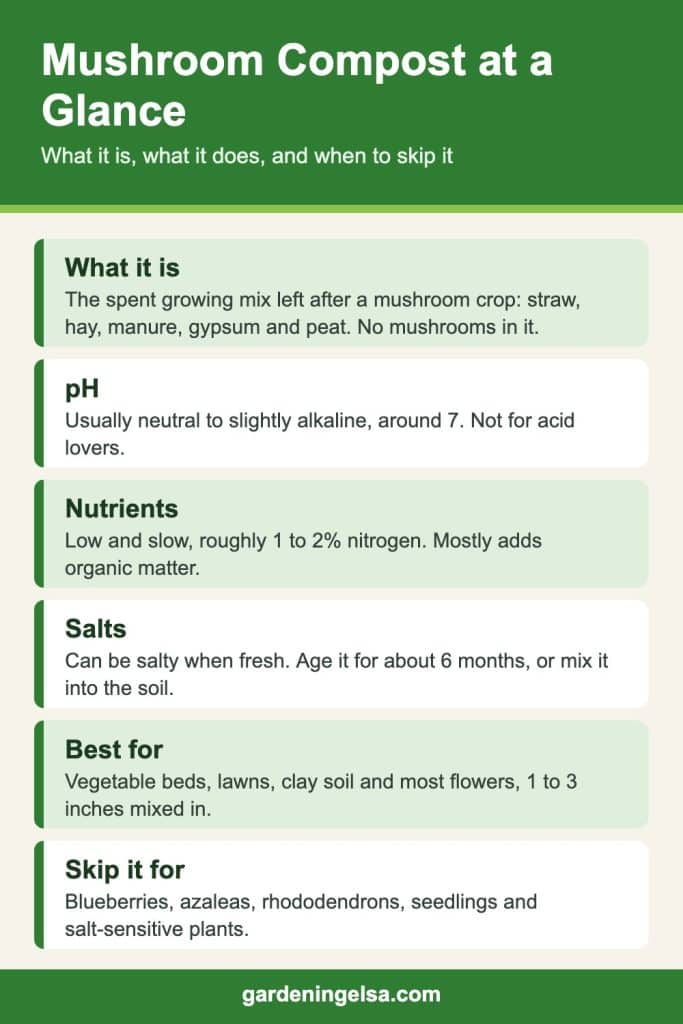
Mushroom compost is the recycled growing medium used to cultivate mushrooms. It contains a mix of organic materials like straw, hay, corn cobs, and chicken manure. After mushroom harvests, this spent substrate becomes a valuable soil amendment.

The compost is high in organic matter. It supplies key nutrients like nitrogen, phosphorus, and potassium to plants. It also contains calcium, magnesium, and iron.

Gardeners use mushroom compost to improve soil structure and fertility. It helps sandy soils retain more water and nutrients. In clay soils, it improves drainage and aeration.

How Mushroom Compost Is Made

Mushroom farmers start by mixing raw organic materials. Common ingredients include:

  • Straw or hay
  • Corn cobs
  • Horse or chicken manure
  • Gypsum
  • Soybean meal

This mixture is wetted and pasteurized with steam. The steaming kills weed seeds and harmful microbes.

Next, mushroom spawn is added. As mushrooms grow, they break down the compost. After harvests, the leftover material becomes mushroom compost.

The final product is dark, crumbly, and earthy-smelling. It’s screened to remove large chunks before being sold or used as a soil amendment.

Soil Health Benefits

Mushroom compost boosts soil health in key ways. It changes soil structure and helps soil hold more water. These traits make plants grow better.

Improving Soil Structure

Mushroom compost makes soil more porous. This lets air and water move through the soil easier. Plant roots can grow deeper and spread out more. The compost also adds organic matter to the soil. This feeds helpful soil microbes. These microbes break down nutrients for plants to use.

The compost can also change soil pH. It often has chalk, which makes acidic soils less acidic. This helps plants that don’t like very acidic soil. The improved structure makes soil easier to work with too. It’s less likely to get packed down or form a hard crust on top.

Enhancing Water Retention

Mushroom compost acts like a sponge in soil. It soaks up water and holds onto it. This means the soil stays moist longer after rain or watering. Plants can access this stored water during dry spells. They’re less likely to wilt or die from lack of water.

The water-holding ability also cuts down on how often you need to water. This saves time and water. It’s good for plants that need steady moisture. The compost also helps stop water from running off quickly. This reduces soil erosion and nutrient loss.

In sandy soils, the compost fills in gaps between sand particles. This slows water drainage. In clay soils, it creates spaces for water to move through. Both changes help plants get the right amount of water.

Sustainability and Environmental Impact

Mushroom compost offers significant benefits for sustainable gardening practices and reduced environmental impact. It helps minimize waste and supports eco-friendly growing methods.

Reducing Waste

Mushroom compost reuses spent substrate from commercial mushroom farms. This keeps large amounts of organic material out of landfills. The compost breaks down into soil-like residue that doesn’t pollute groundwater.

Recycling mushroom waste as compost cuts down on trash and gives new life to a useful resource. It creates a circular economy in the mushroom industry. Farmers can sell or donate their used growing medium instead of throwing it away.

Organic Gardening Advantages

Mushroom compost supports organic gardening without synthetic chemicals. It adds nutrients and improves soil naturally. This helps plants grow strong without artificial fertilizers.

The compost boosts soil health and structure. It holds water well and drains excess moisture. Healthy soil needs less watering and resists erosion.

Using mushroom compost can lower a garden’s carbon footprint. It reduces the need for store-bought fertilizers and pesticides. This cuts down on the manufacturing and shipping of garden products.

Mushroom Compost Benefits

Conclusion

Mushroom compost offers many benefits for gardens and plants. It improves soil structure and water retention. The compost adds nutrients that feed plants over time.

It helps control pests and diseases naturally. Gardens using mushroom compost often see better plant growth and yields. The compost is eco-friendly and puts waste materials to good use.

Adding mushroom compost is an easy way to boost soil health. It works for both new and existing garden beds. Regular application maintains nutrient-rich soil for thriving plants.

Gardeners can buy mushroom compost or make their own. Either way, it’s an affordable soil amendment. The benefits make it worthwhile for most home gardens.

With proper use, mushroom compost can transform struggling plants. It creates ideal growing conditions in various soil types. For healthier plants and bigger harvests, mushroom compost is a valuable gardening tool.


All Natural Mushroom Compost (4 Quarts), Low Odor Rich Supplement for Indoor/Outdoor Potted Plants and Gardening

vegetable garden ideas

10 Vegetable Garden Layout Ideas