
To stop indoor plants from leaking water, keep them in pots with drainage holes, set each pot in a saucer or watertight cachepot that’s wider and deeper than the pot’s base, and empty the standing water within about 30 minutes of watering.
For plants you can lift, watering in the sink or tub and letting them drip dry before you put them back stops nearly every puddle.
Most leaks come down to a few fixable things: a saucer that’s too small, too much water at once, soil that sheds water, or terracotta that wicks moisture onto the floor.
Once you know which one you’re dealing with, you can protect your floors and furniture without giving up healthy drainage for your indoor plants.
Why Is Water Escaping Your Plant Pot?
Water escapes a plant pot because it has somewhere to go: out the drainage holes, through a crack, over a saucer‘s rim, or through porous clay. Finding the exact exit point tells you which fix to use.
Runoff From Drainage Holes vs. Water From a Crack
Drainage holes are supposed to let water out. A little runoff right after watering means the whole root ball got wet, and that’s healthy.
A crack is different. Water from a crack shows up at odd times, seeps from the side of the pot, or leaves a wet ring even when the saucer is dry.
To check, lift the pot after watering and look at where the drips form:
- Drips only from the holes in the first 15 to 30 minutes: normal runoff.
- Drips from the side or a seam: a crack in the pot.
- Water under a dry saucer: a cracked saucer or one with a hairline split in the glaze.
Overwatering, Overflowing Saucers, and Damp Terracotta
Overwatering is the most common reason a saucer spills. If you pour a full quart into a 6-inch pot, most of it runs straight out, and a shallow saucer can’t hold it.
Plants should only leak just after you water them. If a pot is still dripping hours later, the soil is staying too wet, and that also raises the risk of root rot.
Terracotta adds another wrinkle. Unglazed clay is porous, so water soaks through the walls and base and “sweats” onto whatever is underneath. Unglazed clay saucers do the same thing, which is why they leave white rings and dark marks on wood.
Cold surfaces cause condensation too. A cachepot sitting near a chilly window in a Northeast winter can bead up on the outside and drip.
Why Water Sometimes Runs Straight Through the Soil
When water pours out the bottom seconds after you start, the potting mix has likely turned hydrophobic. Peat-based mixes that dry out completely shrink away from the pot’s sides and start to repel water.
Water then runs down the gap between the soil and the pot wall and floods the saucer, while the roots stay dry. You’ll see a fast gush of runoff and a plant that still wilts.
The fix for this is bottom watering or refreshing the mix, both covered below.
Choose a Saucer That Actually Catches the Runoff
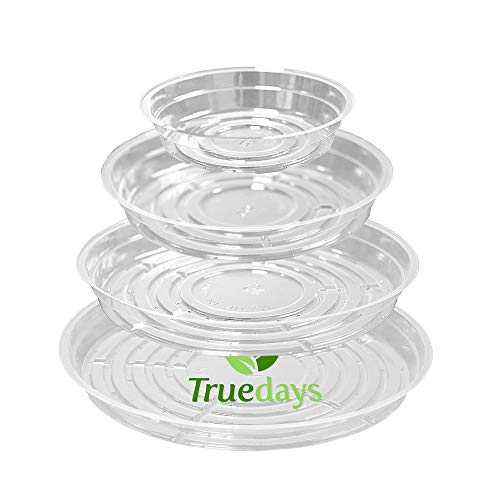
A good saucer is wider than the pot’s base, at least 1 inch deep, and made of a waterproof material like glazed ceramic or plastic. Getting those three details right handles most everyday drips.

Match the Saucer’s Width and Depth to the Pot
Measure the bottom of the pot, then pick a saucer about 1 to 2 inches wider than that. A saucer that matches the pot’s base exactly leaves no room for water that runs down the outside.
Depth decides how much runoff it can hold. Here’s my rule of thumb:
| Pot size (top diameter) | Saucer depth I’d look for |
|---|---|
| 4 to 6 inches | At least 3/4 inch |
| 8 to 10 inches | 1 to 1.5 inches |
| 12 inches and up | 1.5 to 2 inches, or a heavy-duty tray |
For material, I’d pick glazed ceramic, plastic, or metal with a sealed finish. If you love terracotta pots, pair them with glazed saucers so water can’t walk through.
Deep pasta bowls and shallow serving dishes make good saucers for indoor plants. They’re cheap, they hold more than the flimsy saucer that comes with the pot, and they look like decor.
Check for Cracks and Empty Standing Water
Inspect saucers every few months. Hold them up to a light or fill them with water on a towel and wait an hour; a hairline crack will leave a damp spot.
Empty standing water about 30 minutes after watering. For heavy pots you can’t tip, a turkey baster, sponge, or rag pulls the water out of the saucer.
A layer of pebbles in a deeper saucer also works. The pot sits on top of the stones, above the water line, so roots stay out of the puddle while the water slowly evaporates.
Use a Cachepot Without Trapping Water Around the Roots
A cachepot is a decorative pot without holes that hides a plain plastic nursery pot inside it. It’s my favorite fix for leaks, because the outer pot catches every drop while the inner pot keeps its drainage holes.
Set a Draining Nursery Pot Inside a Watertight Outer Pot
Leave the plant in its nursery pot with its drainage holes open. Then pick an outer pot that’s 1 to 2 inches wider and about the same height or a little taller.
If the nursery pot sits too low, set an upside-down saucer or a few inches of gravel in the bottom of the cachepot. That lifts the inner pot so its base stays above any water that collects.
You can hide the rim with a thin layer of sheet moss. Push it aside now and then to check whether the soil is dry. If you’re shopping for outer containers, my guide to pots for indoor plants covers sizes and materials.
Remove and Empty the Inner Pot After Watering
The catch with cachepots is that water collects out of sight. If the nursery pot sits in that hidden puddle, you’ve rebuilt a pot with no drainage, and root rot follows.
After watering, lift the inner pot out about 15 to 30 minutes later. Pour out any water in the cachepot, wipe it dry, and set the plant back in.
For big floor plants, I’d tip the cachepot’s water out with a turkey baster or wick it up with an old towel. Check a hidden cachepot a day after watering for the first few weeks so you learn how much runoff each plant makes.
Water in the Sink or Tub Before Replacing the Pot
Watering in the sink or tub is the cleanest method for any plant you can carry. All the runoff goes down the drain, and the pot goes back to the furniture already drained.
Water Thoroughly Without Flooding the Pot
Pour slowly and evenly over the whole soil surface until water runs out the drainage holes. Stopping there soaks the full root ball and flushes out fertilizer salts.
If water races out the bottom right away, pause for a minute, then pour again. That gives dry potting mix a chance to absorb water. Room-temperature water is easiest on roots.
I’d group plants in the tub on watering day. A shower floor or a laundry sink works the same way, and a wire oven rack set over a deep pot or bin makes a handy drip station if your sink is small.
Let Drips Stop Before Moving the Plant Back
Leave each plant in the sink or tub for 15 to 30 minutes. Lift the pot and tilt it slightly to let the last trapped water run out.
Then wipe the bottom of the pot with a towel. Even a pot that has stopped dripping will leave a damp ring, so put it back on a saucer, coaster, or mat.
For large plants that you can’t lift, a rolling plant caddy lets you wheel them to a hard floor or tile before watering.

When Does Bottom Watering Make Less Mess?
Bottom watering makes the least mess when the soil has dried out and turned hydrophobic, because the roots soak up water slowly from below instead of shedding it over the pot’s rim.
It suits plants that like even moisture, like pothos and peace lily, and needs a pot with drainage holes.
Keep in mind that pothos and peace lily are both toxic to cats and dogs according to the ASPCA, so set your soaking tub where pets can’t drink from it or chew leaves.
Let a Dry Root Ball Absorb Water From Below
Fill a bowl, sink, or tub with 1 to 2 inches of room-temperature water. Set the pot in it and wait about 15 minutes for small pots and 30 to 45 minutes for pots 10 inches or wider.
The soil surface should look darker and feel damp when it’s done. Because water rises up by wicking, dry hydrophobic soil rewets evenly instead of letting water run down the sides.
Top water every few months to flush out salt buildup, since bottom watering doesn’t push those minerals out the drainage holes.
Drain the Pot and Avoid Leaving It in the Tray
Lift the pot out once the top feels moist and let it drain for 10 to 15 minutes before moving it. Leaving a pot sitting in the soaking tray all day keeps the lower roots wet and starves them of air.
Bottom watering also keeps the top inch of soil drier, which helps against fungus gnats. Their larvae live in the top 1 to 2 inches of damp soil.
Keep Floors and Furniture Dry Beneath the Pot
Waterproof barriers and air space beneath pots keep floors and furniture dry. The goal is to block water from soaking through and to let any moisture under the saucer evaporate.
Use Waterproof Mats and Risers on Vulnerable Surfaces
On hardwood, laminate, and wood furniture, I’d use two layers of protection: a sealed saucer plus a mat or riser under it.
Good options include:
- Cork mats with a waterproof backing: they stop condensation and scratches. Plain cork without a backing can let moisture through and mold.
- Rubber or felt-free