
You booked the trip, packed the bags, and then you looked at your plants. Many gardeners worry about coming home to wilted leaves and dry soil.
The good news is that it’s easy to keep plants watered while on vacation with a little planning and a few cheap tools.
In this guide, I’ll walk you through simple prep steps, self-watering setups, DIY tricks, and outdoor garden options. I’ll also cover how long most plants can safely go without you. By the end, you’ll know exactly which method fits your trip and your plants.
Get Plants Ready Before You Leave
The best way to prepare is to water thoroughly, move plants out of direct sun, and group them together. These three steps slow water loss and buy your plants extra days before you even add a watering system.
Good prep matters more than any gadget. A plant that starts the trip well hydrated and sitting in a cooler spot will use far less water while you’re gone.
Water Deeply and Skip the Fertilizer
Give each plant a deep, thorough watering a day or two before you leave. Water slowly until it drains from the bottom, then let the excess drain away. Use room-temperature water, since cold water can shock sensitive roots.
Skip fertilizer right before your trip. Feeding encourages new growth, and new growth needs more water. You want your plants to coast along quietly, not push out fresh leaves while nobody is watching.
Check timing, too. If you’re curious about the best time of day to water indoor plants, morning is usually ideal. A morning soak gives the soil time to settle before you head out.
Move Plants Out of Direct Sun
Sunny windowsills dry soil fast. Move your plants to a bright spot that gets indirect light and stays a little cooler. A room with a north-facing window or a spot a few feet back from a sunny window works well.
Lower light and cooler air mean less evaporation. Plants also transpire less, which means they pull less water from the soil. Just don’t shove them into a dark closet, since they still need some light.
Turn your thermostat to a reasonable setting, too. A house that bakes all day will dry out your plants much faster than one that stays moderate.
Group Plants and Gather Your Supplies
Cluster your plants together in one area. Grouped plants raise the humidity around each other, which slows moisture loss from leaves and soil. It also makes any watering system easier to set up.
This is a good time to gather a few helpful products. Here are two I’d suggest looking at:
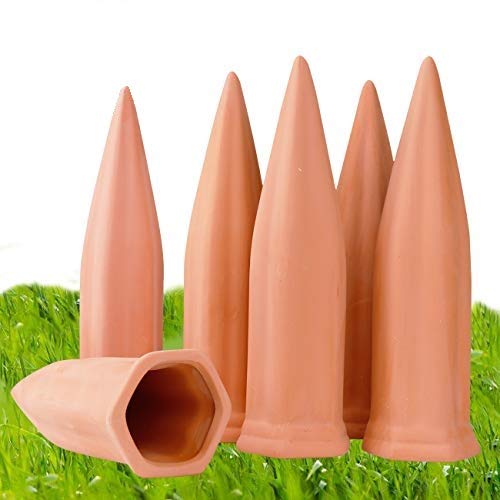
- Terracotta watering spikes: These clay cones push into the soil and connect to a water bottle or tube. Water seeps slowly through the porous clay as the soil dries.
- A self-watering planter: These pots have a built-in reservoir below the soil. The plant draws water up as it needs it, often for a week or more.
Whatever you choose, set it up and test it a week before you leave. That gives you time to see how fast water moves and to adjust before it really counts.
Self-Watering Pots and Reservoirs
Self-watering pots are one of the easiest ways to handle a trip of one to two weeks. A reservoir at the bottom holds water, and the soil wicks it up to the roots as needed.

If you travel often, these pots can pay for themselves fast. They also make everyday watering easier once you’re home.
How Self-Watering Pots Work
Most self-watering pots have two parts: an inner pot that holds soil and an outer base that holds water. A wick or a soil column connects the two. As the soil dries, it draws water up from the reservoir.

Many models include a water level indicator. That small float shows you when the reservoir is low. Before a trip, fill the reservoir to the top and check the indicator.
If you’re shopping, I’ve covered some great options for self-watering pots for indoor plants. Look for a reservoir size that matches how long you’ll be away.
Which Plants Do Best in Them
Self-watering pots work best for plants that like evenly moist soil. Think pothos, peace lilies, ferns, spider plants, and many tropical houseplants. These plants enjoy a steady supply and don’t mind the soil staying damp.
They’re not a great match for cacti and succulents. These plants want their soil to dry out between waterings. Constant moisture can lead to root rot.
Tips for Using Reservoirs Before a Trip
A few simple habits make reservoir pots more reliable:
- Fill the reservoir completely the day before you leave.
- Water the soil from the top as well, so the wick starts out moist.
- Test the pot a week ahead to see how fast the reservoir empties.
- Place the pot on a tray in case of overflow.
That last tip matters if you have nice floors or furniture. If you’ve had trouble with drips before, my guide on stopping indoor plants from leaking water has helpful ideas.
DIY Wicks, Spikes and Globes
If you don’t want to buy new pots, a DIY system can work just as well. Capillary wicks, terracotta spikes, and watering globes all slowly release water into the soil while you’re away.
These tools are cheap and easy to set up. The key is testing them ahead of time so you know they deliver the right amount.
Capillary Wick Watering
The wick method uses a cotton or nylon cord to move water from a container into the soil. One end sits in a jar or bucket of water. The other end is buried a couple of inches into the potting mix.
Water travels up the cord through capillary action and keeps the soil moist. It’s simple, and one large container can feed several plants at once with multiple wicks.
Here’s how to set it up:
- Cut a cord long enough to reach from the bottom of your water container to the soil.
- Soak the cord fully in water before you start.
- Push one end deep into the soil near the roots.
- Drop the other end into a container of room-temperature water.
- Place the container at the same height or slightly higher than the pot.
Nylon cord tends to hold up well and resist rot. Cotton works too, but it can break down over a long trip.
Terracotta Watering Spikes
Terracotta watering spikes are porous clay cones that go into the soil. You attach a water bottle or run a tube from a reservoir. As the soil dries, water seeps out through the clay.
I like these because they respond to the soil. When the soil is moist, less water moves. When it dries, more flows. Soak the spike in water before inserting it so it starts working right away.
Watering Globes
Watering globes are glass or plastic bulbs with a long stem. You fill the globe, then push the stem into moist soil. Water releases slowly as the soil dries around the tip.

Globes work best for short trips and smaller pots. They usually hold a limited amount of water, so they’re better for a long weekend or a few extra days than for two weeks.
Here’s a quick comparison of these DIY options:
| Method | Best For | Typical Trip Length | Setup Effort |
|---|---|---|---|
| Capillary wick | Groups of thirsty plants | 1 to 2 weeks | Low |
| Terracotta spikes | Medium to large pots | 1 to 2 weeks | Low |
| Watering globes | Small pots | A few days to about 1 week | Very low |
Whichever you use, test it a week before you leave. Check the soil each day. If it stays soggy, slow the flow. If it dries out, add a second wick or spike.
The Bathtub and Plastic Bag Methods
If you need a free solution with things you already own, try the bathtub or plastic bag method. Both work well for many common houseplants on trips of about one to two weeks.
These two tricks are old standbys for a reason. They’re easy and they work.
Setting Up the Bathtub Method
Lay an old towel in the bottom of your bathtub or a large sink. Add 1 to 2 inches of water. Then set your potted plants on the towel.
The towel keeps pots from sitting directly on the hard surface and helps spread moisture. The plants draw water up through their drainage holes. This only works with pots that have drainage holes.
Make sure the bathroom gets some natural light. A bathroom with a window is ideal. A windowless bathroom with the lights off for two weeks is too dark for most plants.
Who Should Skip the Bathtub
The bathtub method is not for cacti or succulents. Sitting in water for days can rot their roots fast. Leave them in their usual spot instead.
It’s also not great for plants that hate wet feet, like snake plants or ZZ plants. These tough plants usually do fine on their own for a couple of weeks anyway.
The Plastic Bag Tent
The plastic bag method creates a mini greenhouse. Water the plant well, then cover it with a clear plastic bag. Moisture evaporates, collects on the plastic, and drips back down.

This works best for small pots. Use stakes, chopsticks, or a few skewers to keep the plastic from touching the leaves. Leaves that touch wet plastic can develop rot.
Always place bagged plants in indirect light. Direct sun can quickly overheat the inside of the bag and cook your plant. A bright spot away from the window is perfect.
Keeping Outdoor Gardens Watered
For outdoor gardens, drip irrigation or soaker hoses on a timer are your best bet. Add 2 to 3 inches of mulch to hold moisture in the soil.