
You can use neem oil on houseplants safely if you start with a product labeled for indoor plants, test it on a few leaves, spray in shade, and repeat every 5 to 7 days for 2 to 3 weeks. It works best on soft-bodied pests like spider mites, aphids, and mealybugs.
It also helps a little with powdery mildew.
The trouble is that neem oil for indoor plants gets treated like a cure-all. Mixed too strong or sprayed on a plant in a sunny window, it can burn leaves faster than the bugs ever could.
I’ll show you how to pick the right product, mix it correctly, and know when a different treatment is the better call.
What Kind of Neem Product Are You Using?
Not all bottles labeled “neem” act the same, so check which kind you have before you mix anything. Cold-pressed oil keeps the bug-disrupting compound azadirachtin, while clarified extracts have most of it removed and rely on the oil coating pests.
Cold-Pressed Oil and Azadirachtin
Neem oil comes from the seeds of the neem tree, Azadirachta indica, which is native to the Indian subcontinent. Cold-pressed neem oil is squeezed from the seeds without high heat, so it keeps more of its natural compounds.
The best known of those compounds is azadirachtin. It discourages insects from feeding and interferes with how young insects molt and grow. That’s why neem works slowly; you’ll see fewer new bugs over a couple of weeks instead of instant knockdown.
Cold-pressed oil also has the strongest smell, often described as garlic mixed with sulfur. Some products are sold as pure azadirachtin extracts, which are concentrated insect growth regulators with their own label rates.
Clarified Extracts and Ready-to-Use Sprays
Many garden-center products contain clarified hydrophobic extract of neem oil. This is what’s left after most of the azadirachtin is removed. It works mainly by smothering soft-bodied insects and mites on contact, and some labels list it for fungal leaf diseases too.
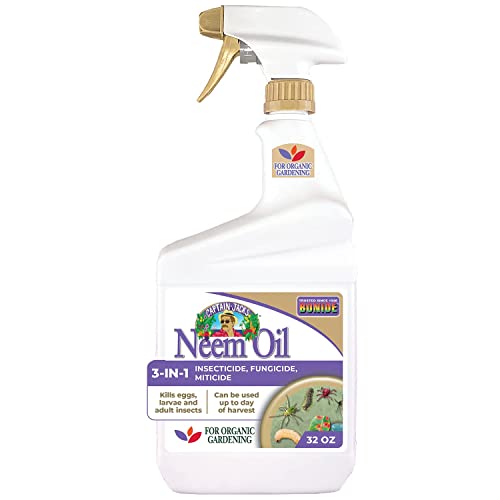
Ready-to-use (RTU) sprays come pre-diluted in a trigger bottle. For most indoor gardeners, I’d start with an RTU spray labeled for houseplants. You skip the mixing math, and the formula already has an emulsifier that keeps oil and water blended.
Concentrates cost less per ounce and last longer. They just ask more of you at mixing time.
Why the Product Label Comes First
The label is a legal document for pesticides in the US. It tells you which plants and pests the product covers, how much to use, how often to repeat it, and whether it’s approved for indoor use.
Look for these details before buying:
- “Houseplants” or “indoor plants” listed as an approved site
- Your specific pest named on the label
- A clear dilution rate or a ready-to-use format
- A list of sensitive plants or a leaf-test warning
- Repeat interval and maximum applications
Pure cold-pressed oil sold as a cosmetic or “for skin and hair” carries no pesticide directions at all. If you use it on plants, you’re working without that guidance.

Which Houseplant Problems Can Neem Treat?
Neem handles soft-bodied, sap-sucking pests best and gives modest help against some leaf fungi. Hard-shelled scale and thrips hidden in buds are tougher, so plan on extra steps for those.
Soft-Bodied Pests It Can Help Control
Neem works on pests it can touch directly or that feed on treated leaves. That covers the common sap-suckers:
| Pest | How well neem helps | Extra step I’d add |
|---|---|---|
| Spider mites | Good with repeat sprays | Raise humidity; rinse leaves |
| Aphids | Good | Hose or wipe off clusters first |
| Mealybugs | Fair | 70% rubbing alcohol on a cotton swab |
| Whiteflies | Fair on nymphs | Yellow sticky traps for adults |
| Soft scale (young crawlers) | Fair | Scrape off adults by hand |
Spider mites thrive in hot, dry air, which is common indoors in winter when the heat runs. If you’re dealing with webbing and speckled leaves, my guide to spider mites on indoor plants covers the humidity and rinsing steps in detail.
For green or black clusters on new growth, see aphids on indoor plants. Cottony white fluff in leaf joints is a different problem, and tiny white bugs on plants helps you tell mealybugs from whiteflies.
Why Thrips and Armored Scale Are Harder to Treat
Thrips hide inside flower buds and folded new leaves where spray can’t reach. They also drop into the soil to pupate, so a leaf spray misses part of their life cycle.
Armored scale builds a hard, waxy shell. Once adults settle in, oil has trouble getting under that cover. Neem works mostly on the young crawlers, which means you’ll need to scrape off adult bumps with a fingernail or soft toothbrush.
For both pests, plan on several weeks of treatment and isolate the plant from the rest of your collection.
Can It Help with Powdery Mildew or Leaf Spots?
Neem helps prevent powdery mildew from spreading, but it won’t heal leaves that are already marked. Clarified neem products labeled as fungicides form a thin film that makes it harder for spores to grow.
Black spot and rust are mostly outdoor rose and garden problems, so you’ll rarely see them inside. Leaf spots on houseplants are often caused by bacteria or too much water on the leaves, and neem won’t fix those.
Remove spotted leaves, improve airflow, and water the soil instead of the foliage. If you’re seeing fuzzy white growth on soil or leaves, my post on white mold on indoor plants helps you figure out whether it’s mildew or harmless soil fungus.
How Do You Mix a Neem Oil Spray?
Mix neem at the label rate first, and only fall back on a homemade ratio when you’re using pure oil with no directions. Then blend it with a mild soap so the oil spreads evenly, and use the batch the same day.

Follow the Label Before Using a Typical Dilution
If your concentrate has directions, use them exactly. Stronger is not better; extra oil is the top cause of burned leaves.
For pure cold-pressed oil with no label rate, the common homemade mix runs from 1 teaspoon to 1 tablespoon of neem oil per quart of water. I’d start at the low end:
- 1 teaspoon neem oil
- ¼ to ½ teaspoon mild liquid soap (fragrance-free, no degreaser or bleach)
- 1 quart warm water (not hot)
Only move toward 2 teaspoons per quart if a tough infestation hasn’t responded after two rounds, and only on sturdy plants that passed a leaf test.
Emulsify the Oil and Mix Only What You Need
Oil and water separate in seconds. The soap acts as an emulsifier, helping tiny oil droplets stay spread through the water.
Here’s how I’d mix it:
- Fill a clean spray bottle about three-quarters full with warm water.
- Add the soap and swirl gently.
- Add the neem oil. If it has turned solid in a cool room, warm the bottle in a cup of warm water first.
- Shake hard for 10 to 15 seconds.
- Shake again every minute or so while you spray.
Azadirachtin breaks down quickly once mixed with water, often within hours to a few days.
A quart covers several medium plants, so cut the recipe in half if you only have one or two to treat, and pour leftovers out at the end of the day.
How Do You Spray Indoor Plants Without Damaging Them?
Safe spraying comes down to a test patch, full coverage, and keeping the plant out of the sun afterward. Neem only touches the bugs you coat, so a careful approach pays off more than a heavy hand.
Patch-Test a Few Leaves First
Spray two or three leaves on one plant and wait 24 to 48 hours. Look for brown edges, yellow patches, spots, or droopy leaves.
If the test leaves look normal, treat the whole plant. If you see damage, dilute the mix by half and test again, or switch to a different treatment. Do this for every new plant type and every new product, even if you’ve used neem before.
Coat Leaf Undersides and Pest Hiding Places
Most houseplant pests live where you don’t look. Spider mites and whiteflies gather on leaf undersides, and mealybugs tuck into the joints where leaves meet stems.
Work through the plant in this order:
- Take the plant to a sink, tub, or a spot lined with old towels.
- Turn each leaf over and spray the underside until it’s wet but not dripping.
- Spray the tops of leaves.
- Hit stems, leaf joints, and the base where stems meet soil.
- Tilt the pot sideways to reach the center of bushy plants.
Rinse heavy infestations off with lukewarm water before spraying. Fewer bugs mean the neem has less to cover.
Keep Plants Shaded and Repeat Every 5 to 7 Days
Oil plus strong light is a recipe for scorched leaves. Spray in the evening or move the plant out of direct sun (a sunny south or west window) for a day or two. Bright indirect light is fine.
Repeat every 5 to 7 days for 2 to 3 weeks. Eggs that survived the first spray hatch in that window, and the repeat sprays catch them before they can breed. Turn off any grow light aimed at the plant until the leaves dry.
Keep plants away from heaters and fans while wet, and aim for room temperatures between 60°F and 80°F. Neem in hot conditions above 90°F is far more likely to cause burn.
Which Houseplants Are Sensitive to Oil Sprays?
Thin, fuzzy, or waxy l