
Plant 8 peas per square, set in two rows of four along a trellis on the north edge of your bed. That spacing gives each vine about 3 inches of room, enough air to stay healthy, and a support to climb from the first week.
Peas are among the easiest crops to fit into a grid, and they’re one of the first seeds you can sow each spring.
Get the timing, spacing, and support right, and a few squares of peas in a square foot garden will give you sweet pods weeks before your tomatoes even flower.
How Many Pea Plants Fit in Each Square?
Eight pea plants fit in one square when they grow on a trellis. That’s the standard count in the square foot gardening method for climbing peas, and I stick with it.
Bush peas can be planted a little tighter, but I still prefer to give them room for airflow.
How Do You Space Eight Snap Pea Seeds Beside Trellis Netting?
Picture the 12-inch square cut in half from east to west. You’ll plant one row of four seeds on each side of the trellis line, which runs along the north part of the square.
Here’s how I’d lay out a packet of snap pea seeds:
- Stretch trellis netting along the north edge of the square before you plant.
- Mark a row about 2 inches south of the netting and another about 2 inches north of it, if the frame allows.
- Space four seeds about 3 inches apart in each row, starting 1.5 inches in from the square’s edges.
- Poke each hole 1 inch deep with your finger.
If your netting sits right on the bed’s back edge, put both rows of four on the south side, about 2 and 4 inches out from the net. The vines will find the netting within a week or two.
Should Bush Peas Use the Same Spacing?
Yes, I’d use 8 per square for bush peas too, even though some charts list 9. Bush types are short and leafy, and that extra plant crowds the square without adding many pods.
Bush peas grow about 18 to 30 inches tall. Plant them in the same two rows of four, and give them a short line of twine or a few twiggy sticks so they don’t flop into the next square after a heavy rain.
Which Pea Varieties Work Best in a Square Foot Bed?
Compact snap peas and short shelling peas are my top picks for a square foot bed because they produce well in a small footprint. Choose by what you want to eat first, then by how tall a trellis you’re willing to build.

Snap, Snow, or Shelling Peas: What Do You Want to Harvest?
Each type gives you a different harvest from the same square:
| Type | What you eat | Pod shape at harvest | Days to harvest |
|---|---|---|---|
| Snap peas | Whole pod and peas | Round, plump, crisp | 55 to 70 |
| Snow peas | Flat whole pod | Flat, peas barely visible | 50 to 60 |
| Shelling peas | Peas only | Full and rounded | 60 to 75 |
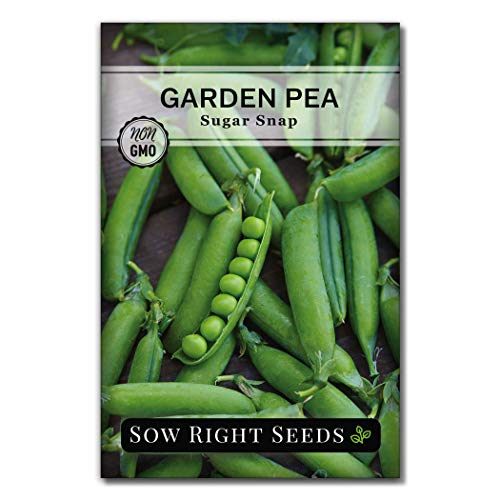
Snap peas give you the most food per square, since you eat the whole thick pod. Sugar Ann is a dwarf snap pea that suits small beds, and Super Sugar Snap is a taller one with good disease resistance.
Shelling peas take more plants to fill a bowl. Little Marvel stays compact, and Green Arrow is known for long, well-filled pods. For snow peas, Oregon Sugar Pod II is a reliable, fairly compact choice.
Bush or Climbing Peas: How Much Support Will You Need?
Bush peas reach 2 to 3 feet and need only light support. Climbing peas, also called vining peas, can reach 5 to 6 feet or more and need a solid trellis.
My advice for a first grid is a bush or short climbing type. Tall vining peas yield longer and pick easier at waist height, but they catch the wind and need a sturdier frame.
When Should You Sow Peas in Spring or Fall?
Sow peas in early spring, 4 to 6 weeks before your last spring frost, as soon as the soil can be worked. Peas are cool-season crops, and they stop setting pods once days climb above about 80°F.
How Early Can You Plant Before the Last Spring Frost?
You can plant once the soil reaches about 40°F, though seeds sprout faster at 45°F and up. Raised beds warm and drain sooner than the ground, so your grid is ready earlier than an in-ground row.
Rough spring windows by region:
- Southeast and Gulf Coast (zones 8 to 9): January to February
- Mid-Atlantic and lower Midwest (zones 6 to 7): March
- Northeast and upper Midwest (zones 4 to 5): late March to April
- Pacific Northwest: February to March
A light snow after sowing won’t hurt the seeds. Cold, soggy soil below 40°F is the real risk, since seeds rot before they sprout.
When Is a Fall Planting Worth Trying?
A fall crop is worth trying where autumn stays mild, mainly zones 7 and warmer. Sow 8 to 10 weeks before your first fall frost.
The catch is heat. Late-summer seeds sprout into warm soil, so keep the squares moist and shaded until seedlings appear. In the Northeast and upper Midwest, fall heat lingers and frost arrives early, so I’d treat spring as your main season.
How Should You Prepare the Bed and Soil?
Peas need full sun, loose soil that drains fast, and a spot where their height won’t shade other crops. A few minutes of planning on the grid saves you from moving a trellis later.
Where Should the Pea Squares Go in a Raised Bed?
Put the pea squares along the north edge of the bed. In a 4 x 4 bed with sixteen squares, the four squares in the back row make a neat pea strip with one trellis running the full 4 feet.
That spot keeps the vines from blocking sun to lower crops. Leave 2 to 3 feet of path behind the bed so you can reach the far side of the trellis to pick.
What Soil Mix and Compost Do Peas Need?
The classic square foot gardening soil mix suits peas well: equal thirds by volume of blended compost, peat moss or coco coir, and coarse vermiculite. It stays loose, drains fast, and needs no tilling.
Peas need at least 6 inches of mix, and their roots will gladly use more. Aim for a pH between 6.0 and 7.0. Before planting, work a trowel of compost into each pea square, and skip fresh manure.
How Do You Plant Peas in the Grid?
Set up the trellis first, then sow 8 seeds per square at 1 inch deep and water well. Putting the support in before planting keeps you from stepping on or slicing through young roots.

How Deep Should You Sow Each Seed?
Sow each seed 1 inch deep. In light, fast-draining mix, you can go to 1.5 inches if the surface dries out quickly.
A few steps help seeds sprout evenly:
- Soak the seeds in water overnight, no longer than 12 hours.
- If peas haven’t grown in that bed before, roll the damp seeds in a pea and bean inoculant powder.
- Poke 8 holes per square with your finger, using the two-rows-of-four pattern.
- Drop one seed in each hole, cover, and firm the mix gently.
Plant soaked seeds the same day. Don’t let them dry out again before sowing.
How Do You Water the Squares After Sowing?
Water the squares slowly right after sowing until the mix is damp several inches down. A cup or watering can held low works better than a hose blast, which washes seeds out of place.
Until sprouts show in 7 to 14 days, keep the mix moist but never soggy. In cold spring weather, that may mean watering only once or twice a week.
Where Should the Trellis and Pea Rows Go?
The trellis belongs on the north edge, with your pea rows tucked right beside it. Match its height to the variety on the seed packet.
How Do You Arrange Two Rows of Four Along the North Edge?
Run the trellis east to west across the back of the bed. On each pea square, plant one row of four close to the support and a second row of four a couple of inches south of the first.
If you grow peas in all four back squares, that’s 32 plants on one 4-foot trellis. The squares just south of them are a good place for short crops.
My guide to companion planting in square foot gardening covers which neighbors pair well, and I like carrots in a square foot garden and radishes in a square foot garden in front of peas.
Lettuce and spinach also enjoy the light afternoon shade.
What Support Works for Short and Tall Climbing Peas?
Short climbing peas need a support 2 to 3 feet high. Tall climbing peas need 4 to 6 feet.
Good options:
- Netting on two stakes: cheap and light, fine for short and medium vines.
- Welded wire or a livestock panel on T-posts: strong enough for tall vines in windy spots.
- A-frame trellis: two netted panels leaning together; plant peas on both sides.
- Twiggy branches: pushed into the square for bush peas.
Peas climb with thin tendrils, so they need netting or wire about pencil-thin. Wide, smooth poles give them nothing to grab.
How Much Water and Fertilizer Do Peas Need?
Peas need about 1 inch of water a week and almost no fertilizer. A trowel of compost at planting covers most of what they need.
How Do You Keep the Soil Moist Without Waterlogging It?
Water at the base when the top inch of mix feels dry. Cool spring rain may handle much of it, but the square foot mix dries quickly once days warm up.
Steady moisture is most needed when plants flower and fill pods. Spread 1 to 2 inches of straw or shredded leaves once seedlings are 4 inches tall to keep roots cool.
Avoid wetting the leaves, and water in the morning so the vines dry by evening.
Why Should You Go Easy on Nitrogen Fertilizer?
Peas work with soil bacteria to pull nitrogen from the air, so extra nitrogen gives you lush leaves and fewer pods. If you feed at all, pick a fertilizer low in nitrogen.
Pale leaves on young plants in cold soil usually green up as the weather warms. One more point: peas add little nitrogen to neighboring crops during the season. Most of that benefit shows up later, when roots and vines break down.
<