
Hanging baskets filled with pink and purple blooms create eye-catching displays for porches, patios, and gardens.
These colorful plants add vertical interest and vibrant color to any outdoor space. Options range from trailing petunias and verbena to unique fuchsias and calibrachoa.
The right combination of pink and purple flowering plants can transform a simple hanging basket into a stunning focal point that blooms all season long.
Many pink and purple hanging plants thrive in various light conditions, with some preferring full sun while others flourishing in shadier spots.
Popular choices include sweet-smelling petunias, trumpet-shaped Dipladenia, and the quirky purple fuchsia, which adds interest to shaded areas.
These versatile plants can be mixed together or displayed as single varieties for maximum impact in your outdoor living spaces.
1. Purple Fuchsia Hanging Basket
Purple fuchsia plants make stunning additions to hanging baskets with their unique, drooping flowers.
These elegant blooms resemble tiny ballerinas dancing in the breeze, creating a delightful display in any garden space. Their vibrant colors stand out beautifully against their deep green foliage.
Fuchsia flowers typically feature a combination of purple and pink hues, often described as teardrop-shaped. They hang down from trailing stems, creating a chandelier-like effect that adds drama and visual interest to porches, patios, and garden areas.
One of the best features of fuchsia plants is their long blooming period. They flower from spring through fall, providing months of colorful displays. This extended blooming time makes them an excellent value for gardeners looking for lasting beauty.
Fuchsias perform exceptionally well in hanging baskets because their trailing habit allows the flowers to cascade over the sides.
This natural growth pattern showcases their pendant blooms perfectly and creates a fuller, more impressive display.

Most fuchsia varieties prefer partial shade or filtered sunlight. They make excellent choices for areas that don’t receive full sun, such as covered porches or spots under trees.
This shade tolerance opens up planting options that many flowering plants can’t accommodate.
When caring for fuchsia hanging baskets, consistent moisture is important.
They don’t tolerate drought well and shouldn’t be planted in waterlogged soil. Regular watering that keeps the soil evenly moist produces the best results.
The intricate nature of fuchsia flowers adds sophistication to hanging displays. Their complex bloom structure features an outer portion (sepals) and an inner portion (petals) in contrasting colors. Common combinations include purple sepals with pink or white petals.
Fuchsia hanging baskets work well in both traditional and contemporary garden settings.
Their classic beauty fits perfectly with cottage gardens, while their distinctive form can also complement modern landscape designs.
For the best display, place fuchsia hanging baskets where they can be viewed from below.
This position allows observers to look up into the flowers, appreciating their intricate details and full beauty. Entryways and covered seating areas make ideal locations.
Regular deadheading (removing spent blooms) encourages continuous flowering throughout the season.
This simple maintenance task keeps the plants looking tidy and stimulates the production of new flower buds.
2. Pink and Purple Petunias Mix
Petunias are one of the most popular choices for hanging baskets with their cascading growth habit and abundant blooms.
Pink and purple petunia mixes create a stunning visual display that can transform any outdoor space.
These colorful combinations typically feature various shades ranging from soft lavender to deep magenta. The vibrant colors stand out beautifully against the green foliage, making them eye-catching additions to porches and patios.
Most pink and purple petunia hanging baskets contain a blend of different varieties.
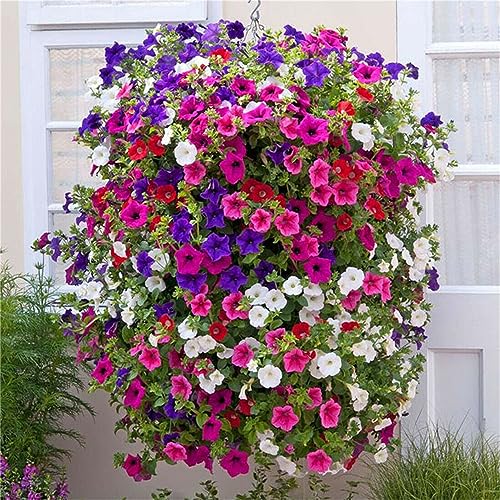
They often include both solid-colored and striped or speckled petunias for added visual interest.
Petunias in hanging baskets can bloom from early summer through late summer. With proper care, many varieties will continue flowering until the first frost, providing months of colorful displays.
These flowers thrive in full sun conditions. They produce the most abundant blooms when placed in locations that receive at least 6 hours of direct sunlight daily.
Many petunia varieties offer sweet fragrances and visual appeal.
This scent can enhance outdoor spaces, especially in the evening hours when the fragrance becomes more pronounced.
Pink and purple petunia mixes typically grow to heights of 8-10 inches.
Their trailing habit allows them to cascade beautifully over the edges of hanging baskets, creating a lush, full appearance.
The individual blooms can reach impressive sizes, with some varieties producing flowers up to 3.5 inches across. These large blooms create a bold visual impact even from a distance.
Petunias are relatively easy to maintain as hanging plants.
They require regular watering, as hanging baskets can dry out quickly, especially during hot summer days.
For the most impressive displays, gardeners should deadhead spent blooms regularly.
This practice encourages the plant to produce more flowers throughout the growing season.
Some hanging baskets combine pink and purple petunias with complementary plants like verbena.
These mixed baskets offer varied textures and an even more impressive visual display.
Modern petunia varieties have been bred for improved weather resistance.
Many can withstand light rain without significant bloom damage, making them more versatile for outdoor display.
When selecting a pink and purple petunia mix, gardeners can choose from compact varieties ideal for smaller spaces or trailing types that create dramatic cascades of color.
3. Verbena Hanging Basket
Verbena, with its clusters of tiny star-shaped flowers in vibrant pink and purple shades, makes a stunning addition to hanging baskets.
This plant cascades beautifully over the sides of baskets, creating a waterfall effect of color.
Verbena is known for its long blooming period, often flowering from spring until the first frost.
These plants thrive in full sun locations and can tolerate heat well. They prefer well-draining soil that doesn’t stay soggy.
Verbena plants in hanging baskets typically need regular watering, especially during the hot summer months.
Most verbena varieties grow between 8-12 inches tall but can spread up to 3 feet, making them perfect for hanging displays.
The trailing habit makes the colorful blooms visible from below, creating maximum impact for your outdoor space.
Verbena comes in several varieties with pink and purple flowers.
Trailing types like Verbena × hybrida and Verbena canadensis work particularly well in hanging arrangements. Their sprawling growth habit ensures your basket will look full and lush throughout the growing season.

Caring for verbena in hanging baskets requires consistent moisture.
The soil should never completely dry out, but it also shouldn’t remain waterlogged. A balanced, slow-release fertilizer applied monthly helps maintain continuous blooming.
Deadheading spent flowers encourages new blooms to form.
An occasional light trimming helps keep plants looking neat and promotes bushier growth with more flowers.
Simply snip back leggy stems to keep the plant compact and full.
Verbena attracts butterflies and hummingbirds to your garden space.
This makes hanging baskets filled with verbena beautiful and beneficial for pollinators. You’ll enjoy watching the wildlife activity around your colorful display.
Mixed hanging baskets that combine verbena with other trailing plants like petunias or calibrachoa create stunning combinations.
The different flower shapes add visual interest while maintaining the pink and purple color scheme. These mixed baskets provide dimension and texture.
Most verbena varieties are treated as annuals in cooler climates but may return in warmer zones.
With proper care, verbena might continue flowering year-round in mild winter areas. This makes them an excellent value for hanging basket displays.
For the best results, place verbena hanging baskets where they’ll receive at least 6 hours of direct sunlight daily.
Morning sun with afternoon shade works well in very hot climates to prevent wilting. Proper placement ensures the most vibrant flower production.
4. Fuchsia ‘Blue Eyes’
Fuchsia ‘Blue Eyes’ is a stunning trailing plant known for its showy double blossoms.
These flowers feature vibrant red sepals paired with lavender-blue petals, creating a dramatic bicolor effect that catches the eye from hanging baskets.
The plant’s flirtatious appearance is enhanced by long, wispy stamens that dangle below the flowers.
These 2-inch blooms appear in abundance throughout the growing season, making it an excellent choice for gardeners looking to add color to elevated spaces.
Fuchsia ‘Blue Eyes’ thrives in hardiness zones 7-10 but is commonly grown annually in cooler regions.
Many gardeners in colder climates enjoy its beauty during the warmer months or bring it indoors when temperatures drop.

This variety is particularly valued for its trailing habit, which allows it to cascade beautifully from hanging baskets and elevated containers.
The stems can reach significant lengths, creating a waterfall effect of foliage and flowers.
Gardeners appreciate that many suppliers grow these plants without harmful pesticides.
This makes them safer for both garden environments and the beneficial insects that might visit the blooms.
Care for Fuchsia ‘Blue Eyes’ includes providing partial shade and regular watering.
These plants prefer cooler conditions and may struggle in intense heat, making them perfect for porches and patios with morning sun and afternoon shade.
The combination of pink-red and purple-blue flowers creates a visually appealing display that complements many garden color schemes.
This versatile color palette allows the plant to pair well with other hanging basket favorites.
5. Trailing Purple Petunias
Trailing purple petunias are a stunning addition to any hanging basket or container garden.
These vibrant flowers cascade beautifully over the edges, creating a waterfall of purple blooms that can transform any outdoor space. They come in various shades, ranging from soft lavender to bold magenta.
Surfinia Trailing Giant Purple is a popular variety known for its enormous, vibrant fuchsia-purple flowers.
These impressive blooms spill generously over the sides of hanging baskets and containers, making a dramatic statement in any garden display.
Many purple petunias feature interesting patterns that add visual interest.
Some varieties showcase intricate veining in contrasting colors, while others might have green edges that create a striking border around the purple blooms.

Trailing petunias are relatively low-maintenance plants that offer abundant flowering throughout the growing season.
They prefer full sun conditions but can tolerate partial shade, making them versatile options for different garden locations.
Planting purple petunias in hanging baskets pairs beautifully with other trailing plants.
Consider combining them with silver potato vines for an elegant contrast that highlights the rich purple tones.
Choose baskets that allow the petunias to cascade at least 12-18 inches for maximum impact.
This showcases their trailing habit and creates that desirable flowing effect that makes hanging baskets so appealing.
Water requirements for trailing petunias are moderate.
They need consistent moisture but dislike being waterlogged. During the hot summer months, hanging baskets may require daily watering to keep the petunias looking their best.
Fertilizing every two weeks with a balanced, water-soluble fertilizer helps maintain vibrant blooms throughout the season.
This regular feeding schedule ensures your purple petunias remain lush and colorful.
Deadheading spent flowers encourages continuous blooming.
While many modern varieties are self-cleaning, removing faded blooms can still improve your trailing petunias’ overall appearance and flowering performance.
These versatile plants work well in various container styles beyond traditional hanging baskets.
Window boxes, tall planters, and wall-mounted containers all effectively showcase the trailing nature of purple petunias.
6. Elegant Hanging Verbena
Verbena is a garden essential that adds cheerful color to hanging baskets with very little fuss.
These long-blooming flowers come in many vibrant colors, with pink and purple being popular choices.
Their cascading habit makes them perfect for hanging displays where their small clustered blooms can spill over the edges.
Verbena flowers bloom in an impressive range of shades, including purple, pink, fuchsia, and burgundy.
Some varieties even feature multi-colored petals with speckles, adding visual interest to your hanging arrangement.

The small, clustered flower heads create a dense mat of color that can transform any outdoor space.
These plants prefer full sun but can tolerate some shade, making them versatile for different hanging locations around your home.
Verbena is known for its ability to bloom throughout the entire growing season, providing continuous color from spring through fall with minimal maintenance.
In hanging baskets, verbena creates a beautiful trailing effect as the stems extend outward and downward.
This spreading habit helps fill out baskets quickly and creates that desired cascading look that makes hanging plants so appealing.
When selecting verbena for hanging baskets, look for trailing or spreading varieties specifically.
These are bred to have a more pendulous growth habit that works best in suspended containers.
Caring for hanging verbena is straightforward.
They need regular watering but dislike staying too wet. For best results, allow the soil to dry slightly between waterings.
A few applications of fertilizer throughout the growing season will keep them blooming profusely.
Deadheading spent flowers can encourage more blooms, though many modern verbena varieties are self-cleaning.
Verbena pairs beautifully with other hanging basket favorites like petunias and osteospermum for a mixed planting with varied textures.
7. Lobelia ‘Purple Star’
Lobelia ‘Purple Star’ is a stunning hanging plant known for its cascading growth habit and vibrant purple-pink blooms.
This annual flowering plant creates a waterfall effect when placed in hanging baskets, making it an excellent choice for adding color to porches, patios, and balconies.
The plant produces masses of small, delicate flowers that bloom profusely throughout the summer months.
Each tiny flower has a distinctive two-lipped tubular shape that attracts hummingbirds, bees, and other beneficial pollinators to your garden space.
Lobelia ‘Purple Star’ typically grows 6-8 inches tall, but its trailing stems can extend up to a meter in length.

This impressive spread makes it perfect for hanging baskets where the stems can gracefully spill over the edges.
The plant features airy, fine-textured foliage that serves as an attractive backdrop for the countless purple-pink blooms.
This combination creates a cloud-like appearance that adds both color and texture to any hanging display.
Lobelia prefers cool conditions and performs best in partial shade, especially in warmer climates.
In cooler regions, the plant can tolerate full sun as long as it receives regular watering to keep the soil consistently moist.
For the best flowering display, plant Lobelia ‘Purple Star’ in well-draining soil enriched with organic matter.
Regular feeding with a balanced fertilizer will promote continuous blooming throughout the growing season.
This low-maintenance plant requires minimal care once established.
Remove spent flowers periodically to encourage new blooms and maintain a tidy appearance.
The plant may slow down flowering during the hottest part of summer but will typically rebound when temperatures cool.
Lobelia ‘Purple Star’ pairs beautifully with other hanging basket favorites like petunias, verbena, and bacopa.
The contrasting purple-pink flowers create eye-catching combinations, especially when planted alongside white or yellow flowering varieties.
8. Calibrachoa ‘Sweet Pink’
Calibrachoa ‘Sweet Pink’, commonly known as Million Bells, is a beautiful trailing plant with abundant pink trumpet-shaped flowers.
This variety showcases a delightful sweet pink color that brightens any hanging basket.
The flowers bloom continuously from spring until the first frost, making it a reliable choice for season-long color.
Calibrachoa plants have a compact growth habit with controlled vigor, making them perfect for hanging baskets.
Their tight internodes allow for more flowers to develop, creating a fuller appearance.
The ‘Sweet Pink’ variety grows to about 6-10 inches tall but can trail 12-24 inches, creating a stunning cascade effect.

These plants prefer full sun to part shade conditions and well-draining soil.
They’re relatively low-maintenance but do require regular watering, especially during the hot summer months.
Unlike some other trailing plants, Calibrachoa doesn’t need deadheading as its spent blooms naturally fall off.
Calibrachoa ‘Sweet Pink’ pairs wonderfully with other hanging basket companions like lobelia, verbena, and sweet potato vine.
The pink flowers create a beautiful contrast when planted alongside purple or blue flowering plants. They also complement taller plants such as purple fountain grass and salvias.
When purchasing Calibrachoa, look for healthy specimens in garden centers during spring.
Some retailers offer them in special containers with embedded nutrients that help the plants grow bigger and faster throughout the season.
These eco-friendly containers naturally break down faster in landfills than traditional plastic pots.
For best results, fertilize your Calibrachoa ‘Sweet Pink’ regularly with a balanced liquid fertilizer.
This helps maintain the plant’s vigor and promotes continuous blooming.
Be careful not to overwater as these plants are susceptible to root rot in consistently wet conditions.
Calibrachoa performs best with consistent moisture but needs good drainage.
This is especially important in hanging baskets as water can quickly drain away.
Check soil moisture regularly and water when the top inch feels dry to the touch.
While relatively pest-resistant, keep an eye out for aphids and whiteflies.
These can be treated with insecticidal soap if they become problematic.
The plant is also somewhat sensitive to pH, preferring slightly acidic soil conditions for optimal growth.
9. Trailing Fuchsia Varieties
Trailing fuchsias are perfect for hanging baskets with elegant, drooping flowers resembling tiny dancers.
From spring to fall, they produce dozens of brightly colored teardrop-shaped blooms, creating a stunning display of pink and purple hues.
The ‘Jollies’ series is especially popular for hanging displays. These varieties are known for their hardiness, good branching habits, and colorful pink and purple flowers cascading beautifully over the baskets’ sides.
Fuchsia ‘Annabelle White’ offers a lovely contrast option with white blooms that pair wonderfully with pink and purple varieties in mixed hanging displays.
This versatility allows gardeners to create dynamic hanging baskets with depth and visual interest.
The Aretes Belfort Fuchsia features large, single pink and purple blooms that dangle enticingly from trailing stems.
These vibrant flowers add a touch of elegance to any hanging basket arrangement.
Trailing fuchsias offer a bonus beyond their beauty – they’re highly attractive to hummingbirds.
Placing these hanging baskets near windows or patios provides entertainment as these tiny birds visit the dangling blooms.
Most trailing fuchsia varieties prefer partial shade, making them perfect for hanging baskets on covered porches or under trees.
They thrive in cooler temperatures and appreciate consistent moisture without becoming waterlogged.
For the most impressive displays, choose cascading or trailing fuchsia varieties bred explicitly for hanging baskets.
These types have been selected for their abundant flowering and graceful trailing habit that can extend 12-24 inches below the container.
Fuchsias in hanging baskets benefit from regular feeding with a balanced fertilizer.
This encourages continuous blooming throughout the growing season, ensuring your pink and purple display remains vibrant for months.
When choosing containers, select hanging baskets at least 10-12 inches in diameter to give trailing fuchsias plenty of room to grow.
The larger soil volume also helps maintain even moisture, which is important for these somewhat thirsty plants.
10. Begonia ‘Pink Delight’
Begonia ‘Pink Delight’ is a standout hanging plant known for its spectacular double blooms in warm rosy pink.
These impressive flowers can reach 5-6 inches across, creating a dramatic display as they cascade over the edges of hanging baskets.

Unlike many begonias, ‘Pink Delight’ offers a sweet scent, making it an exceptional choice for porches and patios where its fragrance can be enjoyed.
The plant continues flowering from summer until the first frost, providing months of colorful blooms.
The foliage of ‘Pink Delight’ is equally attractive.
Its leaves display beautiful pink and green hues, with particularly striking coloration on the undersides.
This adds visual interest even when the plant isn’t in full bloom.
This begonia variety thrives in hanging baskets, window boxes, and tall containers where its cascading habit can be showcased.
Gardeners appreciate its easy-growing nature, making it suitable for both beginners and experienced plant enthusiasts.
The bulbs establish quickly when planted, often showing new growth soon after planting.
Each bulb develops into a full plant with multiple blooms, creating a lush hanging display that draws attention with its vibrant pink color.
The versatility of ‘Pink Delight’ makes it a popular choice for adding color to outdoor spaces.
Its bright pink flowers stand out against its green foliage, creating a visually appealing contrast in container gardens.
For best results, ‘Pink Delight’ should be positioned where it receives some protection from harsh afternoon sun.
The plant prefers consistent moisture but doesn’t like to sit in waterlogged soil.

Conclusion
Pink and purple hanging plants add a special charm to any garden or indoor space.
Their vibrant colors create visual interest, while their trailing growth brings dimension to hanging baskets.
Plants like petunias, fuchsias, and begonias offer long-lasting blooms throughout the summer season.
Their self-cleaning flowers require minimal maintenance while providing maximum impact.
When selecting plants for your hanging baskets, consider mixing different varieties for an eye-catching display.
Combining trailing flowers with different textures and shades creates depth and visual appeal.
Remember to check the sunlight requirements for each plant.
Some flowering varieties thrive in full sun, while others prefer partial shade conditions.
Regular watering is essential for hanging baskets as they tend to dry out faster than ground plantings.
A consistent feeding schedule with appropriate fertilizer will help maintain vibrant blooms all season.
These pink and purple flowering plants will transform ordinary spaces into colorful sanctuaries with proper care.
Their cascading flowers bring beauty to porches, patios, and indoor spaces alike.

Hello there! I’m Elsa, and gardening is my passion. As an avid gardener, I created GardeningElsa.com to share my knowledge and experience with fellow enthusiasts. My website is a comprehensive resource for gardeners of all levels, offering expert advice on a wide range of topics, including plants, flowers, herbs, and vegetable gardening. Whether you’re a beginner looking to start your first garden or a seasoned pro seeking to expand your knowledge, GardeningElsa.com has something for everyone. Read more about me.