
Your hanging baskets looked full and lush in May. Now it’s July, and they’re a tangle of long, bare stems with a few flowers dangling at the tips.
If you’re asking yourself, “Why have my hanging baskets gone leggy?”, you’re not alone. This is one of the most common summer basket complaints.
The good news is that legginess is almost always fixable. In this guide, I’ll walk you through what causes it, how to cut a basket back the right way, and how to keep it compact and blooming until fall.
What Leggy Growth Looks Like
Leggy growth means long, thin stems with wide gaps between the leaves and most of the flowers bunched at the tips. The center of the basket often looks bare or brown while the edges trail far over the rim.
Leggy growth is easier to prevent than to fix, so follow my hanging basket care routine. When it’s time to replant, start with the best plants for hanging baskets.
Signs Your Basket Is Getting Leggy
Legginess creeps in slowly, so it’s easy to miss until it’s obvious. Watch for these early signs:
- Stems that keep getting longer but don’t branch
- Bigger spaces between leaf sets along each stem
- Flowers only at the ends of the stems
- A thin or empty-looking center when you look down into the basket
- Lower leaves turning yellow and dropping
- Stems that look pale, stretched or floppy
If you see two or three of these at once, it’s time to act. The sooner you step in, the faster the basket recovers.
Leggy vs. Healthy Trailing Growth
Not every long stem is a problem. Trailing plants like calibrachoa, bacopa and sweet potato vine are supposed to spill over the edge.
The difference is fullness. A healthy trailing basket has leaves packed tightly along the stems and plenty of branching. A leggy basket has long, sparse stems that look stretched and tired.
Tools You’ll Want on Hand
You don’t need much to fix a leggy basket. My advice is to keep two things ready before midsummer arrives.
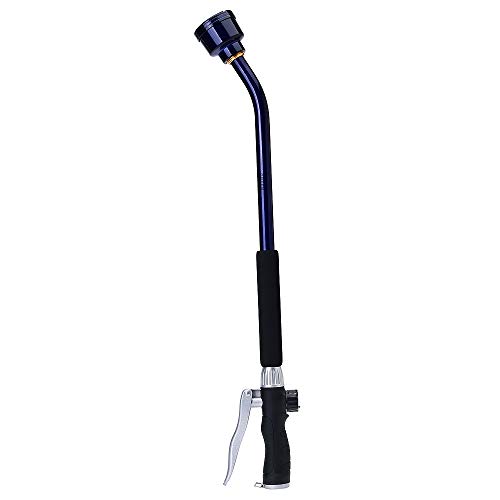
- Small garden snips: A pair with short, sharp blades makes it easy to pinch tips, deadhead and cut back stems cleanly without crushing them.
- A water-soluble flower fertilizer: After a cutback, plants need a quick supply of nutrients to push out new growth. A fertilizer you mix into your watering can works fast.
With those two items, you can handle nearly every leggy basket situation.

Not Enough Light
Low light is one of the biggest reasons baskets stretch. Plants grow long and thin as they reach toward the brightest spot they can find.
How Light Causes Stretching
When a sun-loving plant doesn’t get enough light, it puts its energy into growing taller instead of growing bushier. The stems lengthen, and the leaves space out.
You’ll often notice the basket leaning or growing heavier on one side. That side is facing the light source, usually the open edge of a porch.
Many popular basket plants need at least 6 hours of direct sun to stay compact. That includes petunias, calibrachoa, verbena, lantana, portulaca, scaevola, bacopa and ivy geranium.

Porch and Patio Problems
Covered porches are the classic trouble spot. A porch might feel bright to you, but the roof blocks much of the overhead sun.
Baskets hung under deep eaves, near large trees or on the north side of a house often get far less light than you’d think. If your sun-lovers are stretching, they probably need a sunnier spot.
Try this quick check: watch the basket at a few points during the day. Count how many hours it sits in direct sun, not just bright shade.
Matching Plants to Your Light
If you can’t move the basket, swap the plants instead. Choosing the right plants for the light you have is the simplest long-term fix.
| Light Level | Good Basket Plants |
|---|---|
| Full sun (6+ hours) | Petunia, calibrachoa, verbena, lantana, portulaca, scaevola, bacopa, ivy geranium |
| Part shade | Lobelia, begonia, fuchsia, torenia |
| Shade | Fuchsia, begonia, impatiens, torenia, ferns |
Another simple habit helps too. Rotate your basket a quarter turn every few days so all sides get their share of light. This keeps growth more even and stops one side from stretching out.
Skipping Pinching and Deadheading
Skipping pinching and deadheading lets plants grow long stems instead of side branches, and it signals them to slow down on flowering. Regular trims are what keep a basket dense.

Why Pinching Makes Plants Bushier
Every stem has a growing tip. As long as that tip is there, the plant sends most of its energy upward and outward along that one stem.
When you pinch off the tip, the plant responds by pushing out new shoots from the leaf joints below. One stem becomes two or three. Do that across the whole basket, and it fills in quickly.
Pinch just above a set of leaves. Remove about half an inch to an inch of the tip with your fingers or snips. Early in the season, every week or two is a good rhythm.
Why Deadheading Matters
Once a flower fades, many plants start making seeds. Seed production takes a lot of energy, and the plant puts less effort into new blooms and fresh growth.
Removing spent flowers keeps the plant focused on blooming. It also stops the basket from looking messy and brown.
For petunias, pinch off the whole spent flower including the small green swollen part at the base. That’s where the seed forms. If you only pull off the petals, the seed pod keeps developing.
If your basket has stopped flowering as well as stretching, you may want to read about why hanging plants lose their flowers. The causes often overlap.
Plants That Need It Most (and Least)
Some basket plants need far more attention than others. Here’s how common choices compare:
- Need regular deadheading: Older petunia types, geraniums, marigolds and some verbena
- Mostly self-cleaning: Calibrachoa, many newer petunia types, scaevola and bacopa
- Need pinching more than deadheading: Coleus, sweet potato vine and creeping Jenny
Even “self-cleaning” plants benefit from an occasional pinch. They drop their old flowers, but they can still get long and stringy by midsummer.
Midsummer Fatigue and Heat
Many baskets naturally run out of steam by midsummer. Heat stress, older stems and a crowded root zone all combine to make plants stretch and bloom less.
The Midsummer Slump
Baskets are planted tight for instant impact. By July, those plants have filled every inch of potting mix with roots, and the oldest stems have been flowering for months.
Older stems naturally lose leaves near the base and bloom only at the ends. That’s not a sign you did something wrong. It’s simply the plant’s life cycle in a small container.
This is why a midsummer cutback is standard practice. It resets the plant and gives you fresh growth for late summer and fall.
How Heat Adds to the Problem
Hot weather stresses basket plants in several ways. The mix dries out faster, roots heat up, and many plants slow their flowering when temperatures stay high.
Petunias and calibrachoa often get stringy during long heat spells. Lobelia and bacopa may stall or fade entirely in hot summers.

Baskets hanging against a sunny brick or stucco wall get extra reflected heat. Moving them to a spot with afternoon shade during the hottest weeks can help a lot.
Choosing Heat-Tough Plants
If your summers are long and hot, the right plant choices make a big difference. Lantana, portulaca, scaevola and many newer petunia types handle heat better than cool-season favorites.
For more ideas, check out my list of hanging plants that survive high temperatures. Picking tougher plants from the start means less legginess later.
A larger basket also helps. Baskets 12 to 16 inches or more hold more potting mix and water, so roots stay cooler and more evenly moist.
Feeding and Watering Problems
Too much nitrogen can push fast, floppy stems, while too little food or repeated drying out leaves plants weak and sparse. Both feeding and watering need to be steady in a hanging basket.

Too Much Nitrogen
Nitrogen fuels leafy, green growth. A fertilizer heavy in nitrogen can make plants grow quickly but stretch out, with lots of stems and fewer flowers.
Use a fertilizer made for flowering plants. These have a more balanced mix of nutrients that supports blooms as well as foliage.
Mix a slow-release fertilizer into the potting mix at planting. Then add a water-soluble flower fertilizer every 1 to 2 weeks in summer.
Too Little Food
The opposite problem is just as common. Baskets need frequent watering, and every watering washes nutrients out of the bottom.
By midsummer, a basket that hasn’t been fed regularly is often starved. Plants respond with weak stems, smaller leaves, fewer flowers and pale or yellow foliage.
If the older leaves are turning yellow too, nutrients may be the issue. My guide on hanging baskets turning yellow covers the different patterns and what each one means.
Watering Mistakes That Cause Legginess
Repeated drying out is hard on basket plants. Each time the mix goes bone-dry, plants drop lower leaves and lose some of their roots, which leaves stems bare at the base.
Check baskets daily in summer. Small baskets or baskets in heat or wind may need water twi