
Peat moss and mushroom compost look alike in the bag, but they do opposite jobs. For most garden beds, I recommend mushroom compost, because it adds organic matter, nutrients, and calcium.
Save sphagnum peat moss for containers, seed-starting mixes, and acid-loving plants, where its water-holding power and low pH help.
That’s why the “peat moss vs compost” question trips up so many gardeners. Peat is a sponge with almost no food in it.
Mushroom compost is a soil amendment that feeds and builds soil, and it leans alkaline and salty. Pick the wrong one and you can stunt seedlings or push blueberries into yellow, starving leaves.
The Short Verdict: Which One Should You Use?
Use peat moss when you need moisture control and low pH, and use mushroom compost when you want richer soil in beds. These two soil amendments rarely compete for the same spot in your garden.
Choose Peat Moss for Moisture and Specialized Mixes
I reach for peat moss in three places: potting mixes, seed-starting blends, and planting holes for blueberries, azaleas, and other acid lovers. Its pH runs about 3.5 to 4.5, and it holds many times its weight in water.
It’s also clean. Peat has no weed seeds and very few salts, so tender seedlings don’t get burned.
The catch is that peat adds almost no nutrients. Anything grown in it needs fertilizer.
Choose Mushroom Compost for Most Garden Beds
For vegetable beds, flower borders, and tired lawns, mushroom compost is my pick. It brings organic matter, slow-release nutrients, and calcium from the limestone or gypsum mushroom growers add.
It also loosens heavy clay and helps sandy soil hold water. If you want the full background on what mushroom compost is, it’s leftover growing material from commercial mushroom farms.
Just keep it away from acid-loving plants and young seedlings, since the salts and higher pH can hold them back.
How Do Their Properties Compare?
Peat is acidic, low in nutrients, and very absorbent, while mushroom compost is near neutral to alkaline, moderately fertile, and higher in salts. The table puts the key differences side by side.
| Property | Sphagnum peat moss | Mushroom compost |
|---|---|---|
| Soil pH | 3.5 to 4.5 (acidic) | About 6.5 to 8 (neutral to alkaline) |
| Nutrients | Very low | Moderate, slow release |
| Water retention | Very high | Moderate |
| Soluble salts | Very low | Moderate to high |
| Sustainability | Slow-renewing bogs | Recycled farm byproduct |
| Best uses | Pots, seed starting, acid lovers | Beds, lawns, clay or sandy soil |
pH, Nutrients, Water Holding, and Salts
Soil pH is the biggest split. Peat lowers pH, while mushroom compost often raises it because growers mix in limestone to help mushrooms grow.

For soil fertility, mushroom compost wins easily. It carries potassium, phosphorus, calcium, and magnesium, plus a little nitrogen.
For water retention, peat is the champ. It soaks up moisture and releases it slowly to roots, which is why it’s a base for most commercial potting soil.
Salts are where mushroom compost needs care. Penn State research on microgreens found spent mushroom compost had high salt levels that led to poor seed germination.
Cost, Sustainability, and Best Uses
Mushroom compost is cheap in bulk, especially in the Northeast and Mid-Atlantic. Pennsylvania grows roughly 63% of US mushrooms and produces about 1.1 million tons of spent mushroom compost every year.
Peat costs more because it’s harvested, mostly in Canada, then compressed and shipped. Prices have climbed as supply has tightened.
On sustainability, mushroom compost is the clear winner. It’s a recycled byproduct, while peat comes from bogs that take centuries to rebuild.
What Is Peat Moss, and How Does It Behave?
Sphagnum peat moss is partly decayed sphagnum moss dug from cool, wet peat bogs, mostly in Canada. It works as a sponge and a fluffer, and it does almost nothing else.
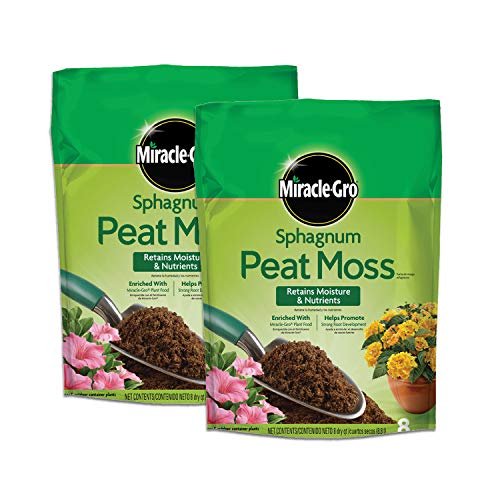
Don’t confuse it with live sphagnum moss or long-fiber sphagnum sold for orchids and hanging baskets. Those are the stringy surface plants, and they behave differently.
Why It Holds Water but Adds Few Nutrients
Peat’s spongy cell structure traps water and air at the same time. That mix improves soil aeration in containers and helps sandy soil hold onto moisture between waterings.
Bogs are wet, acidic, and low in oxygen, so the moss breaks down very slowly and nutrients wash away over the years. What’s left is mostly carbon with little nitrogen or phosphorus.
That’s useful in one way. Since peat starts nearly empty, growers can add exactly the fertilizer and lime a plant needs.
Why Dry Peat Can Be Hard to Rewet
Bone-dry peat repels water. Pour water on it and the water beads up and runs off the sides of the pot.
I always pre-wet peat before using it. Put it in a bucket or wheelbarrow, add warm water a little at a time, and knead it until it feels like a wrung-out sponge.
In pots, a mix that dries out completely can shrink from the edges. If that happens, set the pot in a tray of water for 30 minutes so it soaks up from the bottom.
What Is Mushroom Compost, and How Does It Behave?
Mushroom compost is the spent growing material left after a commercial mushroom harvest. Most bagged mushroom compost in US garden centers is this leftover substrate, steamed to kill pests and diseases before it leaves the farm.
The American Mushroom Institute lists the starting ingredients as hay, straw, horse bedding, poultry litter, cottonseed meal, cocoa shells, and gypsum. Growers also top the beds with a layer of peat moss and limestone, so there’s a little peat in most mushroom compost already.
What Spent Mushroom Substrate Adds to Soil
This compost is full of broken-down straw and manure, so it adds organic matter that improves soil structure. Clay gets crumblier, and sandy soil holds water longer.
It also brings calcium. Tomatoes and peppers appreciate that, since low calcium uptake is linked to blossom end rot.
Steaming kills off many organisms, so a fresh bag holds fewer beneficial microbes than homemade compost. Once it’s in the ground, earthworms and soil life move in quickly.
If you’re weighing it against richer options, my notes on mushroom compost vs manure and worm castings vs mushroom compost cover those trade-offs.
Why pH and Salt Levels Vary by Product
Every farm uses its own recipe, so no two batches are identical. Some test near pH 6.6, and others run above 7.5 from leftover limestone.
Salt levels swing too. Research on spent substrates found that fresh material taken straight from the mushroom house hadn’t finished composting and showed higher salts.
Aged or weathered product is gentler. If you buy bulk compost straight from a farm, let it sit outdoors for a few months so rain can rinse out some salts.
Alkaline soil in parts of the Southwest and Midwest gets more alkaline with heavy use, so go lighter there.
Which Works Better in Pots and Seed-Starting Mixes?
Peat moss is the better base for pots and seed starting, and mushroom compost works best as a small add-in for older plants. Seeds need a fine, clean, low-salt mix, which peat delivers and fresh mushroom compost doesn’t.
Why Peat Belongs in a Balanced Potting Mix
Most commercial potting soil and seed-starting mix starts with peat, then adds perlite or vermiculite for drainage and air. These growing media stay light, hold even moisture, and don’t crust over.
A simple seed-starting recipe I like:
- 2 parts sphagnum peat moss (or coco coir)
- 1 part fine vermiculite
- 1 part perlite
- 1 tablespoon garden lime per gallon if using peat, to raise the pH
Seed starting doesn’t need fertilizer right away, because the seed carries its own food. Start a diluted liquid feed once the first true leaves open.
When Compost Is Too Salty or Coarse for Seedlings
Fresh mushroom compost can be chunky and salty, which is hard on tiny roots. The Penn State microgreen study saw poor germination in straight spent mushroom compost.
Mixed in moderation, it works fine for bigger plants. A separate Penn State study replaced half to three-quarters of the peat with spent mushroom compost in a basil mix, with perlite making up half the pot, and got yields close to a commercial peat mix.
For containers, I’d stay around 1 part mushroom compost to 3 parts potting mix. Skip it for seed trays, ferns, and other salt-sensitive plants.
Which Should You Add to Garden Beds and Lawns?
Mushroom compost is the better choice for garden beds and lawns because it feeds soil life and builds structure, while peat mostly holds water.
Healthy garden soil is living soil, and the soil food web needs organic matter that breaks down into food. Mushroom compost supplies that, and peat breaks down too slowly to help much.
Improving Clay and Sandy Soil in Vegetable Beds
For vegetable beds, spread 2 to 3 inches of mushroom compost and work it into the top 6 to 8 inches of topsoil. Do this in early spring or fall, a few weeks before planting.
On clay soil, common in much of the Southeast and Midwest, the straw fibers open up pore space so roots and water move better. On sandy soil along the coasts, the organic matter holds moisture and nutrients longer.
I’d test pH first. If your soil already reads above 7.0, use 1 inch a year and mix in a neutral compost too.
My guides on how to prepare soil for a vegetable garden and mushroom compost in a vegetable garden go deeper on timing and amounts.
Top-Dressing Grass Seed Without Smothering It
For lawns, rake a thin layer, no more than 1/4 inch, of screened mushroom compost over bare spots or after core aeration. Grass seed needs light and contact with soil, so a thick blanket will smother it.
Water lightly every day until the seed sprouts. Fall is the best time for cool-season lawns in the Northeast and Pacific Northwest, and late spring suits warm-season grasses in the South.
Peat was once the standard seed cover, but it dries into a crust and blows away. Fine mushroom compost stays put and feeds young grass for months.
What About Blueberries and Other Acid-Loving Plants?
Peat moss is the better amendment for blueberries, azaleas, camellias, and rhododendrons, and mushroom compost is usually a poor fit. These acid-loving plants want acidic soil, roughly pH 4.5 to 5.5 for blueberries.
Why Mushroom Compost Can Be a Poor Fit
The limestone in mushroom compost pushes pH up, which works against everything blueberries need. Above pH 5.5, they struggle to take up iron, and new leaves turn yellow with green veins.
Salt adds to the problem. Blueberry roots are shallow and fine, and they burn easily in high-salt material.
If you want a list of crops that welcome it instead, see my roundup of plants that like mushroom compost. Tomatoes