
You can keep an air plant in glass, but the glass has to stay open.
No, air plants can’t live long-term in a closed terrarium, because a sealed lid traps damp, still air around the leaves and the base of the plant rots before it can dry. An open globe, bowl, or wide-mouth jar is the safe way to get the same look.
Air plants are Tillandsia, a group of roughly 650 species in the bromeliad family that grow on tree branches, rocks, and even power lines from the southern US through Mexico, Central and South America, and the Caribbean.
They’re built for breezy, bright spots where rain comes and goes fast. If you match that pattern indoors, your plant will grow slowly and steadily for years and eventually bloom.
Why a Sealed Terrarium Is the Wrong Home
A closed terrarium recycles its own water, which is perfect for ferns and moss and deadly for a plant that needs to dry out within hours. Below is what that means for long-term care and what a lid does to the air inside.
If you are stocking up, a pot with drainage holes is the first thing I would pick up.
The Short Answer for Long-Term Care
An air plant sealed in a jar can look fine for a couple of weeks. That’s because rot starts inside the base, where you can’t see it, and the outer leaves stay green until the very end.
Some sites suggest opening the lid every two or three weeks to “air it out.” I don’t recommend it. A plant that sits damp for days between airings still has a wet base, and that’s the exact spot where rot begins.
My advice is plain: if the container has a lid, leave the lid off for good, or pick a different plant for that jar.
Why a Lid Changes the Conditions Inside
A closed terrarium works as a tiny water cycle. Moisture evaporates, beads up on the glass, and drips back down, so humidity inside stays very high all the time.
That loop is the whole point for moss and ferns. For a Tillandsia, it means:
- Water from misting or soaking never fully evaporates off the leaves.
- Stale, humid air sits in the tight space where leaves meet the base.
- Fungi and bacteria get the steady dampness they need to grow.
- Fogged glass cuts down the light the plant needs to use the water it holds.
Why Do Air Plants Need Airflow?
Air plants need moving air because they drink through their leaves and then have to dry off quickly, the same way they would on a windy tree branch. Steady humidity can’t stand in for that wet-then-dry rhythm.

How Tillandsia Takes in Water Without Soil
Air plant leaves are covered in tiny scales called trichomes. When the leaves get wet, those scales open and pull in water and dissolved nutrients. When they dry, they close up to hold moisture in.
The roots don’t drink at all. They only work as anchors to grip bark or rock, which is why an air plant needs no soil or potting mix.
Air plants also “breathe” mostly at night. They open their pores in the dark to take in carbon dioxide, and a leaf still coated with water can’t do that well. A plant that stays wet overnight gets weaker over time.
Why Humidity Cannot Replace Drying Time
People often assume more humidity means less work. For air plants, humidity of 40 to 60% is pleasant, but airflow counts for more.
Damp air that never moves keeps the leaf surface and the base wet for many hours. In open air, a soaked plant dries in about 4 hours.
In a sealed container, the same plant can stay damp for a day or longer, and that long wet stretch is what leads to rot, the top killer of air plants.
Which Open Terrariums and Glass Globes Work?
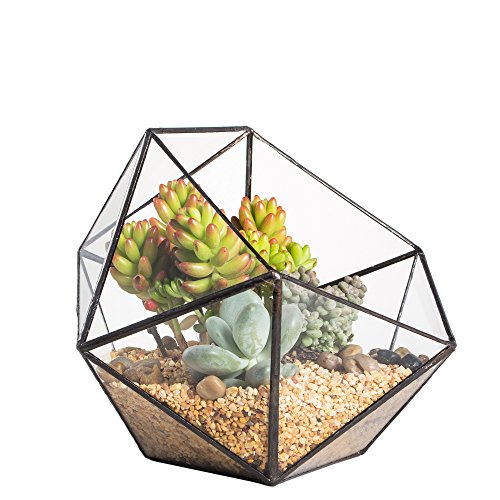
Any glass container with a wide opening that lets air flow freely around the plant can work. The best ones also let you lift the plant out in seconds.
Choose an Opening That Lets Air Move
Good choices include:
- Hanging glass globes with a large side opening
- Wide, shallow bowls where the plant sits near the rim
- Geometric open terrariums with one or more open panels
- Open jars or vases wide enough for your hand
- Open-sided Wardian-style cases
I’d pick the widest opening you can find. A small air plant in a big open bowl dries much faster than the same plant tucked into a narrow bud vase.
Skip cloches, cheese domes, corked bottles, and any jar you plan to keep capped. Don’t crowd several plants into one small globe either, since packed leaves hold moisture and spread rot from one plant to the next.
Make the Plant Easy to Remove for Watering
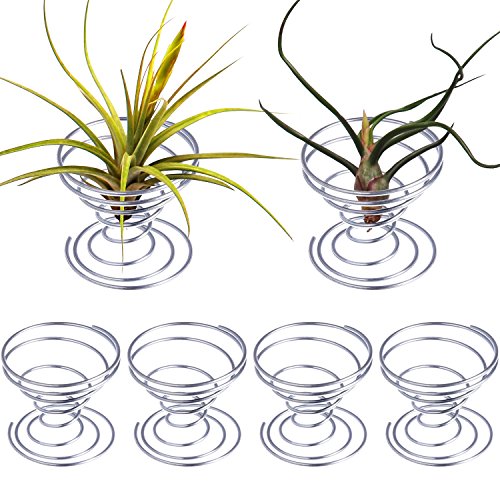
You’ll take the plant out every week, so make that step easy. Set it loose on top of the decor, or rest it in the fork of a small branch.
If you’d like a permanent setup, you can attach air plants to wood and set the whole piece inside an open bowl. Glue only the base, never the leaves, and use cooled hot glue or a plant-safe waterproof adhesive.
How Should You Water an Air Plant Displayed in Glass?
Water the plant outside the glass, dry it completely, and only then put it back. That one habit prevents most terrarium losses.
Water the Plant Outside the Container
Take the plant out and soak it in a bowl of room-temperature water for 20 to 30 minutes once a week. That schedule suits most average homes.
Use rainwater, pond water, bottled spring water, or filtered tap water. If your tap water is chlorinated, let it sit out overnight first. Avoid distilled water and softened water, because softened water carries salts that build up on the leaves.
Very fuzzy or bulb-shaped types like T. xerographica do better with a quick dunk or rinse. Their cupped bases hold water a long time.
Water in the morning so the plant has all day to dry. For plants fixed to a mount, see how to water air plants that are glued.
Shake Out Trapped Water and Dry the Plant Before Replacing It
After the soak, hold the plant by its base and give it a few gentle shakes. Then set it upside down or on its side on a towel or dish rack.
Keep it somewhere bright with good airflow, like a kitchen counter near a window. The leaves should feel fully dry within about 4 hours. If they’re still damp, a small fan on low speeds it up.
Only put the plant back once the base is dry to the touch. A damp plant inside glass dries far more slowly than one on an open rack.
Adjust Watering for Dry Indoor Air
Watch the plant more than the calendar. Leaves that curl or roll inward more than usual, look dull or wrinkled, or feel lighter in your hand all mean the plant is thirsty. My guide to air plant leaves curling covers that sign in more detail.
In very dry homes, add a thorough misting between weekly soaks. Most air plants can go about two weeks without water before real harm sets in. Here’s more on how long air plants can go without water.

How Much Light Does an Air Plant Need Behind Glass?
Air plants need bright, indirect light, and glass makes placement a bit trickier because it can magnify heat. Good light also helps the plant use the water it absorbs, which lowers rot risk.
Choose Bright Indirect Light
Place the container within a few feet of an east-facing window, or a bit back from a south- or west-facing one. A few hours of gentle morning sun is fine.
A dim shelf across the room won’t work for long. In low light, air plants decline slowly over months, and a plant that can’t use its water stays wet longer. You’ll find more on air plant light needs in my full guide.
Prevent Scorching in Hot Afternoon Sun
Hot afternoon sun shining through glass can scorch an air plant fast. The container traps heat, and a curved globe can focus the light on one spot.
Signs of sunburn include bleached patches, crispy brown tips, and a faded look. If you see them, move the glass a few feet back or hang a sheer curtain. Keep the spot between 50 and 90°F.
Use Grow Lights When Natural Light Is Limited
A full-spectrum LED or fluorescent light works well when windows are scarce. Set it 6 to 12 inches from the plant and run it about 12 hours a day.
LEDs give off little heat, which suits glass displays. A simple outlet timer keeps the schedule steady.
Which Tillandsia Types Suit an Open Display?
Both main groups of air plants can live in open glass, but they dry at different speeds and want different amounts of light and water. Leaf color is your best clue.
Greener Mesic Types and Their Moisture Needs
Mesic air plants have smoother, greener leaves with fewer trichomes. They come from humid forests and need more water and softer light. Examples include T. bulbosa, T. brachycaulos, and T. cyanea.
These seem like a natural fit for a damp jar, but they still rot when sealed. Keep them in open glass out of direct sun, and soak weekly, or a bit more often in dry homes.
T. bulbosa has a hollow, swollen base, so shake and dry it with extra care.
Silvery Xeric Types and Their Drying Needs
Xeric air plants look silvery and fuzzy, thanks to thick trichomes. They come from drier places and handle more light and lon