
Walk into any garden center and you’ll see walls of shiny tools, each one promising to make gardening easier. Here’s the truth: you only need a small set of the best gardening tools and equipment to grow a healthy garden.
The rest can wait until you know what you actually use.
In this guide, I’ll walk you through the core tools I recommend for new gardeners. I’ll explain what each one does, what to look for when you buy it, and how to keep it working for years.
My advice is simple: buy fewer tools, buy good ones, and take care of them.
The 10 Tools Every Gardener Needs
Every beginner needs ten basic tools: a hand trowel, bypass pruners, gloves, a hoe, a spade, a digging fork, a rake, a hose with a watering wand, a watering can, and a wheelbarrow. A kneeler is a smart bonus for your knees and back.
When people ask me about the best gardening tools and equipment for a first garden, this is the list I give them. It covers digging, planting, cutting, watering, weeding, and hauling. That’s almost every job you’ll face in a typical backyard.
The Core Starter Kit
If you only buy two tools this season, make them a hand trowel and a pair of bypass pruners. A hand trowel handles planting seedlings, digging small holes, and scooping soil into pots. Bypass pruners snip herbs, deadhead flowers, and trim small branches cleanly.
From there, add the rest as your garden grows. Here’s the full list at a glance:
| Tool | Main Job | Priority |
|---|---|---|
| Hand trowel | Planting, small digging | Must-have |
| Bypass pruners | Cutting live stems | Must-have |
| Gloves | Hand protection | Must-have |
| Hoe | Weeding, shaping soil | High |
| Spade | Digging, edging beds | High |
| Digging fork | Loosening soil, turning compost | High |
| Rake | Leveling soil, gathering leaves | High |
| Hose with watering wand | Gentle watering | Must-have |
| Watering can | Seedlings, containers | Must-have |
| Wheelbarrow | Hauling soil, mulch, compost | Medium |
| Kneeler (bonus) | Comfort while working | Medium |
How Your Garden Size Changes the List
Not everyone needs all ten right away. If you’re growing on a balcony or patio, a trowel, pruners, gloves, and a watering can may be all you need. My guide to small-space vegetable gardening covers that setup in more detail.
A full in-ground plot is different. You’ll want the spade, fork, rake, and wheelbarrow early on. If you’re planning that kind of garden, read my tips on starting a vegetable garden in your backyard before you shop.

What to Look for When Buying
Good tools share a few traits. Look for steel heads, solid handles, and a firm connection between the two. A wobbly head is a sign the tool won’t last.
- Forged or stainless steel heads hold up better than thin stamped metal.
- Comfortable grips reduce blisters and hand fatigue.
- Replaceable parts like springs and blades extend a tool’s life.
- The right weight matters. Pick up the tool and mimic using it before you buy.
Digging and Planting Tools
The essential digging and planting tools are a hand trowel, a spade, and a digging fork. Together they handle everything from tucking in a single seedling to breaking ground for a brand-new bed.

Hand Trowel
The hand trowel is the tool you’ll reach for most. Use it to plant transplants, dig holes for bulbs, mix amendments into small spaces, and fill containers.
Look for a narrow, pointed blade if you have rocky or compacted soil. Wider blades move more soil per scoop in loose ground. Some trowels have depth markings stamped on the blade, which is handy for planting bulbs and seeds at the right depth.
The joint between the blade and handle is the weak spot. A one-piece design or a blade that runs deep into the handle won’t bend when you pry at a stubborn root.
Spade and Shovel
A spade has a flat, squared blade with a straight edge. It’s perfect for edging beds, cutting through sod, and digging straight-sided holes. A shovel has a rounded, pointed blade that’s better for scooping and moving loose material like soil or mulch.
For beginners, I suggest starting with a spade. It does most digging jobs well and gives you clean bed edges. Add a shovel later if you find yourself moving piles of material often.
Check for a foot tread on top of the blade. That flat lip lets you press down with your boot without hurting your foot. A D-shaped handle gives you better control, while a long handle gives you more leverage.
Digging Fork
A digging fork has four sturdy, flat tines. It loosens compacted soil without slicing through it the way a spade does. That keeps soil structure and earthworm tunnels more intact.
I also use a digging fork to lift root crops like potatoes and carrots, divide perennials, and turn a compost pile. It’s one of the most versatile tools in the shed.
Don’t confuse it with a pitchfork. A pitchfork has thin, curved tines meant for tossing straw and hay. It will bend if you try to dig with it.
| Tool | Best For | Not Great For |
|---|---|---|
| Hand trowel | Seedlings, bulbs, containers | Large digging jobs |
| Spade | Edging, cutting sod, straight holes | Scooping loose material |
| Shovel | Moving soil, mulch, gravel | Clean edges |
| Digging fork | Loosening soil, harvesting roots, compost | Moving loose material |
Cutting and Pruning Tools
For cutting and pruning, start with bypass pruners for live stems. Add loppers for thicker branches and a pruning saw for anything larger.
Bypass Pruners
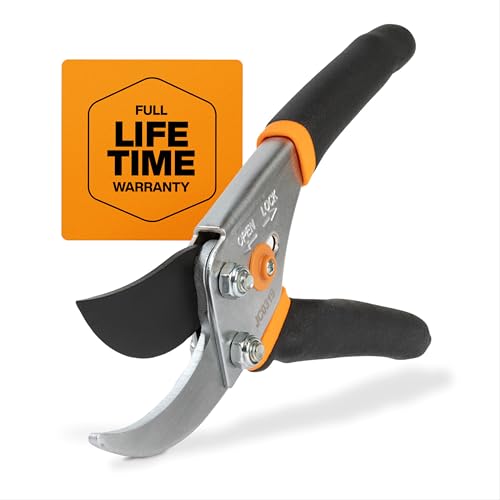
Bypass pruners work like scissors. Two curved blades slide past each other to make a clean cut. That clean cut matters because it helps live plants heal faster and lowers the risk of disease entering the wound.
Use bypass pruners for harvesting herbs, cutting flowers, trimming tomato suckers, and shaping small shrubs. Most hand pruners handle stems up to about the thickness of a finger.
Look for pruners that fit your hand. Many come in small and large sizes, and some are designed for left-handed gardeners. A locking latch keeps the blades closed when not in use, and a replaceable blade and spring add years of life.
Anvil Pruners
Anvil pruners have one sharp blade that closes down onto a flat surface, like a knife on a cutting board. They crush as they cut. That makes them a poor choice for live, green stems.
Where anvil pruners shine is dead wood. Dry, brittle branches cut easily with an anvil design, and the crushing action doesn’t matter on wood that’s already dead. If you clean up a lot of old shrubs, a pair can be useful.
For most beginners, though, bypass pruners are the first pair to buy. You can add anvil pruners later if you need them.
Loppers and Pruning Saws
Loppers are basically pruners with long handles. The extra length gives you leverage to cut branches too thick for hand pruners. Like hand pruners, they come in bypass and anvil styles, and the same rules apply.
For branches thicker than loppers can handle, use a folding pruning saw. These saws cut on the pull stroke, which gives you more control. A folding blade is safer to carry and store.
- Hand pruners: small, live stems
- Loppers: medium branches
- Pruning saw: large branches
- Garden shears or scissors: herbs, flowers, light harvesting
A simple rule: never force a tool beyond its size. Straining pruners on a thick branch damages both the plant and the blades.
Watering Tools
The two watering tools every beginner needs are a hose with a watering wand and a watering can. The wand gives a gentle shower for beds, while the can handles seedlings, containers, and spot watering.
Hose and Watering Wand
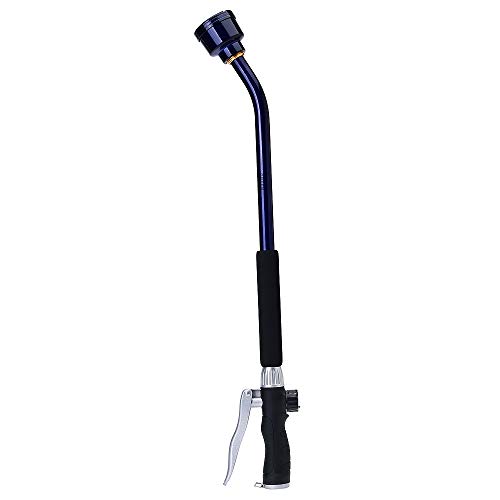
A good garden hose should reach every corner of your garden without stretching. Measure the distance from your spigot to the farthest bed before you buy. Kink-resistant hoses save a lot of frustration.
A watering wand attaches to the end of the hose and extends your reach. It delivers a soft, rain-like spray that won’t wash soil away from roots. It also lets you aim water at the base of plants without bending over.
For edible plants, I always recommend watering the soil, not the leaves. Wet foliage can encourage fungal disease, especially in humid weather. A wand makes it easy to direct water exactly where roots need it.
Watering Can
A watering can is perfect for small jobs. Use it for seed trays, potted herbs, houseplants, and newly planted transplants that need a careful drink.
Look for a can with a removable rose, the perforated cap on the spout. The rose breaks water into a gentle shower for seedlings. Remove it when you want a steady stream at the soil line.
Size matters here. A full can is heavy, so choose one you can carry comfortably. A two-gallon can is a good middle ground for most gardeners.
Rain Barrels and Soaker Hoses
Once you have the basics, consider collecting rainwater. One inch of rain on 1,000 square feet of roof yields about 600 gallons of water. Most rain barrels hold 50 to 60 gallons, so even a small storm can fill one fast.
Use a fine screen on top to keep out mosquitoes and debris. Raise the barrel on blocks for better water pressure, and direct overflow away from your home’s foundation.
Drain it before freezing weather. Most states allow rain barrels, but a few regulate collection, so check your state and local rules first.
Soaker hoses are another smart upgrade. They seep water slowly along their length, right at the soil. Lay them under a layer of mulch and you’ll lose less water to evaporation. My post on mulching a vegetable garden explains how to pair the two.
| Watering Tool | Best Use | Beginner Priority |
|---|---|---|
| Hose with watering wand | Beds and rows | Must-have |
| Watering can | Seedlings, containers | Must-have |
| Soaker hose | Low-effort bed watering | Nice to have |
| Rain barrel | Free water for the garden | Nice to have |
Weeding Tools
The best weeding tools for beginners are a hoe for open beds and a hand weeder for tight spots and deep roots. Pair them with mulch and regular attention, and weeds stay manageable.