
Few things sting like walking out to your garden and finding your kale shredded or your squash vines wilting overnight.
The good news is that you can keep bugs out of your vegetable garden naturally, without reaching for harsh chemicals that also kill the helpful insects you want around.
My advice is to think in layers. Healthy soil, smart barriers, a little hand work, and a welcome mat for beneficial insects will handle most problems. Gentle treatments come last, and only when you know exactly what you’re dealing with.
Start With Healthy Plants
Strong, well-grown plants resist pests far better than stressed ones. Good sun, good soil, and steady water are your first line of defense, and a couple of simple products fill in the gaps.
Why Stressed Plants Attract Pests
Insects often target plants that are already struggling. A tomato short on water or a cabbage in compacted soil gives off signals that pests pick up on. It also has fewer resources to outgrow damage.
Overfeeding causes problems too. Too much nitrogen produces soft, leafy growth that aphids love. It can also leave you with lots of leaves and very little fruit.
Get the Basics Right
Most vegetables need 6 to 8 or more hours of sun. Fruiting crops like tomatoes and peppers do best with about 8 hours, while leafy greens get by with 4 to 6.
Your soil should be loose, well-drained, and rich in organic matter. Most vegetables like a pH between 6.0 and 6.8, so test your soil every 2 to 3 years. Add lime to raise pH or elemental sulfur to lower it, following the test results.
Each year, add 2 to 3 inches of compost. Work it into the top 6 to 8 inches, or simply top-dress if you garden no-dig. If you’re new to this approach, my guide to starting an organic garden walks through the setup.
Water and Mulch for Resilience
Plan on about 1 inch of water a week, and 1 to 2 inches during heat waves or in sandy soil. Water deeply and less often, in the morning, right at the soil line.
Drip lines or soaker hoses are best because they keep leaves dry.
Check moisture by pushing a finger 2 to 3 inches into the soil. If it feels dry at that depth, it’s time to water.
Mulch with 2 to 3 inches of organic material like seed-free straw, shredded leaves, or compost. Keep it 1 to 2 inches away from stems, since mulch piled against plants can shelter slugs and cutworms.
Two Products Worth Keeping on Hand
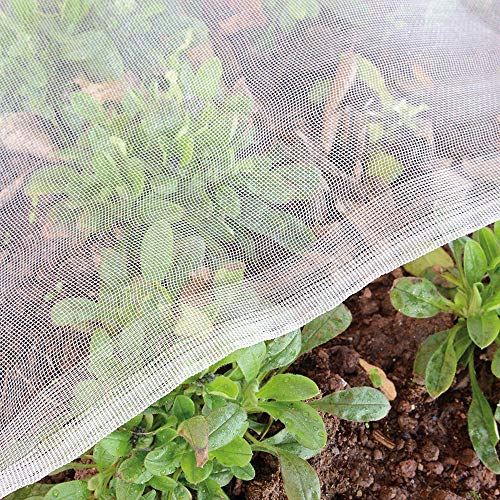
I recommend two simple supplies for every vegetable gardener. The first is insect netting, a fine mesh that physically blocks pests while letting in light, air, and water.
The second is insecticidal soap, a ready-to-use spray labeled for vegetables. It kills soft-bodied pests like aphids on contact and breaks down quickly. Keep it for spot treatments, not routine spraying.
Use Physical Barriers
Physical barriers stop pests before they ever reach your plants. They are one of the most reliable ways to keep bugs out of your vegetable garden naturally, especially for crops that pests target year after year.
Row Covers and Insect Netting
Floating row covers are lightweight fabrics draped over plants or supported on hoops. Insect netting works the same way but breathes better in summer heat. Both block flea beetles, cabbageworms, cucumber beetles, and many other flying pests.
Put covers on at planting time, not after you spot damage. Bury or weigh down the edges so pests can’t crawl underneath. A gap of even an inch is an open door.
Here’s the catch. Row covers must come off when flowering crops that need bees start to bloom. Squash, cucumbers, and melons won’t set fruit without pollinators, so uncover them once you see female flowers.
| Crop Type | Cover Timing | When to Remove |
|---|---|---|
| Cabbage, kale, broccoli | At planting | Can stay on all season |
| Lettuce, spinach, arugula | At planting | Can stay on all season |
| Squash, cucumbers, melons | At planting | When flowers open |
| Eggplant | At planting | When flowers open or plants outgrow cover |
| Tomatoes, peppers | Optional | Before flowering if used |
Cutworm Collars
Cutworms chew through young stems at the soil line, often overnight. A simple collar around each transplant stops them cold.
Use a cardboard tube or a strip of stiff paper about 3 inches tall. Push it an inch into the soil around the stem. Remove it once the stem thickens and the plant is well established.
Barriers for Slugs and Larger Pests
Slugs and snails glide right over most fabrics, so they need a different plan. Copper strips around raised bed edges can discourage them. Keeping mulch thin near stems and removing boards or debris also reduces hiding spots.
Bigger animals are a separate problem from insects. If furry visitors are digging up your beds, my tips on keeping raccoons and squirrels out cover fencing and other deterrents.
Hand-Pick and Spray Off Pests
Hand-picking and a strong blast of water remove many pests quickly and safely. These methods cost nothing and harm nothing but the bugs.

Know What You’re Looking At
Identify the pest before you act. Many bugs in the garden are harmless or even helpful, and treating the wrong insect wastes time.
Walk your garden at least once a week and flip leaves over. Look at the undersides, where eggs and young insects hide. A guide to common vegetable garden pests can help you put a name to what you find.
If you see ragged holes in your brassicas, read my breakdown of what is eating my cabbage leaves. Cabbageworms, loopers, slugs, and flea beetles all leave different signs.
Hand-Picking Tips
Larger pests are easy to pick off by hand. Tomato hornworms, Colorado potato beetles, squash bugs, Japanese beetles, and Mexican bean beetles all fit this category.
- Drop pests into a bucket of soapy water.
- Check early in the morning, when beetles move slowly.
- Squash egg clusters on leaf undersides, especially squash bug eggs.
- Wear gloves if you’re squeamish.
- Go out at night with a flashlight for slugs and snails.
Consistency matters more than effort. A few minutes every couple of days beats one long session after the population explodes.
The Water Spray Method
A strong spray from the hose knocks aphids, spider mites, and whiteflies right off plants. Most can’t climb back up.
Aim at the undersides of leaves, where these pests cluster. Do this in the morning so foliage dries quickly. Repeat every few days until numbers drop.
Be gentle with seedlings and tender greens. A firm spray is fine for established plants, but it can damage young ones.
Attract Beneficial Insects
Beneficial insects eat or parasitize pests for free. Planting flowers they love brings them in and keeps them working all season.
Meet Your Garden Allies
Ladybugs and their larvae eat huge numbers of aphids. Lacewing larvae feed on aphids, mites, and small caterpillars. Hoverfly larvae are also aphid hunters.

Parasitic wasps are tiny and don’t sting people. They lay eggs inside pests like caterpillars and aphids. If you spot a hornworm covered in white cocoons, leave it alone, because more wasps will hatch.
| Beneficial Insect | Main Pests Eaten | Flowers That Attract It |
|---|---|---|
| Ladybugs | Aphids, mites, small larvae | Dill, yarrow, alyssum |
| Lacewings | Aphids, mites, small caterpillars | Dill, cilantro, yarrow |
| Hoverflies | Aphids | Alyssum, cilantro, dill |
| Parasitic wasps | Caterpillars, aphids | Alyssum, dill, yarrow |
Plant a Beneficial Border
Small-flowered plants work best, because many beneficials have short mouthparts. Sweet alyssum, dill, cilantro, and yarrow are excellent choices.
Tuck alyssum along bed edges and between rows. Let some cilantro and dill bolt and flower instead of pulling them. Yarrow is a tough perennial that fits nicely at the garden’s border.
Aim for something blooming from spring through fall. Steady flowers mean beneficials stick around instead of moving on.
Don’t Spray Away Your Helpers
Broad-spectrum insecticides kill good bugs along with bad ones. Pest numbers often rebound faster than predators, leaving you worse off.
Tolerate a few pests. Beneficials need something to eat, and a small aphid colony can feed the next generation of ladybugs. This balance is a big part of creating a sustainable garden.
Rotate Crops and Clean Up
Rotating crops and cleaning up debris breaks pest life cycles. Many insects overwinter in soil or plant litter near their favorite crops.
How Crop Rotation Helps
Pests like Colorado potato beetles and some cabbage pests emerge in spring right where their host plants grew. Moving those crops forces pests to search for food.
Rotate by plant family, not by individual crop. Tomatoes, peppers, eggplant, and potatoes all belong to one family. Cabbage, broccoli, kale, and cauliflower belong to another.
Try to keep each family out of the same spot for 3 years. Even in a small garden, shifting crops to the other end of a bed helps.
| Year | Bed 1 | Bed 2 | Bed 3 |
|---|---|---|---|
| Year 1 | Tomato family | Cabbage family | Beans and peas |
| Year 2 | Beans and peas | Tomato family | Cabbage family |
| Year 3 | Cabbage family | Beans and peas | Tomato family |
Fall and Seasonal Cleanup
Remove spent plants promptly, especially diseased or heavily infested ones. Squash vines, cabbage stumps, and fallen fruit give pests a place to spend the winter.
Toss infested material in the trash rather than the compost pile. Most home compost doesn’t get hot enough to kill eggs and larvae.
Pull weeds around the garden edges too. Many pests use weeds as backup food and shelter.
Keep Moisture-Loving Pests in Check
Slugs, snails, earwigs, and pill bugs thrive in damp debris. Clearing old boards, piled leaves, and soggy mulch reduces their numbers.
Water in the morning so the soil surface dries by evening. If roly-polies are nibbling your seedlings, my guide to getting rid of pill bugs has more targeted tips.
Gentle Treatments That Work
When prevention isn’t enough, a few low-impact treatments can handle stubborn pests. Use them on specific problems, follow the label, and spray only what needs it.