
A dying ZZ plant almost always has a water problem, and most of the time it’s too much water.
If your ZZ plant is dying, the most likely cause is rhizome and root rot from soil that stayed wet too long, and you can often save it by cutting away the mushy parts and repotting the firm rhizomes in dry, fast-draining mix.
Zamioculcas zamiifolia stores water in thick, potato-like rhizomes under the soil. Those rhizomes let it survive weeks of drought.
They also let it hide rot for a long time, so the leaves can look fine while the base is already failing. Start with the squeeze test below, then match what you see to the symptom sections that follow.
First Check: Are the Rhizomes and Stems Firm or Mushy?
Firmness tells you more than leaf color does. A ZZ with firm stems and firm rhizomes is stressed but alive, while soft, brown, or smelly tissue means rot, and that needs action this week.
How to Check a Rhizome Without Damaging It
Start above the soil. Pinch each stem gently right at the soil line between your thumb and finger. A healthy stem feels hard, like a fresh celery stalk.
Next, tip the pot on its side and ease the plant out. If it’s stuck, run a butter knife around the inside edge. Never pull hard on the stems, because they snap at the base.
Brush off the soil with your fingers so you can see the rhizomes. Then squeeze each one lightly. You only need enough pressure to feel whether it gives.
Wear gloves while you do this. The sap can irritate skin, and the whole plant contains calcium oxalate crystals.
What Firm, Shriveled, and Mushy Tissue Tell You
Each texture points to a different problem, so here’s how I read them:
| What you feel | What it looks like | What it means |
|---|---|---|
| Firm and solid | Cream to pale tan inside | Healthy tissue |
| Wrinkled but firm | Shrunken, dull skin | Thirsty plant using up stored water |
| Soft or squishy | Brown or black, may smell sour | Rot from wet soil |
A wrinkled rhizome is good news. It means the plant is dry, and a deep watering fixes it.
A mushy rhizome is a different story. Rot spreads from tissue to tissue, so go straight to the rescue steps in the next section.
How to Rescue Mushy Stems and Rotting Rhizomes
An overwatered ZZ plant can come back as long as some rhizomes are still firm. You’ll remove every soft piece, let the cuts dry, and repot into dry, well-draining soil.

Why Wet Soil Causes ZZ Plant Root Rot
Roots need air as much as they need water. When soil stays soggy for days, the air spaces fill with water and the roots start to suffocate. Fungi and bacteria that live in soil then move into the weakened tissue.
Overwatering and poorly drained potting mix are the top causes of root rot in houseplants. ZZ plants are extra sensitive because their rhizomes are already full of water.

The usual triggers are easy to spot:
- A pot with no drainage hole
- Water left sitting in the saucer
- Dense, peaty potting soil that holds moisture for weeks
- A pot much bigger than the root ball
- Watering on a set schedule during winter, when growth slows
How to Remove Rot and Repot Healthy Rhizomes
Follow these steps as soon as you find soft tissue:
- Stop watering right away.
- Remove the plant from the pot and shake off all the old soil. Throw that soil out.
- Clean your scissors or a sharp knife with rubbing alcohol.
- Cut away every soft, brown, or black section. Keep cutting until you see clean, pale tissue all the way through.
- Wipe the blade with alcohol between cuts so you don’t spread rot to healthy parts.
- Cut off any mushy stems at their base.
- Set the plant on newspaper in a dry, shady spot for 1 to 2 days so the cuts can seal over.
- Repot in a fresh cactus and succulent potting mix. I like adding a few handfuls of perlite for extra air.
- Use a pot with drainage holes, only 1 to 2 inches wider than the rhizome cluster.
Terra cotta works well here because the clay pulls moisture out of the soil. If you want more detail on mixes, see my picks for the best potting soil for a ZZ plant.
When to Water Again After Repotting
Wait at least 7 days before watering a rescued plant. The cuts need time to heal, and the rhizomes still hold plenty of water.
After that first week, water deeply only when the soil is dry all the way down. A soil moisture meter or a wooden chopstick pushed to the bottom of the pot takes the guesswork out of it.
Indoors, that often works out to every 2 to 3 weeks in spring and summer and once a month or less in winter. My guide on how often to water a ZZ plant covers seasonal timing in more detail.
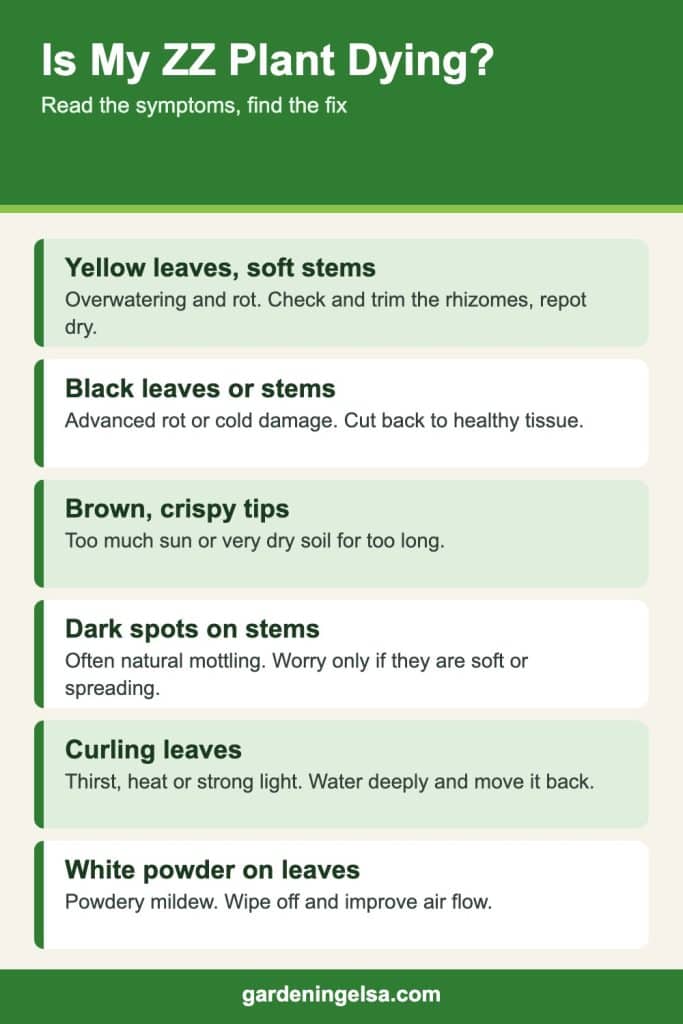
What Do Yellow Leaves Mean?
Yellow leaves mean the plant is pulling resources out of older growth. The soil tells you why, so check it before you change anything.
Yellow Leaves with Wet Soil
Yellowing that starts on the lower leaflets and moves up, with damp soil underneath, is the classic sign of overwatering. Squeeze the stem bases. If any feel soft, treat the plant for rot as described above.
If the stems are still firm, you’ve caught it early. Let the soil dry out completely and empty the saucer. Remove yellow leaflets with clean scissors, since they won’t turn green again.
Yellow Leaves with Dry Soil or Recent Stress
Yellowing on a plant with bone-dry soil and wrinkled rhizomes points to a long drought. Water deeply and the new growth will stay green.
Other causes include a recent move, repotting, or a few hours of hot afternoon sun. One or two old leaves yellowing now and then is just normal aging. You can read more on why a ZZ plant turns yellow, including nutrient problems.

Why Are the Leaves or Stems Turning Black?
Black tissue on a ZZ comes from two main causes: rot moving up from wet soil, or cold damage. Where the black starts tells you which one you’re dealing with.
Black, Soft Bases That Signal Rot
Blackening that begins at the soil line and climbs the stem is rot. The stem usually feels soft and may bend or collapse.
Cut that stem off at the base, then unpot the plant and check every rhizome. Black at the base almost always means some tissue below the soil is rotting too.
If you grow the ‘Raven’ variety, new shoots come up bright green and turn near-black as they mature. That’s natural, and those stems stay firm and glossy.
Blackened Patches After Cold Exposure or Drafts
Black or dark, water-soaked patches on leaves that sat near a cold window or door are cold damage. ZZ plants like 65°F to 85°F, and tissue starts to suffer below about 50°F.
This happens a lot in the Northeast and Midwest from November through March. Leaves touching frosty glass and plants near exterior doors take the worst of it. Cold air from AC vents can do the same in the Southeast and Southwest during summer.
Move the plant at least a foot from the glass and away from vents. Trim the damaged leaflets once you can see which ones aren’t recovering. Keep watering light, because cold, wet soil sets up rot.
What Causes Brown, Crispy Leaves and Tips?
Crispy brown tissue means a leaf lost water faster than it could replace it. That happens from long dry spells or harsh direct sun, while soft brown patches point back to overwatering.
How to Tell Drought Damage from Sun Scorch
Look at where the browning shows up:
- Drought damage: brown, dry tips and edges spread across the whole plant, with dry soil and wrinkled rhizomes.
- Sun scorch: bleached, tan, or brown patches only on the leaves facing the window, often in the center of the leaflet.
Sun scorch is common on ZZs set in south- or west-facing windows, especially in the Southwest. Burned spots don’t heal, but the plant will grow new leaves once you move it.
Dry air from winter heating adds to tip burn, too. Fertilizer salt buildup shows up as a white crust on the soil and browning that starts at leaf edges.
How to Rehydrate a Dry ZZ Plant
To revive a dehydrated ZZ plant, water slowly until it runs out the drainage holes. Wait 10 minutes and water again so the dry soil soaks it up.
If the mix has shrunk away from the pot sides, bottom water instead. Set the pot in a few inches of water for 20 to 30 minutes, then let it drain fully.
The rhizomes should firm up within a few days. Go back to normal watering after that, and don’t make up for lost time by watering again too soon.
Why Are the Leaves Curling?
Curling leaves are the plant’s way of saving water. It’s reacting to thirst, heat, or too much light, and less often to rot that keeps the roots from drinking.
Check Dry Soil, Heat, and Direct Sun
Work through these checks in order:
- Push a finger or meter 2 inches into the soil. Dry soil plus curling means thirst.
- Check for a heat source. Radiators, heating vents, and sunny windowsills in summer all dry leaves fast.
- Notice which side curls. Curling only on the window side points to too much light.
- If the soil is wet and leaves still curl, squeeze the stems. Softness means the roots can’t take up water, and you’re back to a rot check.
How to Adjust Water and Light Without Overcorrecting
Make one change at a time and give it 2 weeks. Adding water and moving the plant at once makes it hard to tell what helped.
For thirst, water deeply once and then wait for the soil to dry. For light, move the ZZ to bright indirect light, such as a few feet back from a south window or right beside an east window. A sheer curtain works too.
Don’t swing into overwatering. Curled leaves often uncurl in about a week, but badly creased ones may stay bent. My page on ZZ plant light requirements explains how to judge light in each room.
Are Dark Spots on the Stems Normal?
Dark speckles and streaks on ZZ stems are usually normal. Many plants have natural mottling, especially on older stems and near the base.
Natural Mottling vs. Soft or Spreading Spots
Use the pinch test on each spot. Here’s how to tell them apart:
- Normal mottling: dark purple, brown, or black flecks spread evenly along the stem. The surface is smooth and hard, and the pattern doesn’t change much over weeks.
- Rot: spots that feel soft, sunken, or wet. They grow bigger, run together, or start near the soil line.
- Scale insects: raised bumps you can pop off with a fingernail.
Take a phone photo of the stems today and compare it next week. If spots haven’t grown and the tissue stays firm, leave them alone.
Soft or spreading spots mean that stem should come off at the base. Then check the rhizomes underneath for more rot.
Why Are the Stems Drooping, Leaning, or Falling?
A ZZ that’s flopping over most often has rot at the base. Thirst and weak, stretched stems from low light come in second and third.
Compare Rot with Thirst and Low Light
Each cause feels different when you handle the stems:
| Cause | Stem base | Soil | Other clues |
|---|---|---|---|
| Rot | Soft, may be dark | Damp | Yellow lower leaves, sour smell |
| Thirst | Firm | Bone dry | Wrinkled rhizomes, curled leaves |
| Low light | Firm | Normal | Long, thin stems leaning toward a window |
For low light, move the plant somewhere brighter and turn the pot a quarter turn each week. Tall stems can be tied loosely to a thin stake while new, sturdier growth comes in.
See my article on a ZZ plant falling over for staking and support ideas.
What to Check If Stems Droop After Repotting
Some droop for 1 to 2 weeks after repotting is common. The roots got disturbed and need time to settle.
Check three things if it lasts longer. First, make sure the rhizomes sit at the same depth as before, since burying them deeper invites rot.
Second, see if the new soil stays wet for days, which means it’s too dense. Third, make sure the pot isn’t much larger than the plant.
If the stems are still firm after a month, give it time. ZZ plants recover slowly.
Is White Powder Mildew or a Pest?
White powder that wipes off cleanly is usually powdery mildew or dust. White fuzz that moves, sticks in clumps, or hides in leaf joints is more likely mealybugs.
Identify Powdery Mildew and Improve Airflow
Powdery mildew looks like flour dusted on the leaf surface. It starts as small round white spots that spread and merge. It favors still, humid air and temperatures between 60°F and 80°F.
True mildew is rare on ZZ plants, so rule out hard water spots and dust first. Water spots leave a crusty ring, and dust comes back evenly across every leaf.
To treat mildew:
- Wipe each leaf with a damp cloth and throw the cloth in the wash.
- Remove badly coated leaflets and bag them.
- Move the plant away from walls and crowded shelves, or run a fan on low nearby.
- Water at the soil line and skip misting.
For stubborn cases, many growers spray 1 tablespoon of baking soda and ½ teaspoon of liquid soap in 1 gallon of water once a week. Test it on one leaflet first.
Check for Mealybugs, Scale Insects, Spider Mites, and Fungus Gnats
ZZ plants don’t get pests often, but these four show up:
- Mealybugs: white, cottony clusters where leaflets meet the stem. Dab them with a cotton swab dipped in 70% rubbing alcohol.
- Scale insects: brown or tan bumps on stems that leave sticky residue. Scrape them off, then wipe with alcohol or insecticidal soap.
- Spider mites: fine webbing and tiny pale specks on leaves, worse in dry winter air. Rinse the plant in the shower and treat with insecticidal soap every 5 to 7 days for 3 weeks.
- Fungus gnats: small black flies around the soil. They breed in wet soil, so letting the top 2 inches dry out cuts them off. Yellow sticky traps catch the adults.
Keep an infested plant away from your other houseplants until it’s clean.
What Can You Save If Most Stems Have Died?
You can save a ZZ with only one firm rhizome or one healthy stem left. The plant regrows from stored energy, though it takes months.
Keep Firm Rhizomes and Remove Dead Stems
Cut every dead, yellow, or mushy stem off at its base. Then unpot and trim any rotten rhizome tissue as described in the rescue steps.
Even a bare, stemless rhizome can sprout. Plant it just under the surface of dry cactus mix, with the top barely covered. Keep it warm and wait to water until the first week has passed.
If you have several healthy rhizomes, you can split them apart and pot each one separately. That spreads your risk if one fails.
Take Healthy Stem or Leaf Cuttings
Any green, firm stem is a backup plant. Cut it at the base with clean shears and let the end dry for a day.
You have two options:
- Stem in water: stand the cut end in a jar of water and change the water weekly. Roots form in a few weeks, and a tiny rhizome follows.
- Leaflets in soil: pull single leaflets and push the cut ends ½ inch into damp cactus mix. Each one grows a small rhizome over several months.
Leaf cuttings are slow. It can take 6 months or more before the first new stem appears. My step-by-step guide to propagating a ZZ plant covers both methods.
Set Up Care for Slow Regrowth
A recovering ZZ needs bright indirect light, warmth around 70°F to 80°F, and soil that dries out fully between waterings. Skip fertilizer until you see new shoots, then feed at half strength a few times in spring and summer.
Expect a quiet few months. That’s normal for this plant, and my ZZ plant care guide walks through year-round routine care.
Keep pets in mind while it recovers. The ZZ plant is not on the ASPCA toxic plant list, but it contains calcium oxalate crystals that can irritate a cat’s or dog’s mouth and stomach, so set it out of reach.
Frequently Asked Questions
Can a ZZ plant come back from root rot?
Yes, a ZZ can recover from root rot if at least one rhizome is still firm. Cut away all soft tissue, let the cuts dry for a day or two, and repot in dry cactus mix. New shoots can take a few months to appear.
Why are my ZZ plant stems turning black?
Black stems that start at the soil line and feel soft mean rot from overwatering. Black patches higher up on a plant near cold glass point to cold damage below about 50°F. Remove the black stems and check the rhizomes either way.
Why are my ZZ plant leaves curling?
Curling leaves usually mean the plant is thirsty, too hot, or getting harsh direct sun. Check the soil first, then move the plant to bright indirect light away from heat vents. If the soil is wet and leaves still curl, check the stems for rot.
Should I cut off dying ZZ stems?
Yes, cut yellow, black, or mushy stems off at the base with clean scissors. Dead stems won’t recover, and rotting ones can spread rot to healthy tissue. Firm green stems you remove can be rooted as cuttings.
How do I know if my ZZ plant is overwatered?
An overwatered ZZ has damp soil, lower leaves turning yellow, and stems that feel soft at the base. You may also notice a sour smell or fungus gnats. Unpot it and squeeze the rhizomes to confirm whether rot has started.

Hello there! I’m Elsa, and gardening is my passion. As an avid gardener, I created GardeningElsa.com to share my knowledge and experience with fellow enthusiasts. My website is a comprehensive resource for gardeners of all levels, offering expert advice on a wide range of topics, including plants, flowers, herbs, and vegetable gardening. Whether you’re a beginner looking to start your first garden or a seasoned pro seeking to expand your knowledge, GardeningElsa.com has something for everyone. Read more about me.