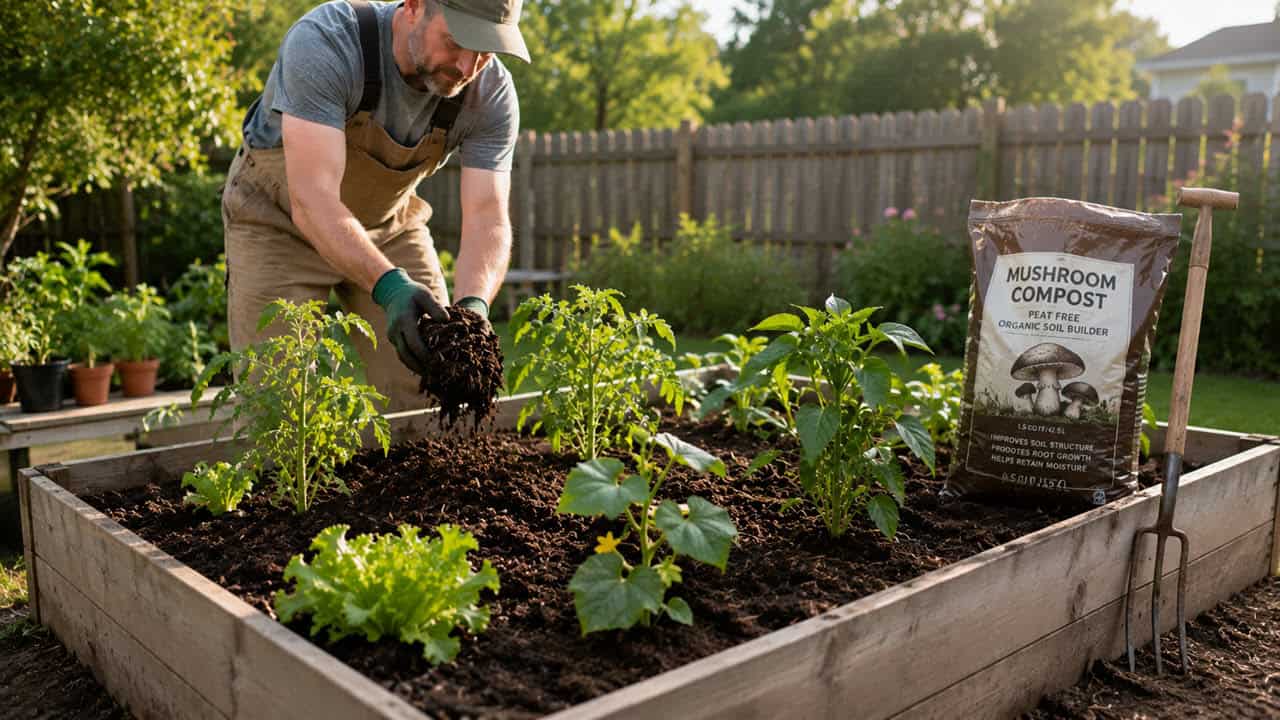
Mushroom compost is a nutrient-rich soil amendment that can boost garden productivity. Many vegetables thrive when grown in soil enriched with this organic matter. Gardeners often use it to improve soil structure and provide essential nutrients to their plants.
Certain vegetables respond especially well to mushroom compost, producing larger yields and healthier plants. This article will explore 15 vegetables that benefit from the addition of mushroom compost to their growing environment. Understanding which plants work best with this soil amendment can help gardeners make the most of their vegetable patches.
1. Tomato
Tomatoes grow well with mushroom compost. This nutrient-rich material helps tomato plants thrive and produce tasty fruits.
Mushroom compost adds important nutrients to the soil. It has nitrogen, phosphorus, and potassium that tomatoes need to grow strong and healthy.
The compost also improves soil structure. This lets tomato roots spread out more easily and absorb water and nutrients better.
Tomatoes like the calcium found in mushroom compost. Calcium helps prevent issues like blossom end rot in the fruits.
When using mushroom compost for tomatoes, mix it into the soil before planting. You can also use it as a mulch around established plants.
Start with small amounts of compost. Too much can make the soil too salty for tomatoes. A light application is often enough to see benefits.
Gardeners report that tomatoes grown with mushroom compost tend to be more flavorful. The extra nutrients may boost the development of flavor compounds in the fruits.
2. Broccoli
Broccoli thrives in soil enriched with mushroom compost. This nutrient-dense amendment provides the perfect balance of elements that broccoli needs to grow strong and healthy.
The high nitrogen content in mushroom compost supports the development of lush, green foliage. This is crucial for broccoli, as its leaves are responsible for photosynthesis and overall plant health.
Mushroom compost also improves soil structure, allowing broccoli roots to spread easily. This leads to better nutrient uptake and more robust plants.
The organic matter in mushroom compost helps retain moisture in the soil. Broccoli prefers consistent moisture levels, making this compost an ideal choice for cultivation.
Gardeners often notice larger, more flavorful broccoli heads when using mushroom compost. The rich nutrient profile contributes to improved taste and texture of the vegetable.
Applying mushroom compost to broccoli beds can also boost the plant’s natural resistance to common pests and diseases. This can lead to healthier crops with less need for chemical interventions.
3. Cabbage
Cabbage thrives when grown with mushroom compost. This nutrient-rich soil amendment provides the perfect environment for cabbage to flourish.
Mushroom compost improves soil structure, allowing cabbage roots to spread easily. This leads to stronger, healthier plants that can better resist pests and diseases.
The high nitrogen content in mushroom compost is especially beneficial for cabbage. Nitrogen promotes leafy growth, which is crucial for this vegetable.
Cabbage plants also benefit from the increased water retention provided by mushroom compost. This helps maintain consistent moisture levels, reducing stress on the plants.
The compost’s balanced nutrient profile supports steady cabbage growth throughout the season. It provides a slow release of nutrients, ensuring the plants have access to food as they develop.
Mushroom compost can help neutralize soil pH, creating ideal growing conditions for cabbage. Most cabbage varieties prefer slightly alkaline soil, which this compost naturally provides.
Gardeners often notice larger, more flavorful cabbage heads when using mushroom compost. The improved soil quality translates directly to better crop yields.
When applying mushroom compost for cabbage, mix it into the top layer of soil before planting. This allows the roots to access the nutrients as they grow.
For best results, reapply a thin layer of mushroom compost around cabbage plants mid-season. This gives them an extra boost of nutrients during their main growth period.
4. Spinach
Spinach thrives when grown in soil enriched with mushroom compost. This leafy green vegetable benefits from the nutrient-rich composition of the compost.
The high nitrogen content in mushroom compost promotes lush, green leaf growth in spinach plants. This leads to larger, more vibrant leaves that are packed with nutrients.
Mushroom compost also improves soil structure, allowing spinach roots to spread easily. This enhanced root development results in healthier plants and better yields.
The compost helps retain moisture in the soil, which is crucial for spinach. Consistent moisture levels prevent the leaves from becoming tough or bitter.
Adding mushroom compost to spinach beds can increase overall crop yields. Studies have shown that spinach grown with mushroom compost produces more abundant harvests.
Gardeners can mix mushroom compost into the soil before planting spinach seeds or seedlings. Alternatively, it can be used as a top dressing around established plants.
For best results, incorporate mushroom compost into the soil a few weeks before planting spinach. This allows time for the nutrients to integrate into the growing medium.
5. Lettuce
Lettuce is a popular leafy green that thrives when grown with mushroom compost. This versatile vegetable benefits from the nutrient-rich soil amendment.
Mushroom compost helps lettuce grow quickly and produce tender, flavorful leaves. The compost improves soil structure, allowing lettuce roots to spread easily.
The high nutrient content in mushroom compost is ideal for lettuce, which needs plenty of nitrogen for lush leaf growth. It also helps retain moisture in the soil, preventing lettuce from drying out.
Gardeners can mix mushroom compost into their soil before planting lettuce seeds or seedlings. This gives the plants a strong start and promotes healthy development throughout the growing season.
Both head lettuce and loose-leaf varieties do well with mushroom compost. The rich organic matter supports rapid growth, resulting in crisp, tasty lettuce for salads and sandwiches.
When using mushroom compost for lettuce, it’s important not to overdo it. A light application is usually sufficient, as lettuce doesn’t need extremely fertile soil to thrive.
For best results, gardeners can combine mushroom compost with other organic matter in their lettuce beds. This creates a balanced growing environment for these cool-season crops.
6. Carrots
Carrots grow well in soil enriched with mushroom compost. This nutrient-rich amendment improves soil structure and drainage, which carrots need for proper root development.
Mushroom compost adds organic matter to the soil. This helps create loose, friable soil that allows carrot roots to expand easily as they grow.
The nutrients in mushroom compost support healthy carrot growth. Carrots particularly benefit from the potassium content, which aids in root formation and overall plant health.
Using mushroom compost can lead to sweeter, more flavorful carrots. The improved soil conditions allow carrots to take up nutrients more efficiently, enhancing their taste.
Gardeners often mix mushroom compost into the top layer of soil before planting carrot seeds. This gives the young plants access to nutrients as they establish themselves.
For best results, avoid using too much mushroom compost. A light application is usually sufficient, as carrots don’t require extremely rich soil to thrive.
When using mushroom compost for carrots, it’s important to ensure the soil pH remains slightly acidic to neutral. This range is ideal for carrot growth and nutrient uptake.
7. Cauliflower
Cauliflower thrives in soil enriched with mushroom compost. This cruciferous vegetable benefits from the nutrient-rich composition of the compost.
Mushroom compost improves soil structure, which is crucial for cauliflower’s root development. It helps retain moisture while allowing proper drainage, creating ideal growing conditions.
The compost’s high organic matter content provides a steady supply of nutrients as it breaks down. This supports cauliflower’s growth throughout its life cycle.
Cauliflower plants have high nutrient demands, especially for nitrogen. Mushroom compost helps meet these needs, promoting healthy leaf and head formation.
The slightly alkaline nature of mushroom compost can be beneficial for cauliflower. It prefers soil with a pH between 6.5 and 7.0, which the compost can help maintain.
When adding mushroom compost to your cauliflower bed, mix it well with the existing soil. A ratio of about 25% compost to 75% soil is a good starting point.
Apply the compost before planting and as a top dressing during the growing season. This provides a continuous nutrient boost to the cauliflower plants.
Remember to water your cauliflower regularly when using mushroom compost. The compost helps retain moisture, but consistent watering is still important for optimal growth.
8. Peas
Peas are a great vegetable to grow with mushroom compost. They thrive in soil enriched with this nutrient-dense amendment. Mushroom compost helps peas in several ways.
It improves soil structure, allowing pea roots to spread easily. This leads to stronger plants that can produce more pods. The compost also helps retain moisture in the soil, which peas need for proper growth.
Mushroom compost provides key nutrients that peas love. It’s rich in nitrogen, which peas use to grow lush, green vines. The compost also contains phosphorus and potassium, supporting overall plant health and pod development.
Peas prefer slightly alkaline soil, and mushroom compost helps maintain this pH level. This creates ideal growing conditions for pea plants. The compost also adds beneficial microorganisms to the soil, enhancing nutrient uptake.
When using mushroom compost for peas, mix it into the top layer of soil before planting. A ratio of about 20-30% compost to 70-80% soil works well. This blend gives peas the nutrients they need without overwhelming them.
Gardeners often see better pea harvests when using mushroom compost. The plants tend to be more robust and produce more pods. The peas themselves may also be sweeter and more flavorful due to the rich soil.
9. Brussels Sprouts
Brussels sprouts thrive in soil enriched with mushroom compost. This nutrient-rich amendment provides the perfect environment for these small, cabbage-like vegetables to grow.
Mushroom compost helps Brussels sprouts by improving soil structure. It makes the ground looser, allowing the plants’ roots to spread more easily. This leads to healthier, stronger plants.
The compost also adds essential nutrients to the soil. Brussels sprouts need these nutrients to produce their signature round, tightly-packed leaves. With mushroom compost, they can grow bigger and tastier.
Another benefit is moisture retention. Mushroom compost helps the soil hold water better. This is great for Brussels sprouts, which need consistent moisture to grow well.
The non-acidic nature of mushroom compost suits Brussels sprouts perfectly. These plants prefer slightly alkaline soil conditions. Mushroom compost helps create this ideal pH balance.
Using mushroom compost can also reduce the risk of certain diseases in Brussels sprouts. For example, it may help prevent clubroot, a common problem for plants in the cabbage family.
Gardeners can mix mushroom compost into the soil before planting Brussels sprouts. They can also use it as a top dressing around established plants. Either way, Brussels sprouts will benefit from this rich organic matter.
10. Celery
Celery grows well in soil enriched with mushroom compost. This vegetable needs lots of nutrients and moisture to thrive. Mushroom compost provides both.
The compost improves soil structure, allowing celery’s shallow roots to spread easily. It also helps retain water, which celery needs plenty of. The nutrients in mushroom compost support celery’s growth.
Gardeners can mix mushroom compost into the soil before planting celery. They can also use it as a top dressing around growing plants. This feeds the celery throughout the growing season.
Celery planted in mushroom compost often produces thicker, crunchier stalks. The leaves may be more flavorful too. The compost’s nutrients boost the plant’s overall health and productivity.
When using mushroom compost for celery, it’s best to mix it with regular garden soil. This prevents the soil from becoming too rich. A blend of about 30% mushroom compost to 70% garden soil works well for celery.
11. Leeks
Leeks thrive in mushroom compost. This nutrient-rich soil amendment provides ideal growing conditions for these flavorful alliums.
Mushroom compost helps leeks develop strong, healthy roots. It improves soil structure, allowing the long white stalks to grow straight and tall.
The compost’s moisture-retaining properties benefit leeks, which need consistent moisture. It also supplies essential nutrients that support robust leaf growth.
Leeks planted in mushroom compost often grow larger and more flavorful. The compost’s organic matter breaks down slowly, feeding the plants throughout the growing season.
Gardeners can mix mushroom compost into the soil before planting leeks. Alternatively, it can be used as a top dressing around established plants.
When using mushroom compost for leeks, be mindful of quantity. A little goes a long way, as leeks don’t require extremely rich soil.
For best results, combine mushroom compost with regular garden soil. This creates a balanced growing medium that leeks love.
12. Onions
Onions are a popular vegetable that can benefit from mushroom compost. This nutrient-rich soil amendment provides several advantages for onion growth.
Mushroom compost helps improve soil structure, allowing onion roots to develop more easily. It also enhances water retention, which is important for onions as they need consistent moisture.
The compost adds organic matter to the soil, boosting its fertility. This can lead to stronger onion plants and potentially larger bulbs.
When using mushroom compost for onions, it’s best to mix it into the soil before planting. A ratio of about 20-30% compost to 70-80% soil usually works well.
It’s important not to use too much mushroom compost, as onions prefer soil that isn’t overly rich in nitrogen. Excess nitrogen can lead to more leaf growth at the expense of bulb development.
Gardeners should also be aware that mushroom compost can raise soil pH slightly. This isn’t usually a problem for onions, which prefer slightly acidic to neutral soil.
13. Beets
Beets grow well with mushroom compost. This nutrient-rich soil amendment provides many benefits for beet plants.
Mushroom compost improves soil structure, which helps beet roots develop properly. The compost also adds organic matter to the soil, increasing its ability to hold water and nutrients.
Beets need plenty of nutrients to grow their large roots and leafy tops. Mushroom compost supplies key elements like nitrogen, phosphorus, and potassium that beets require.
The high calcium content in mushroom compost is good for beets. Calcium helps prevent issues like an internal black spots in beetroots.
When using mushroom compost for beets, mix it into the soil before planting. A layer 2-3 inches deep worked into the top 6-8 inches of soil is usually enough.
Beets prefer neutral to slightly alkaline soil. Mushroom compost can help balance soil pH to create ideal growing conditions for beet plants.
For best results, use well-aged mushroom compost. Fresh compost may have high salt levels that could harm young beet seedlings.
14. Swiss Chard
Swiss chard is a leafy green vegetable that grows well in soil enriched with mushroom compost. This versatile plant thrives in nutrient-rich environments, making it an ideal candidate for gardens using this type of organic matter.
Mushroom compost provides Swiss chard with essential nutrients that support its growth. The compost’s high organic content improves soil structure, allowing the plant’s roots to spread easily and absorb more nutrients.
Swiss chard benefits from the moisture retention properties of mushroom compost. This helps keep the soil consistently moist, which is important for the plant’s health and productivity.
The nutrients in mushroom compost promote lush foliage growth in Swiss chard. This results in larger, more vibrant leaves that are packed with vitamins and minerals.
Gardeners can expect improved yields when growing Swiss chard in soil amended with mushroom compost. The nutrient-rich environment supports stronger plants that are more resistant to pests and diseases.
When planting Swiss chard, mix mushroom compost into the top soil layer before sowing or transplanting seedlings. This ensures the plants have access to nutrients from the start of their growth cycle.
Swiss chard can be harvested multiple times throughout the growing season. The continuous supply of nutrients from mushroom compost supports this repeated harvesting, allowing for a prolonged and abundant crop.
15. Kale
Kale thrives when grown in soil enriched with mushroom compost. This nutrient-dense leafy green benefits from the high nitrogen content found in this type of compost.
The added nutrients help kale develop larger, more vibrant leaves. Gardeners often notice improved flavor and texture in kale grown with mushroom compost.
Mushroom compost also helps retain moisture in the soil. This is beneficial for kale, as it prefers consistent moisture levels throughout its growing season.
The organic matter in mushroom compost improves soil structure. This allows kale’s roots to spread more easily, leading to healthier and more productive plants.
Kale grown in mushroom compost-enriched soil often shows increased resistance to pests and diseases. The improved plant health makes it better able to withstand various environmental stresses.
Gardeners can mix mushroom compost into the soil before planting kale or use it as a top dressing around established plants. Either method will provide benefits to the kale crop.
For best results, it’s important to not overuse mushroom compost. A layer of 2-3 inches worked into the top 6 inches of soil is usually sufficient for kale.
Benefits of Mushroom Compost for Vegetables
Mushroom compost boosts vegetable growth in many ways. It improves soil quality and helps plants retain water. These benefits lead to bigger, healthier harvests.
Soil Enrichment
Mushroom compost adds key nutrients to the soil. It contains nitrogen, phosphorus, and potassium. These help vegetables grow strong and produce more. The compost also adds calcium and magnesium to the soil.
Vegetables like tomatoes, peppers, and broccoli love this nutrient-rich mix. It helps them develop better roots and leaves. The compost makes soil looser too. This allows roots to spread out more easily.
For root veggies like carrots and beets, loose soil is key. It lets them grow bigger and straighter. Mushroom compost also balances soil pH. This helps plants take up nutrients better.
Water Retention Benefits
Mushroom compost acts like a sponge in the soil. It soaks up water and releases it slowly. This means plants have steady access to moisture.
Vegetables that need lots of water do well with this compost. Cucumbers, squash, and zucchini are good examples. The compost helps soil stay damp between waterings.
This water-holding power is great for gardeners too. It means less frequent watering is needed. In dry spells, plants with mushroom compost in their soil often do better.
The compost also helps stop soil from getting too wet. This protects plant roots from rotting. It’s especially good for vegetables that don’t like “wet feet,” such as tomatoes.
Best Practices for Using Mushroom Compost
Mushroom compost can boost plant growth when used correctly. It’s important to apply it properly and mix it with soil in the right amounts.
Application Techniques
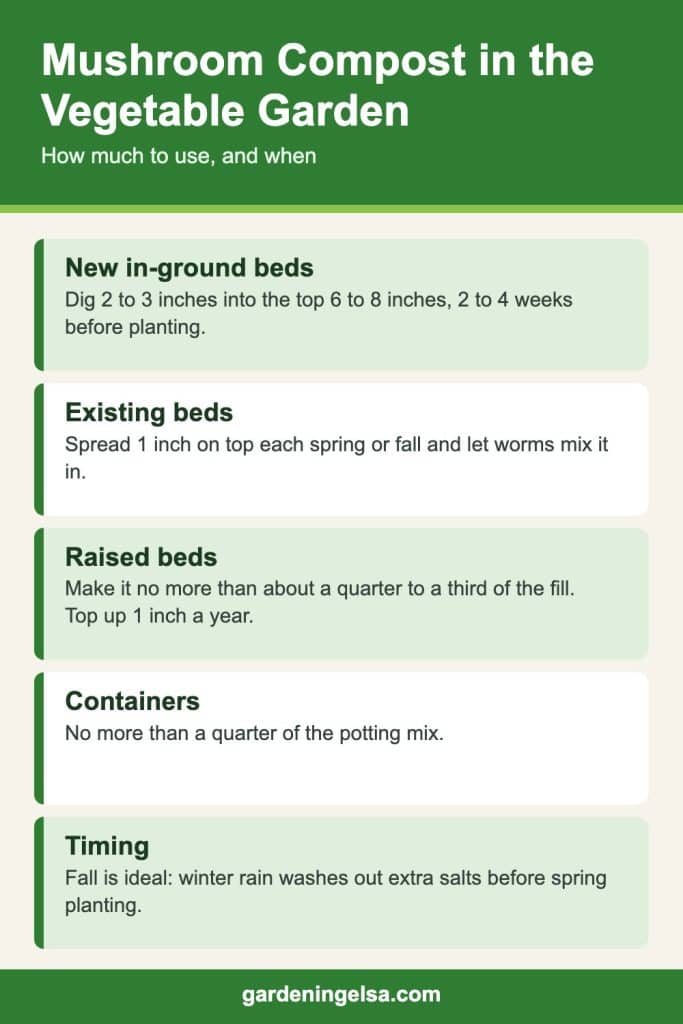
Spread mushroom compost in a thin layer on top of the soil. About 1-2 inches deep is enough for most gardens. Don’t pile it too thick or it may smother plants. Mix it into the top 6-8 inches of soil before planting. This helps nutrients reach plant roots.
For existing plants, gently work compost into the soil around them. Be careful not to damage roots. Water well after applying to help nutrients soak in.
Reapply mushroom compost each spring to replenish nutrients. You can also use it as a mulch around plants during the growing season.
Mixing Ratios
The right mix of mushroom compost and soil is key. Too much can harm plants. A good rule is to use 25-50% compost mixed with garden soil.
For new beds, mix 1 part compost with 2-3 parts soil. In containers, use a 1:1 ratio of compost to potting mix.
For heavy clay soils, use more compost to improve drainage. For sandy soils, add less to avoid excess nutrients. Always test soil first to check nutrient levels.
Start with small amounts and watch how plants respond. You can slowly increase the ratio if needed.

Conclusion
Mushroom compost offers many benefits for vegetable gardens. It improves soil structure and adds valuable nutrients. Many common vegetables thrive when grown with mushroom compost.
Root vegetables like carrots, beets, and radishes grow well in soil amended with mushroom compost. The loose texture allows roots to develop properly.
Leafy greens such as lettuce, kale, and spinach also do well. They benefit from the nitrogen and other nutrients in the compost.
Fruiting vegetables like tomatoes, peppers, and eggplants produce more abundantly with mushroom compost. The added nutrients support healthy growth and fruit production.
Squash, cucumbers, and other vining crops spread vigorously in compost-enriched soil. Their extensive root systems can access nutrients throughout the growing season.
Cruciferous vegetables including broccoli, cauliflower, and cabbage thrive in the neutral pH provided by mushroom compost.
Using mushroom compost can lead to bigger harvests and healthier plants across many vegetable varieties. It’s a versatile soil amendment that benefits most garden crops.

Hello there! I’m Elsa, and gardening is my passion. As an avid gardener, I created GardeningElsa.com to share my knowledge and experience with fellow enthusiasts. My website is a comprehensive resource for gardeners of all levels, offering expert advice on a wide range of topics, including plants, flowers, herbs, and vegetable gardening. Whether you’re a beginner looking to start your first garden or a seasoned pro seeking to expand your knowledge, GardeningElsa.com has something for everyone. Read more about me.