Gardeners often debate the merits of different soil amendments. Two popular options are mushroom compost and organic compost. While both can improve soil quality, they have distinct differences.
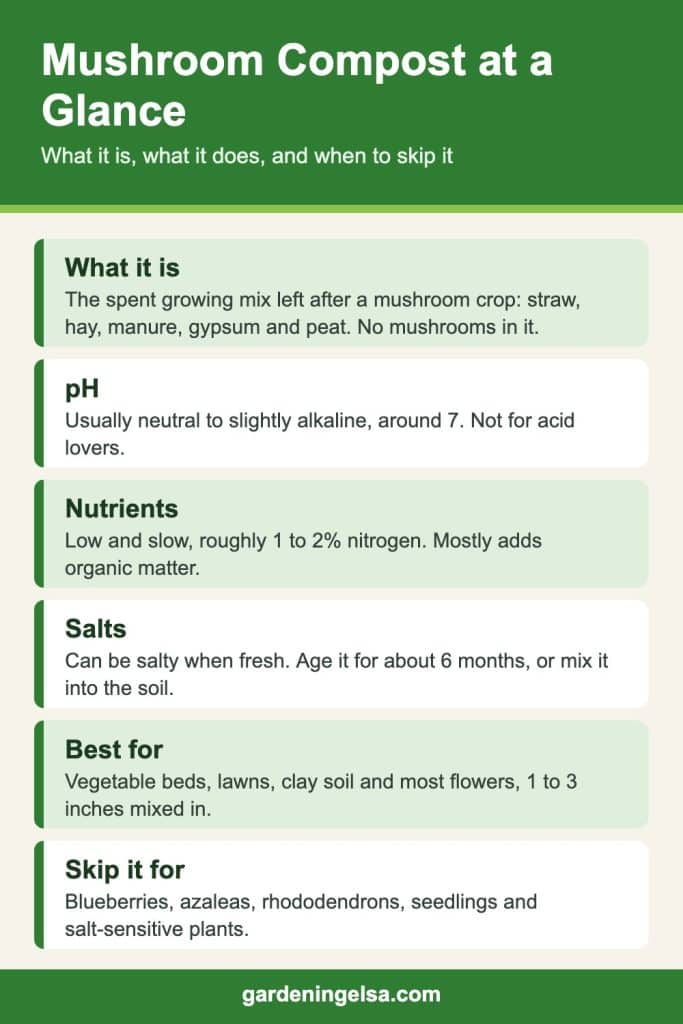
Mushroom compost isn’t made from mushrooms. It’s a byproduct of mushroom farming, containing leftover materials used to grow mushrooms. Mushroom compost tends to have a higher salt content and more alkaline pH than regular organic compost. This can affect which plants thrive in it.
Organic compost is made from decomposed plant matter and other organic materials. It’s typically lower in salts and has a more neutral pH. Both types of compost can boost soil fertility and structure, but their unique properties make them better suited for different gardening needs.
Overview of Composting
Composting is a natural process that breaks down organic materials into a nutrient-rich soil amendment. It improves soil health and provides many benefits for plants and the environment.
Composting turns organic waste into a valuable resource for gardens and farms. It involves the breakdown of materials like food scraps, yard trimmings, and other plant matter. Microorganisms break down these materials over time. This process creates a dark, crumbly substance called compost.
Compost is full of nutrients that plants need to grow. It also helps soil retain water and air. To make compost, you need:
- “Green” materials high in nitrogen (fruit/vegetable scraps, grass clippings)
- “Brown” materials high in carbon (leaves, twigs, paper)
- Water
- Air
The mix of materials, moisture, and oxygen allows helpful bacteria and fungi to thrive. These microbes digest the organic matter, heating up the pile. After weeks or months, the result is nutrient-rich compost.
Benefits of Compost for Soil Health
Adding compost to soil offers many advantages:
- Improves soil structure and water retention
- Adds essential nutrients for plant growth
- Increases helpful microbe activity in soil
- Helps control soil erosion
- Reduces need for chemical fertilizers
- Makes clay soils lighter and sandy soils more water-retentive
Compost acts as a slow-release fertilizer. It feeds plants over time as microbes continue to break it down. This steady supply of nutrients leads to healthier plants that are more resistant to pests and disease.
Compost also boosts soil’s ability to hold onto water. This means less watering for gardeners and farmers. The improved soil structure allows roots to grow more easily. All these factors lead to stronger, more productive plants.
Check out Is Mushroom Compost Good for Flowers?
Comparing Mushroom Compost and Organic Compost
Mushroom compost and organic compost are both useful soil amendments, but they have some key differences. Let’s look at how they compare in terms of what they’re made of, how they work, and when to use each one.
Composition and Properties
Mushroom compost is made from leftover materials used to grow mushrooms. It often contains straw, peat moss, and horse manure. This mix gives it a unique set of nutrients.
Organic compost comes from plant and food waste that breaks down over time. It can include things like leaves, grass clippings, and kitchen scraps.
Mushroom compost tends to have more salt than regular compost. This can be good or bad, depending on what you’re growing. It also has a higher pH, usually around 6.5 to 7.5.
Regular organic compost has a wider range of nutrients. Its pH can vary but is often slightly acidic. It generally has less salt than mushroom compost.
Application and Effectiveness
Both types of compost help plants grow better. They add nutrients to the soil and improve its structure. This helps roots grow and lets the soil hold more water.
Mushroom compost works well for many garden plants and vegetables. It’s especially good for plants that like slightly alkaline soil. But it’s not ideal for plants that are sensitive to salt.
Organic compost is more versatile. It can be used for almost any type of plant or garden. It’s great for improving poor soil and boosting plant growth.
Both composts can increase crop yields. Mushroom compost often gives quick results. Organic compost provides benefits over a longer time as it breaks down slowly.
Check out Will Mushroom Compost Kill Grass?
Characteristics of Mushroom Compost
Mushroom compost has unique traits that set it apart from other soil amendments. It offers both benefits and drawbacks for plant growth, depending on how it’s used.
Making of Mushroom Compost
Mushroom compost starts as a mix of materials like straw, hay, corn cobs, and gypsum. Farmers use this blend to grow mushrooms. As the mushrooms grow, their roots (called mycelium) spread through the mix.
After several harvests, the mix can’t support more mushroom growth. At this point, it becomes “spent mushroom compost.” This leftover material is what gardeners often buy and use.
Fresh mushroom compost can be too strong for plants. Aging it helps balance out its properties. Aged mushroom compost is gentler on plants and easier to use in gardens.
Benefits and Limitations
Mushroom compost adds organic matter to soil, which helps plants grow. It holds water well and improves soil structure. Many plants thrive in it, especially those that like rich soil.
But it has some limits too. It has high salt levels, which can harm some plants. Its pH is often alkaline, so it’s not good for plants that need acidic soil.
The compost is rich in some nutrients but may lack others. It works best when mixed with other soil or compost types. This balances out its strong traits and makes a more complete growing medium.
Some plants, like seedlings, can be sensitive to fresh mushroom compost. It’s best to use aged compost or mix it with regular soil for these plants.
Check out Is Mushroom Compost Good for Dahlias?
Exploring Organic Compost
Organic compost is a nutrient-rich soil amendment made from natural materials. It improves soil structure and provides essential nutrients for plant growth.
Ingredients and Production
Organic compost is made from a mix of plant and animal materials. Common ingredients include:
- Leaves and grass clippings
- Fruit and vegetable scraps
- Coffee grounds and tea bags
- Manure from herbivores
- Eggshells
The materials are piled together and left to decompose. Microorganisms break down the organic matter over several months. This process creates a dark, crumbly substance full of nutrients.
Advantages for Soil and Plants
Organic compost offers many benefits for gardens and farms:
- Improves soil structure and water retention
- Adds nutrients like nitrogen, phosphorus, and potassium
- Introduces beneficial microorganisms to the soil
- Helps plants resist diseases and pests
- Reduces the need for chemical fertilizers
It also helps sandy soil hold more water and makes clay soil drain better. Plants grown in compost-enriched soil often produce higher yields and tastier crops.
Check out Is Mushroom Compost Good for Azaleas?
Practical Aspects of Using Composts
Applying compost properly can greatly improve soil health and plant growth. Proper techniques and precautions ensure the best results when using mushroom or organic compost in gardens and farms.
Application Techniques
Spread compost evenly over soil before planting. Use 1-2 inches for garden beds or 1/4-1/2 inch for lawns. Mix it into the top 6-8 inches of soil. For potted plants, blend compost with potting soil at a 1:3 ratio.
Apply compost in spring or fall. This allows time for it to break down and enrich the soil. Avoid applying in very hot or cold weather. Water the area after spreading compost to help it settle.
For established plants, add a thin layer around the base. Be careful not to pile it against stems or trunks. This can lead to rot or pest issues.
Considerations and Precautions
Test soil pH before adding large amounts of compost. Mushroom compost is alkaline and may raise pH too high for some plants. Organic compost is usually pH neutral.
Check salt levels, especially with mushroom compost. High salt can harm plants. If concerned, leach the compost with water before use. Or mix it with low-salt materials like peat moss.
Fresh compost can temporarily tie up soil nitrogen as it breaks down. Add extra nitrogen fertilizer if needed. Fully finished compost won’t cause this issue.
Use caution with salt-sensitive or acid-loving plants. These may not tolerate mushroom compost well. Choose a low-salt organic compost instead for these plants.
Economic and Environmental Impacts
Mushroom compost and organic compost have different effects on costs and sustainability. Their prices, production methods, and impacts on soil health shape their economic and environmental profiles.
Cost Analysis
Mushroom compost is often cheaper than organic compost. A 40-pound bag of mushroom compost costs $5-$8, while organic compost ranges from $8-$15 for the same amount. Bulk prices show similar differences.
Mushroom compost is a byproduct of the mushroom industry. This keeps production costs low. Organic compost needs more processing, raising its price.
Some garden centers and farms sell mushroom compost locally. This cuts transport costs. Organic compost is widely available but may travel farther to stores.
Sustainability Considerations
Mushroom compost reuses waste from mushroom farms. This reduces landfill use and turns a problem into a useful product. It contains nutrients that boost soil health.
Organic compost uses a mix of plant materials. It improves soil structure and adds organic matter. This helps retain water and nutrients.
Both composts support sustainable farming. They reduce the need for chemical fertilizers. This protects waterways from runoff.
Mushroom compost may have high salt levels. This can harm some plants if overused. Organic compost is gentler but may take longer to break down in soil.
Choosing the Right Compost for Your Garden
Picking the best compost for your garden depends on a few key factors. Soil quality and type play a big role in this choice.
For sandy soils that drain quickly, mushroom compost can help improve water retention. Clay soils may benefit more from organic compost to boost drainage and aeration.
Consider your plants’ fertilization needs too. Mushroom compost is often higher in salt content. This makes it great for salt-tolerant plants but less ideal for sensitive ones.
Organic compost tends to have a wider range of nutrients. It’s a good all-purpose choice for most gardens. But it may not be as rich in certain minerals as mushroom compost.
Think about your specific plant requirements:
- Vegetable gardens often do well with either type
- Acid-loving plants prefer organic compost
- Flower beds can thrive with mushroom compost
pH levels matter too. Mushroom compost is usually neutral, while organic compost can vary. Test your soil and choose accordingly.
Cost is another factor. Mushroom compost is often cheaper, making it budget-friendly for large areas.
Remember, you can always mix both types to get the best of both worlds. This can create a balanced, nutrient-rich soil for your garden.
Mushroom Compost vs Organic Compost – Summary
| Aspect | Mushroom Compost | Organic Compost |
|---|---|---|
| Origin | Leftover materials from mushroom cultivation | Various organic materials like plant waste and manure |
| Nutrient Content | Lower overall nutrient levels | Higher and more balanced nutrient content |
| pH Level | Typically alkaline | Can vary, but often neutral to slightly acidic |
| Salt Content | Higher salt content | Generally lower salt content |
| Best Use | Soil amendment and slow-release fertilizer | All-purpose soil enrichment |
| Cost | Often less expensive | Can be more costly, depending on source |
| Nitrogen Content | Lower nitrogen levels | Higher nitrogen content |
| Organic Matter | Contains organic matter, but percentage varies | High organic matter content |
| Plant Suitability | Good for most plants, may need adjustment for acid-loving species | Suitable for a wide range of plants |
| Availability | May be more readily available in some areas | Can be made at home or purchased |
This table compares key aspects of mushroom compost and organic compost. Each type has its strengths and can be useful in different gardening situations.

Conclusion
Mushroom compost and organic compost each have their own strengths. Mushroom compost comes from spent mushroom growing materials. It has a neutral pH and good nutrient content. Organic compost is made from various plant and food wastes.
Both can improve soil structure and fertility. Mushroom compost excels at water retention. Organic compost typically has higher and more balanced nutrient levels.
The choice depends on specific garden needs. Mushroom compost works well for moisture-loving plants. Organic compost is versatile for general soil enrichment.
Gardeners can use either or combine them. Mixing the two provides a range of benefits. This creates an ideal growing environment for many plants.
Cost and availability may affect the decision. Local sources often determine which is more accessible. Both options support sustainable gardening practices by recycling organic materials.
You may also like:

Hello there! I’m Elsa, and gardening is my passion. As an avid gardener, I created GardeningElsa.com to share my knowledge and experience with fellow enthusiasts. My website is a comprehensive resource for gardeners of all levels, offering expert advice on a wide range of topics, including plants, flowers, herbs, and vegetable gardening. Whether you’re a beginner looking to start your first garden or a seasoned pro seeking to expand your knowledge, GardeningElsa.com has something for everyone. Read more about me.