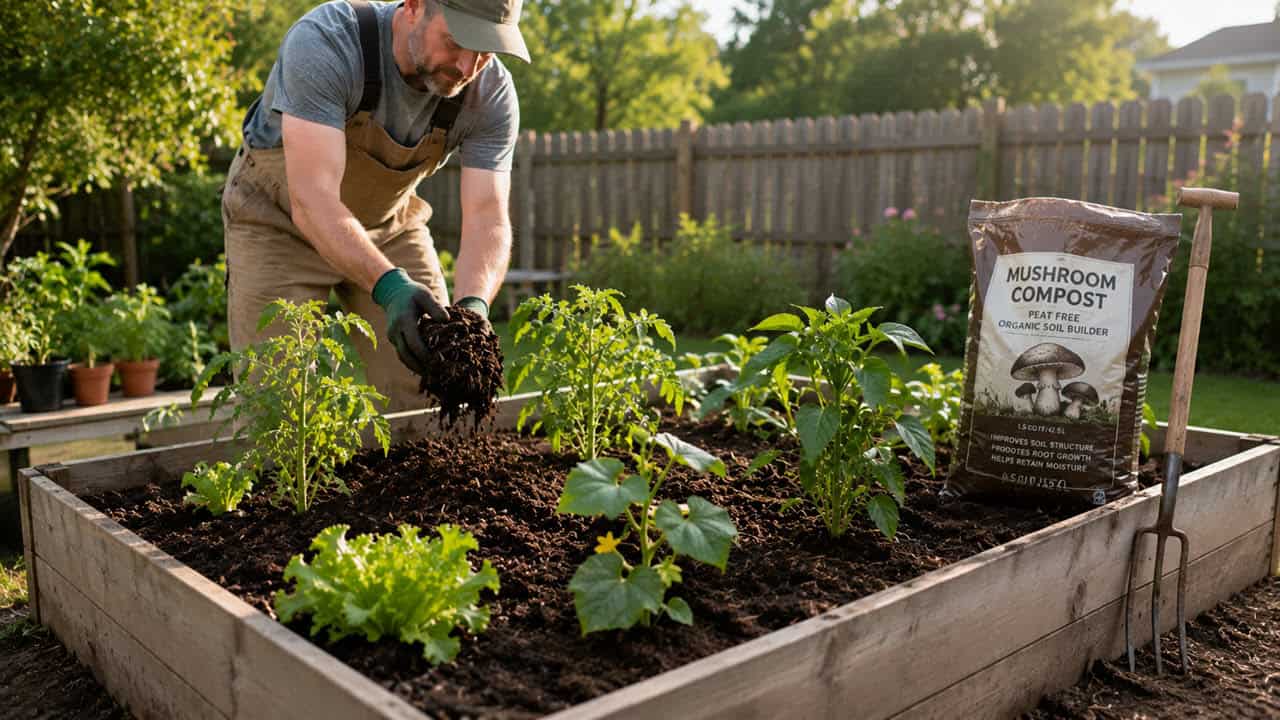
Mushroom compost can be a great addition to raised vegetable beds. This nutrient-rich soil amendment helps plants thrive by improving soil structure and moisture retention. Mushroom compost boosts soil fertility and promotes healthy plant growth in raised beds.
Gardeners often use mushroom compost to enhance their vegetable gardens. It contains valuable nutrients that feed plants over time. The porous nature of mushroom compost allows it to hold onto water and nutrients, making them available to plant roots as needed.
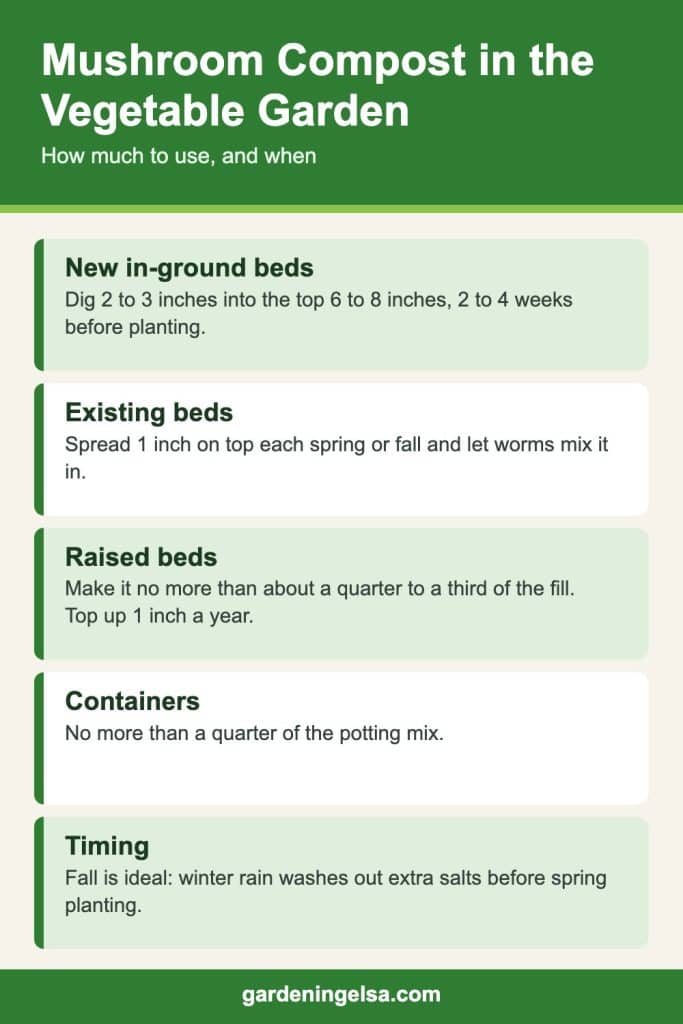
When adding mushroom compost to raised beds, mix it with existing soil for best results. A layer of 2-3 inches spread evenly over the bed surface works well. This amendment is suitable for many vegetables, including broccoli, cauliflower, and potatoes. Mushroom compost creates an ideal growing environment for a wide range of crops in raised bed gardens.
Understanding Mushroom Compost
Mushroom compost is a nutrient-rich soil amendment made from organic materials used in mushroom farming. It offers many benefits for garden soil and plant growth.
Composition and Properties
Mushroom compost contains a mix of organic materials like straw, peat moss, and animal manure. These ingredients break down during the mushroom growing process. The result is a dark, crumbly compost full of nutrients.
Key nutrients in mushroom compost include:
- Nitrogen: 1-2%
- Phosphorus: 0.2%
- Potassium: 1.3%
- Calcium
- Trace minerals
Mushroom compost has a porous structure that helps it hold water and nutrients well. It typically has a neutral to slightly alkaline pH between 6.5-7.5.
Differences Between Mushroom and Regular Compost
Mushroom compost differs from regular compost in a few key ways:
- Higher nutrient content
- More uniform texture
- Usually pasteurized to kill weed seeds and pathogens
- May have higher salt levels
Regular compost can vary more in its makeup. Mushroom compost offers a more consistent product. Its nutrients are also more readily available to plants.
Benefits for Soil
Adding mushroom compost to soil provides many benefits:
- Improves soil structure and water retention
- Boosts soil fertility and nutrient levels
- Enhances microbial activity in the soil
- Helps loosen heavy clay soils
- Adds organic matter to sandy soils
Mushroom compost can increase crop yields by 30-50% when used properly. It works well for most vegetables, herbs, flowers, and fruiting plants.
For best results, mix mushroom compost with regular garden soil. Use about 20-30% compost in raised beds. This prevents the soil from getting too wet or spongy.
Advantages of Mushroom Compost for Raised Beds
Mushroom compost offers many benefits for raised vegetable beds. It can improve soil quality, boost plant growth, and make gardening easier.
Boosting Nutrient Levels
Mushroom compost is packed with nutrients plants need to thrive. It has a good balance of nitrogen, phosphorus, and potassium. These key elements help plants grow strong roots, stems, and leaves.
The compost also contains calcium, which prevents issues like blossom end rot in tomatoes. Trace minerals in the mix support overall plant health.
As the compost breaks down, it slowly releases nutrients. This steady supply feeds plants throughout the growing season. Gardeners often need less fertilizer when using mushroom compost.
The nutrient-rich soil created by mushroom compost leads to bigger harvests of tastier vegetables.
Improving Water and Moisture Retention
Mushroom compost acts like a sponge in garden soil. It soaks up water and holds onto it. This helps in several ways:
- Plants have steady access to moisture
- Less frequent watering is needed
- Soil doesn’t dry out as quickly
The compost also helps distribute water evenly through the soil. This prevents dry patches that can stress plants.
In raised beds, good water retention is extra important. The soil in raised beds tends to dry out faster than ground-level gardens. Mushroom compost helps keep moisture levels stable.
Enhancing Soil Structure and Drainage
Mushroom compost improves soil texture and structure. It makes heavy clay soils lighter and helps sandy soils hold together better.
The compost creates spaces between soil particles. This leads to better drainage and aeration. Roots can spread more easily through the improved soil.
In raised beds, good soil structure is key. It allows excess water to drain while still holding onto enough moisture for plants.
The lighter soil is easier to work with. Planting, weeding, and harvesting become simpler tasks.
Weed Suppression and Disease Prevention
A layer of mushroom compost on top of garden beds acts as a natural mulch. This helps stop weed seeds from sprouting. Fewer weeds mean less competition for water and nutrients.
The compost also creates a barrier that can block some plant diseases. It may help prevent issues like root rot.
Mushroom compost boosts helpful microbes in the soil. These tiny organisms can fight off harmful fungi and bacteria. This leads to healthier plants that resist disease better.
Using mushroom compost can reduce the need for chemical weed killers and pesticides in raised beds.
Utilizing Mushroom Compost Effectively
Mushroom compost can boost vegetable growth in raised beds when used correctly. It adds nutrients and improves soil structure for healthier plants.
Preparing and Applying in Vegetable Gardens
Mix mushroom compost into raised bed soil before planting. Add a 2-3 inch layer on top and work it into the top 6 inches of soil. For existing beds, spread a 1-2 inch layer around plants, avoiding direct contact with stems.
Reapply mushroom compost each growing season to maintain soil health. Use it as a mulch to retain moisture and suppress weeds.
When starting new beds, blend equal parts mushroom compost, topsoil, and existing garden soil for a rich growing medium.
Considerations for Specific Vegetables
Most vegetables thrive with mushroom compost, but some need special care. Tomatoes, peppers, and eggplants benefit from its nutrients and moisture retention.
Leafy greens like lettuce, spinach, and kale grow well with a light application. Root crops such as carrots and potatoes prefer less rich soil, so use sparingly.
Brassicas, like cabbage and broccoli, love mushroom compost’s nutrients. Avoid using it for acid-loving plants, as it can raise soil pH.
Creating a Balanced Garden Ecosystem
Mushroom compost supports beneficial microorganisms in the soil. These tiny helpers break down organic matter and make nutrients available to plants.
It improves soil structure, allowing better water retention and root growth. This leads to stronger, healthier plants that can resist pests and diseases.
Use mushroom compost as part of a diverse soil amendment strategy. Combine it with other organic matter like leaf mold or well-rotted manure for a balanced ecosystem.
Monitor soil pH and adjust if needed, as mushroom compost can make soil slightly alkaline over time.
Addressing Potential Concerns
Mushroom compost can be great for raised vegetable beds, but it’s important to be aware of a few key issues. Proper management of salt levels, pH balance, and possible contaminants will help you get the most out of this nutrient-rich organic matter.
Managing Salt Content and pH Levels
Mushroom compost often has high salt content. This can harm some plants if not used carefully. Mix it with other soil or compost to lower salt levels. Water beds well after adding mushroom compost to help flush out excess salts.
The pH of mushroom compost is usually 6.5 to 7.5. This is fine for most veggies but may not suit acid-loving plants. Test your soil pH after adding mushroom compost. If needed, add sulfur to lower pH for plants that like acidic soil.
Limestone in mushroom compost can raise soil pH over time. Keep an eye on pH levels each season. Adjust as needed to keep your soil in the right range for your plants.
Mitigating Risk of Pathogens or Pests
While uncommon, mushroom compost may contain weed seeds or plant pathogens. Buy from trusted sources that properly heat-treat their compost. This kills most weed seeds and harmful organisms.
Water your raised beds properly. Avoid overwatering, which can lead to root rot in damp conditions. Good drainage is key. Mix mushroom compost with coarse materials like perlite to improve drainage if needed.
Check plants often for signs of pests or disease. Remove any problem plants quickly. Rotate crops each year to prevent buildup of soil-borne issues. This helps keep your garden beds healthy long-term.
Comparing Alternatives to Mushroom Compost
Gardeners have many options for improving soil in raised vegetable beds. Each type of amendment has pros and cons to consider.
Other Organic Amendments
Leaf mold is a great alternative to mushroom compost. It’s made from decomposed leaves and adds organic matter to soil. Leaf mold improves soil structure and water retention.
Compost tea is a liquid fertilizer made by steeping compost in water. It adds nutrients and beneficial microbes to soil. Gardeners can make compost tea at home or buy it ready-made.
Peat moss helps loosen heavy soils and improves drainage. It’s very acidic, so it’s good for acid-loving plants. Peat moss doesn’t contain many nutrients on its own.
Poultry manure is high in nitrogen. It needs to be composted before use to avoid burning plants. Well-aged poultry manure adds nutrients and organic matter to soil.
Synthetic Fertilizers vs. Natural Composts
Synthetic fertilizers give a quick nutrient boost. They’re easy to apply and have exact nutrient ratios. But they don’t improve soil structure or add organic matter.
Natural composts feed soil life. They release nutrients slowly over time. Composts improve soil texture and water-holding capacity. Types include:
- Homemade compost from kitchen and yard waste
- Worm castings from vermicomposting
- Aged animal manures
Natural composts are usually cheaper than synthetic fertilizers. They help build healthy soil for the long term.
Maintenance and Long-Term Considerations
Mushroom compost offers lasting benefits for raised vegetable beds. Regular care and monitoring help maximize its positive effects on soil health and plant growth.
Top-Dressing and Mulching with Mushroom Compost
Adding a fresh layer of mushroom compost each growing season keeps soil fertile. Spread a 1-2 inch layer on top of existing soil in early spring. This top-dressing adds nutrients and organic matter.
Mushroom compost also works well as mulch. Apply a 2-3 inch layer around plants, avoiding direct contact with stems. This mulch helps:
- Retain soil moisture
- Suppress weeds
- Regulate soil temperature
- Slowly release nutrients
Reapply mulch as needed throughout the growing season to maintain coverage.
Monitoring and Adjusting Soil Composition Over Time
Check soil pH and nutrient levels yearly. Mushroom compost can change soil chemistry over time. Test kits from garden centers make this easy.
If pH rises too high, mix in some pine bark or peat moss. For nutrient imbalances, adjust with targeted amendments. A soil test will show what’s needed.
Watch for signs of nutrient deficiency in plants. Yellow leaves or stunted growth may mean it’s time to add more compost or other fertilizers.
Maximizing Plant Health and Garden Productivity
Rotate crops each year to prevent nutrient depletion. This also helps control pests and diseases.
Water deeply but less often. Mushroom compost improves soil structure, allowing better water retention. This promotes strong root growth.
Remove spent plants promptly at season’s end. Work any remaining compost into the soil. This preps beds for the next growing season.
Consider cover crops in off-seasons. They add organic matter and prevent erosion. Legumes like clover also fix nitrogen in the soil.
Frequently Asked Questions
Mushroom compost can be a great addition to raised vegetable beds. It offers many benefits but also has some limitations to consider. Here are answers to common questions about using mushroom compost in garden beds.
What are the benefits of using mushroom compost in vegetable gardens?
Mushroom compost improves soil structure and drainage. It adds organic matter and nutrients like nitrogen, phosphorus, and potassium. This compost also helps soil retain moisture and promotes healthy root growth.
Which plants thrive in mushroom compost-amended soils?
Many vegetables do well with mushroom compost. Tomatoes, peppers, squash, and leafy greens often grow better in soil mixed with this compost. Flowers like marigolds and petunias also benefit from it.
Are there any vegetables that should avoid mushroom compost?
Some plants don’t like mushroom compost. Acid-loving plants like blueberries and azaleas may struggle. Root vegetables such as carrots and potatoes can also have issues with too much of this compost.
Is mushroom compost good for growing vegetables?
Mushroom compost can be good for growing vegetables. It provides nutrients and improves soil quality. Mix it with existing soil at a ratio of 1 part compost to 4 parts soil for best results.
How might mushroom compost impact grass when used in garden beds?
Grass near garden beds with mushroom compost may grow faster and greener. The compost can leach nutrients into nearby soil. This might lead to uneven grass growth around the edges of garden beds.
What steps should be taken when introducing mushroom compost to raised beds for the best results?
Clear the bed of weeds and debris first. Spread a 2-3 inch layer of mushroom compost on top. Mix it into the top 6 inches of soil. Water the bed well after adding compost. Let the soil settle for a few days before planting.

Conclusion
Mushroom compost is a great choice for raised vegetable beds. It adds nutrients and organic matter to the soil, improving its structure and water retention. This helps vegetables grow better and produce more.
When using mushroom compost in raised beds, mix it into the top layer of soil. A 2-3 inch layer works well for most plants. Be careful not to use too much, as it can make the soil too dense.
Some vegetables like mushroom compost more than others. Broccoli, cabbage, and potatoes tend to do very well. Plants that prefer acidic soil may not be as happy.
Always check the compost for any unwanted materials before using it. Fresh mushroom compost can be high in salts, so letting it age a bit is a good idea.

Hello there! I’m Elsa, and gardening is my passion. As an avid gardener, I created GardeningElsa.com to share my knowledge and experience with fellow enthusiasts. My website is a comprehensive resource for gardeners of all levels, offering expert advice on a wide range of topics, including plants, flowers, herbs, and vegetable gardening. Whether you’re a beginner looking to start your first garden or a seasoned pro seeking to expand your knowledge, GardeningElsa.com has something for everyone. Read more about me.