
Hardy lotus grows best in USDA zones 6 to 10, where summers stay hot, and it survives in zones 4 to 10 as long as the tuber never freezes solid. Both sacred lotus (Nelumbo nucifera) and the native American lotus (Nelumbo lutea) fit that range.
Winter cold decides whether your lotus lives. Summer heat decides whether it blooms. A lotus in Minnesota can come back every spring and still give you only leaves, while the same plant in Texas can flower for months.
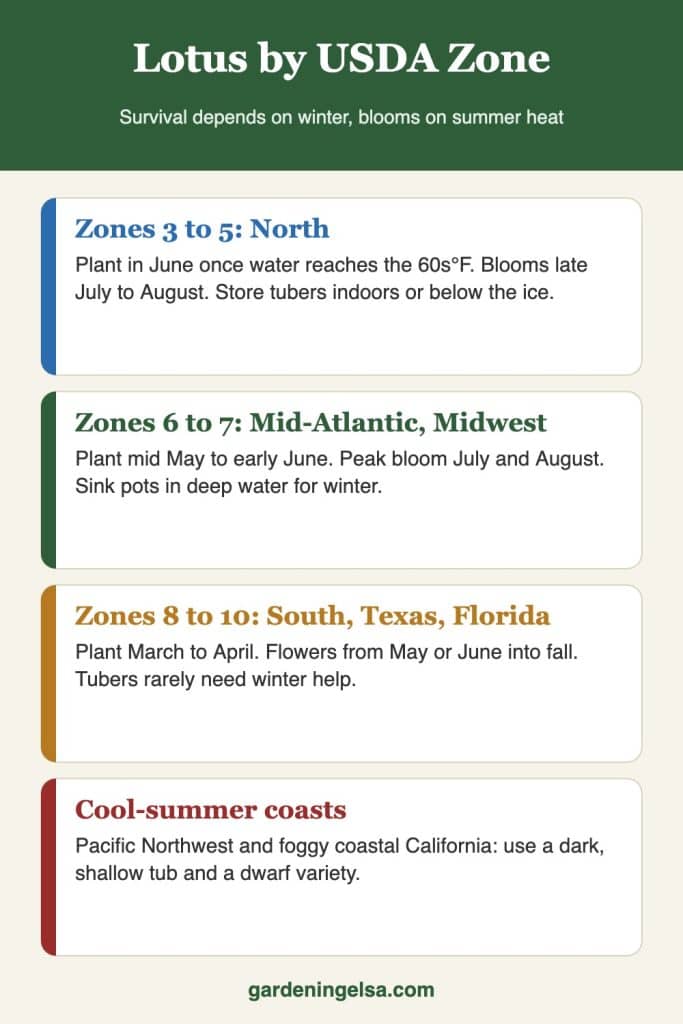
Where Hardy Lotus Thrives Across US Zones
Lotus does its best work across the warm middle and southern US, from the Mid-Atlantic and lower Midwest down through the Southeast, Texas, and Florida.
These areas give lotus cultivation the two things it needs: long, hot summers and winters mild enough that tubers rarely come close to freezing.
American lotus is hardy from zones 4 to 11 and grows wild from Ontario south to Texas and Florida. Sacred lotus is usually rated for zones 5 through 10.
So the plant handles a wide range of winters, and what changes from place to place is how much bloom you get.
Here’s how I’d rank US regions for flowering:
- Best: The Southeast, Texas, and inland California (zones 8 to 10). Long, hot seasons mean big plants and months of flowers.
- Very good: The Mid-Atlantic and Midwest (zones 6 to 7). Hot July and August weather brings strong midsummer blooms.
- Possible with effort: The Northeast, Upper Midwest, and mountain West (zones 3 to 5). Short summers mean a later, shorter bloom window.
- Tricky: The coastal Pacific Northwest and foggy coastal California. Winters are easy, but cool summers hold back flowers.
What USDA Zones Tell You About Lotus Survival
A USDA zone tells you only how cold your winters get, and that’s half of the lotus story. Lotus survives winter when the tuber stays unfrozen, and it blooms only when summer water stays warm for months, which the zone map doesn’t measure at all.
Why Unfrozen Tubers Matter More Than Air Temperature
The USDA Plant Hardiness Zone Map is based on the average coldest winter night in your area. For a lotus, the air temperature is less important than what happens down in the mud.
The tuber is the plant’s survival kit. If it stays wet and unfrozen, it rests through winter and sprouts in spring. If it freezes solid, it dies.
That’s why a lotus in a deep pond can survive zone 4, while a lotus in a shallow patio tub can die in zone 6. Water deeper than your ice line protects the tuber. A small container freezes all the way through much faster.
Put plainly, the crown of a lotus must never freeze solid. If you’re unsure about your pond, I’d treat it as too shallow and protect the tuber.
Why Winter Survival Does Not Guarantee Summer Blooms
A lotus that makes it through winter still needs heat to flower. Lotus needs two to three months of temperatures between 75 and 85°F to produce its big leaves and flowers.
Without enough heat and sun, you get yellowing leaves and no blooms. This is the most common complaint from northern and Pacific Northwest gardeners.
So read your zone as a survival rating. Then look at your summer: how many weeks of 80°F days you get and how warm your pond water runs.
Planting, Blooming, and Winter Care by USDA Zone
Planting dates move earlier as you go south, and winter care gets lighter. Plant tubers once water reaches the 60s°F, and expect strong growth once it holds above 75°F.
| USDA Zone | Plant Tubers Outdoors | Main Bloom Season | Winter Care |
|---|---|---|---|
| 3 to 4 | Mid to late June | Late July to August | Store tuber indoors, cool and moist |
| 5 | Early to mid June | Late July to early September | Sink below ice line or store indoors |
| 6 to 7 | Mid May to early June | July to early September | Sink pot to deep water; protect small tubs |
| 8 | April to early May | June to September | Leave in pond; move shallow tubs to deeper water |
| 9 to 10 | March to April | May to October | Leave in place; tubers rarely at risk |
These are average windows. A late spring or a cool summer can push things back two to three weeks.
Use the same basics in every zone. Plant in heavy clay loam, never potting mix, in a wide container with no drainage holes.
Start with about 2 inches of water over the soil and raise it as leaves grow. My lotus care guide covers potting step by step.
Growing Lotus in Northern States, Zones 3 to 5
Northern gardeners can grow lotus, but you’ll need a late planting date and a firm winter plan. Expect flowers from late July into August in a good year, and protect tubers from freezing every single winter.
When Can You Set Lotus Outdoors?
Wait until water is warm, and ignore the calendar. In zones 3 to 5 that usually lands in early to late June.
A pond thermometer takes the guesswork out of this. Put the pot out once the water holds in the 60s°F and nights stay above about 55°F.

Here’s my advice for giving a northern lotus a head start:
- Start the tuber indoors in a sunny window in May, in a tub of warm water.
- Move it out only once outdoor water is close to the indoor water temperature.
- Keep water over the soil shallow, 2 to 4 inches, so it warms fast.
A growing lotus moved into 50°F water gets shocked and will flower late or not at all. If your plant is already leafing out, wait for water near 75°F before moving it outside.
How Do You Keep Tubers From Freezing?
You have two good options. Sink the pot to the deepest part of your pond, below the ice, or bring it indoors.
For indoor storage, follow these steps:
- After a light frost or two, cut foliage at the soil line.
- Leave the tuber in its pot of mud.
- Store it in a cool, dark, frost-free spot, around 40 to 50°F. An unheated basement or attached garage works.
- Check every few weeks and keep the soil moist. A dried-out tuber dies.
In zone 3, I’d skip the pond method unless your pond is deep and you’re sure it never freezes to the bottom. My guide to overwintering lotus in cold climates goes deeper on pond depths and storage.
Growing Lotus in the Mid-Atlantic and Midwest, Zones 6 to 7
Zones 6 and 7 are a sweet spot for many gardeners. Winters are mild enough for most ponds, and July and August bring the heat lotus craves.
When Do Tubers Start Growing and Flowering?
Plant tubers from mid-May to early June, once water reaches the 60s°F. The first small, flat floating leaves show up about two to three weeks later.
Next come the tall standing leaves that rise above the water. Flower buds follow, usually in early to mid July.
Peak bloom runs through July and August, sometimes into early September. Each flower lasts about three days, opening in the morning and closing by midafternoon.
Once standing leaves appear, push aquatic fertilizer tablets into the soil every 3 to 4 weeks. Stop feeding by late August so the plant can build new tubers for winter. My lotus fertilizer post explains which tablets to use.
Which Containers and Pond Spots Warm Up Fastest?
In zones 6 and 7, the plants that bloom earliest sit in water that warms fast. I’d focus on these choices:
- Dark containers: Black or dark tubs soak up sun and warm quicker than light ones.
- Shallow placement: Set the pot on bricks so only 2 to 6 inches of water covers the soil early in the season.
- Full sun spots: The south side of a pond, away from trees, gets the most heat.
- Still water: Keep lotus away from fountains and waterfalls, which stir in cooler water.
Once summer heat arrives, you can lower a standard lotus so it sits under 6 to 12 inches of water. My guide on how deep to plant lotus in a pond walks through each stage.
In winter, sink pots to the deepest part of the pond. Small patio tubs in zone 6 should come indoors.
Growing Lotus in the South, Texas, and Florida, Zones 8 to 10
The South gives lotus its longest season in the country. Lotus flowers can show up from late spring to fall, and winter care is light.
When Does Lotus Bloom in Texas?
Most Texas lotus blooms from late May or June through September. American lotus in Texas typically flowers in mid to late summer.
Timing shifts across the state:
- South Texas and the Gulf Coast (zones 9 to 10): Plant in March. Expect flowers from May into October.
- Central Texas (zones 8 to 9): Plant in April. Blooms run June to September.
- North Texas and the Panhandle (zones 7 to 8): Plant late April to May. Flowers start in late June or July.
How Do You Manage Long Seasons and Summer Heat?
Southern heat is mostly good news, but a few problems show up in long summers.
Leaf scorch: In zone 9 and warmer, afternoon shade helps prevent burned leaf edges. Morning sun with light afternoon shade still gives 6+ hours.
Low water: Evaporation is fast in July and August. Top off ponds and tubs at least weekly, and keep the water level steady.
Overcrowding: A long season means more runners and more tubers. Divide plants every year or two in early spring, or they’ll stop blooming.
Spread: American lotus spreads fast by runners, tubers, and seed. Keep it in a container if your pond is near a creek or lake. Some states regulate planting lotus in natural waters, so check your state’s rules.

In Florida, tubers rarely need winter protection. Florida’s long warm season keeps lotus growing from spring well into fall.
Growing Lotus in California and the Western States
California’s inland valleys are excellent lotus country, while the foggy coast is much harder. The rest of the West ranges from hot desert lowlands to cold mountain zones that need northern-style winter care.
What Changes Between Coastal and Inland California?
Inland areas like the Central Valley and Sacramento get long, dry, hot summers. Lotus there grows big and blooms from June through September.
Coastal spots like San Francisco and much of the Central Coast stay cool all summer. Fog and highs in the 60s and low 70s°F mean water rarely reaches 75°F for long.
If you garden on the coast, I’d grow a small lotus in a dark, shallow container in your sunniest, most sheltered spot. Southern California’s warmer coast does better than the north, especially a few miles inland.
Mountain areas of Colorado, Utah, and Idaho behave more like zones 4 to 6. Use the northern planting dates and winter steps.
How Do You Handle Dry Heat and Evaporation?
Dry heat pulls water out of ponds and tubs fast. In the Southwest and inland California, these habits help:
- Use the biggest container you can. More water holds a steadier temperature.
- Check water levels every few days in July and August.
- Add afternoon shade in desert areas like Phoenix, where water can overheat.
- Let floating leaves shade the surface, which slows evaporation.
Mild winters in low-elevation California, Arizona, and Nevada mean tubers can stay in place. Just keep pots covered by water so the soil never dries.
Growing Lotus in the Pacific Northwest
Winter is the easy part in Seattle and Portland, and summer is the challenge. Most Pacific Northwest gardeners need extra heat tricks to get flowers.
Why Can Mild Winters Still Mean Fewer Blooms?
Western Washington and Oregon sit in zones 7 to 9, so tubers survive with little help. Summers are often cool and short, with plenty of days in the 70s°F.
Lotus wants about three months above 75°F. Many Northwest summers fall short, so plants make leaves and few or no flowers.
East of the Cascades is different. Places like Yakima and the Tri-Cities get hot summers and grow lotus well, though their colder winters need more protection.
How Can You Make the Most of a Cool Summer?
Start early and hold every bit of heat you can. Here’s what I’d do west of the Cascades:
- Start tubers indoors in April or May in warm water.
- Choose a dwarf or bowl lotus, which warms faster in a small container.
- Use a dark tub in the hottest spot in your yard, such as against a south-facing wall or on a paved patio.
- Keep water shallow, 2 to 4 inches over the soil, for the whole season.
- Pick early-blooming, cold-tolerant varieties like American lotus or its hybrids.
Some growers use a small aquarium heater in a container to keep water warm. If you try this, make sure the heater is rated for outdoor use and the cord is protected.
Why Summer Heat Matters as Much as Winter Cold
Summer warmth is what turns a living lotus into a blooming one. A plant with full sun and warm water for three months will flower, while a cool, shady one stays leafy.
How Much Sun and Water Warmth Does Lotus Need?
Give lotus at least 6 hours of direct sun each day. More is better outside the hottest zones, and 8 hours is a good target in the North.
For water, aim for 75 to 87°F during the main growing season. Growth slows in the 60s°F and speeds up a lot once water stays above 75°F.
A pond thermometer is the best tool for this. Check the water in the afternoon near the lotus pot, since a big pond can be cooler in some spots than others.
| Water Temperature | What Your Lotus Does |
|---|---|
| Below 60°F | Dormant or barely growing |
| 60 to 70°F | Tubers sprout; floating leaves appear |
| 70 to 75°F | Standing leaves form; growth picks up |
| 75 to 87°F | Fast growth and flowering |
What Should You Check When a Hardy Lotus Will Not Bloom?
Work through this list in order:
- Sun: Fewer than 6 hours of direct sun is the top reason for no flowers.
- Water temperature: If your water rarely tops 75°F, the season may be too cool.
- Depth: Pots sitting too deep stay cold. Raise them closer to the surface.
- Crowding: A root-bound lotus stops flowering. Divide it in early spring.
- Feeding: Lotus is a heavy feeder. Skipping tablets leaves it short on fuel.
- Damaged growing tip: A broken tip often causes failure to bloom.
For more fixes, see my post on why a lotus is not blooming.
Choosing a Lotus Variety for Your Zone and Space
Pick a cold-tolerant variety for the North, any hardy type for warmer zones, and match plant size to your container. Both choices change how fast your lotus warms up and blooms.
Sacred Lotus or American Lotus?
American lotus is native to the US and handles cold winters very well. Sacred lotus comes from Asia and offers more colors and flower forms.
| Feature | Sacred Lotus | American Lotus |
|---|---|---|
| Native range | Asia | Eastern and central US |
| Flower color | Pink, white, red | Pale yellow to cream |
| Listed hardiness | Zones 5 to 10 | Zones 4 to 11 |
| Spread | Vigorous | Very aggressive |
| Best fit | Zones 6 to 10 | Zones 4 to 10, natural ponds |
For zones 4 and 5, I’d pick American lotus or a hybrid with American lotus in its background, like ‘Mrs. Perry D. Slocum’. In zones 6 to 10, any hardy type does well. My sacred lotus vs American lotus post compares them in more detail.
When Does a Small Bowl Lotus Make Sense?
A bowl lotus makes sense on a patio, in a cool-summer region, or anywhere you don’t have a pond. Dwarf types stay 1 to 2 feet tall and grow in a 14 to 16 inch container.
Small containers warm fast, which helps in the Pacific Northwest and the North. They also freeze fast, so bring them indoors for winter in zone 7 and colder.
Bowl lotus seeds are a cheap way to start, though plants from seed often take a year or two to flower. If you’d like to try one, here’s how to grow a lotus in a bowl.
Frequently Asked Questions
What zone does lotus grow in?
Hardy lotus grows in USDA zones 4 to 10 when the tuber never freezes solid. It blooms best in zones 6 to 10, where summers bring about three months of warm weather.
Can lotus grow in zone 5?
Yes, lotus grows in zone 5 if you protect the tuber in winter. Sink the pot below the ice line or store it indoors in a cool, moist spot, and plant out in early to mid June.
When does lotus bloom in Texas?
Most Texas lotus blooms from late May or June through September. South Texas and the Gulf Coast can see flowers from May into October, while North Texas starts closer to July.
Does lotus need hot summers?
Yes, lotus needs warm summers to flower. Plan on water between 75 and 87°F for about three months plus at least 6 hours of direct sun.
Can lotus grow in Florida?
Yes, Florida is one of the easiest states for lotus. Its long warm season keeps plants growing from spring into fall, and tubers rarely need winter protection.

Hello there! I’m Elsa, and gardening is my passion. As an avid gardener, I created GardeningElsa.com to share my knowledge and experience with fellow enthusiasts. My website is a comprehensive resource for gardeners of all levels, offering expert advice on a wide range of topics, including plants, flowers, herbs, and vegetable gardening. Whether you’re a beginner looking to start your first garden or a seasoned pro seeking to expand your knowledge, GardeningElsa.com has something for everyone. Read more about me.