
Air plants grow slowly.
Most air plants add only a few new leaves a year, and a young pup takes about 1 to 3 years, sometimes longer, to reach blooming size. Small, green types like Tillandsia ionantha sit at the quick end of that range, while big silver ones like T. xerographica can take 3 to 5 years or more.
If your plant looks the same as it did a few months ago, that’s normal.
Once you know what steady growth looks like for your species, you can tell whether your plant is just pacing itself or whether your light, water, or airflow needs a fix.
The Short Answer: Air Plants Grow Slowly
Tillandsia is a slow genus by nature, and air plant growth is measured in leaves per season. Most plants put on somewhere around an inch of size a year at best, and some grow much less. If you are stocking up, a LED grow light is the first thing I would pick up.
That pace comes from where they live. These are epiphytes that cling to trees and rocks and drink through tiny leaf scales called trichomes, so they’ve adapted to grow carefully on limited water and food.
How Long Does It Take to Reach Blooming Size?
A pup usually needs 1 to 3 years to reach blooming size. Fast mesic species can bloom in about a year with good light, while slow xeric species stretch past 3 years.
Store-bought plants are often already mature. If yours came from a nursery at full size, it could bloom within months of coming home.
| Plant type | Example species | Pup to bloom (approx.) |
|---|---|---|
| Small mesic | T. ionantha, T. stricta, T. aeranthos | 1 to 2 years |
| Medium | T. brachycaulos, T. bulbosa | 1 to 2 years |
| Large xeric | T. xerographica, T. capitata, T. harrisii | 3 to 5+ years |
What Counts as Visible Growth?
Real progress shows up as new leaves emerging from the center of the rosette. On a healthy plant, the center looks fresh and slightly lighter in color than the older outer leaves.
Other good signs include:
- Leaves getting a little longer or wider at the base
- New roots, which only anchor the plant but show it’s active
- A pup forming between the lower leaves
- Red or pink blushing on the center leaves before bloom
Which Air Plant Types Grow Faster?
Green, smooth-leaved mesic air plants grow faster than silvery, fuzzy xeric types. The size you start with also shapes how long you’ll wait for flowers.

Small, Quicker-Growing Tillandsia ionantha
Tillandsia ionantha is one of the fastest air plants you can buy. It stays small, often 2 to 4 inches tall, so it doesn’t need much time to reach full size.
A healthy ionantha pup can bloom in a year or two. Its center leaves turn bright red before purple flowers appear, and if you want to know why that happens, I explain it in my post on an air plant turning red.

T. stricta, T. aeranthos, and T. brachycaulos also grow at a steady clip. These like a bit less light and a bit more water than the fuzzy types.
Large, Slow-Growing Tillandsia xerographica
Tillandsia xerographica is the slowpoke of common air plants. A plant only 4 to 5 inches across can already be 3 to 5 years old.
It comes from dry regions, so its thick silver leaves are built to save water, which also limits how fast it builds new tissue. A mature xerographica can reach a foot or more across, and its bloom spike can last for months.

Why Species and Starting Size Matter
Genetics sets the speed limit for each plant. Good care helps a plant hit its natural pace, but it won’t turn a xerographica into an ionantha.
Starting size counts too. A tiny pup of a large species has a long road ahead, while a nearly mature plant of the same kind could flower soon. When you shop, a bigger plant costs more mostly because someone already waited years for it.
How Long Does a Pup Take to Bloom?
A pup takes about 1 to 3 years to bloom in most homes, and seed-grown plants take far longer, often many years.
Growth from a New Pup to a Mature Plant
A pup starts as a tiny bump between the mother’s lower leaves. Over the next several months it forms its own center and grows to about a third of the mother’s size.
From there, it fills out leaf by leaf until it matches the mother’s mature size and flowers. Fast species can do this in roughly 12 to 18 months; slow ones need several years.
You can read my step-by-step guide to grow air plants from pups if you’re starting with a small offset.
Air plants don’t grow from leaf or stem cuttings, so pups and seed are the only ways to get new plants.
Why Seed-Grown Plants Take Longer
Seedlings start microscopic and stay under an inch for the first two years or so. After that, they pick up a little speed as they get bigger.
Most home growers never raise air plants from seed because of this wait. Seed-grown plants can become strong, large specimens, but a pup gives you a blooming plant years sooner.
What Happens After an Air Plant Flowers?
Each air plant blooms only once, then puts its energy into making pups and slowly fades.
One Bloom per Plant, Then New Pups
Flowering is the peak of the plant’s life. Blooms last a few days on some species and several months on xerographica.
During or after the bloom, the mother sends out 1 to 8 pups, depending on species. Once the flower stalk turns brown, you can cut it off with clean scissors, staying above the base.
How Long the Mother Plant Remains Alive
The mother doesn’t die right after flowering. She declines over several months to a couple of years while feeding her pups.
Keep watering and caring for her normally during that time. My post on air plants after flowering covers what that decline looks like and when to remove the old plant.
What Helps Air Plants Grow at Their Best Pace?
Steady bright light, regular soaking with full drying, moving air, and a light monthly feeding are what keep air plants growing at full speed. My complete air plant care guide goes deeper, but these four habits do most of the work.
Give Them Enough Light Without Scorching the Leaves
Bright indirect light drives growth. An east window or a spot a few feet back from a south or west window works well, and a few hours of gentle morning sun is fine.
Hot afternoon sun through glass scorches leaves, leaving tan or bleached patches. Silver xeric types handle more light than green mesic ones.
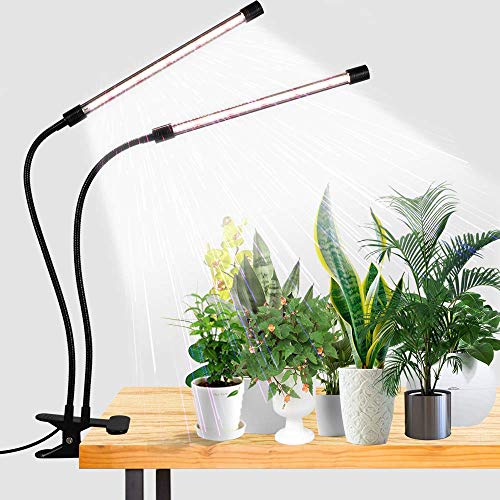
If your home is dim, use a full-spectrum LED or fluorescent light about 12 hours a day, placed 6 to 12 inches above the plants. For more detail, see my post on air plant light needs.
Water Consistently and Let Them Dry Completely
I recommend a 20 to 30 minute soak once a week for most homes. In very dry homes, especially in the Southwest or during winter heating season, add a mist between soaks.
Give xerographica and other very fuzzy or bulb-shaped types a quick dunk or rinse instead of a long soak. After watering, shake gently and set the plant upside down so it’s fully dry within about 4 hours.
Water in the morning so plants dry during the day. Use rainwater, pond water, bottled spring water, or filtered or dechlorinated tap water, and skip distilled or softened water.
Keep Air Moving Around the Plant
Moving air helps leaves dry and keeps rot away. An open shelf, a hanging holder, or a room with a ceiling fan on low all help.
Humidity of 40 to 60% is nice, but airflow counts for more. Open globes are fine as long as you take the plants out to water and dry them.
Feed Lightly During Active Growth
A little food in spring and summer helps plants grow and pup. Use an air plant fertilizer or a bromeliad fertilizer that’s urea-free and low in copper or copper-free.
Mix it at quarter strength into the soak water about once a month. Skip feeding in winter when growth slows, and never use copper wire for hanging, since copper is toxic to Tillandsia.
What Slows Growth or Stops It Altogether?
Poor light, uneven watering, wet bases, and cold temperatures are the usual reasons an air plant stalls.
Too Little Light or Long Gaps Between Waterings
In a dim room, an air plant can look fine for a while, then decline slowly over months. It stops making new leaves and the color fades.
Long dry spells slow growth too. Most plants handle about 2 weeks without water, but a month or more causes damage; my post on how long air plants can go without water explains the limits by type.
Thirst signs to watch for:
- Leaves rolling inward more than usual
- A dull or wrinkled look
- A plant that feels lighter in your hand
- Dry brown tips
Trapped Water, Rot, and Poor Airflow
Rot is the number one air plant killer. It starts when water sits at the base for hours.
Signs include a dark, mushy base, leaves falling out from the center, and a sour smell. Once the center rots, the plant rarely recovers.
Closed containers are a common cause because they trap still, humid air. I explain why in my post on air plants in a closed terrarium.
Cold Temperatures and Winter Slowdowns
Air plants grow best between 50 and 90°F. Below 50°F, growth slows sharply, and frost kills them.
Even indoors, growth drops in winter because days are short and light is weak.
In the Northeast, Midwest, and Pacific Northwest, I’d move plants closer to a bright window or add a grow light from November through February, and stretch watering by