
You don’t need a backyard to grow your own food. With the right vegetables for container growing and the right pot size, a sunny patio, deck or front step can produce salads, salsa ingredients and fresh herbs all season long.
The trick is matching each plant to a container big enough for its roots.
In this guide, I’ll walk you through the best crops for pots, the minimum pot size for each one, and my advice on soil, watering and feeding so your plants stay healthy.
What Makes a Vegetable Good for Containers?
A good container vegetable stays fairly compact, has a modest root system and produces a lot of food for the space it takes up. Plant breeders have made this easier by developing varieties made for small spaces.
Look for Compact Varieties
When you shop for seeds or transplants, look for words like “patio,” “bush,” “compact” or “dwarf” on the label. These varieties are bred to stay smaller and still give you a good harvest.
A full-size zucchini or a sprawling heirloom tomato can outgrow a pot fast. A bush or patio version of the same crop will be far easier to manage in a container.
Here’s what I look for in a container-friendly vegetable:
- A mature size listed as small, compact or bush
- A shorter time to harvest
- Roots that don’t need to go very deep
- Plants that produce over a long season, like herbs and peppers
- Crops you can harvest a little at a time, like leafy greens
Match Plants to Your Sunlight
Sunlight is the other big factor. Fruiting crops like tomatoes, peppers, eggplant, cucumbers and squash need 6 to 8 hours of direct sun a day. Without it, they grow leggy and produce little fruit.
Leafy greens and herbs are more forgiving. They can manage with 3 to 4 hours of direct sun, which makes them a smart pick for shadier spots.
If you’re working with a partly shaded space, my guide to growing vegetables on a balcony covers how to make the most of the light you have.
Spend a day watching your space before you buy plants. Note when the sun hits and when it leaves. That simple step saves a lot of disappointment.
Helpful Supplies to Start With
Two products make container growing much easier. The first is fabric grow bags. They’re lightweight, they drain well, and they let roots breathe, which helps prevent roots from circling the pot.

The second is a balanced liquid vegetable fertilizer. Container plants run through nutrients quickly, and a liquid feed is an easy way to keep them fed through the season. I’ll cover how often to use it later in this guide.
Easy Leafy Greens and Herbs
Leafy greens and herbs are the easiest vegetables for container growing because they have shallow roots and tolerate partial shade. Most only need 6 to 8 inches of soil depth.

Lettuce, Spinach and Arugula
Lettuce, spinach and arugula all grow well in containers 6 to 8 inches deep. They don’t need a lot of depth, so wide, shallow containers and trays work fine.
These greens love cool weather. Plant them in spring and fall for the best results. In summer heat, they tend to bolt, which means they send up a flower stalk and the leaves turn bitter.
My advice is to grow loose-leaf lettuce and harvest the outer leaves as you need them. The plant keeps producing from the center, so you get several harvests from one sowing.
A few tips for growing greens in pots:
- Sow seeds every two to three weeks for a steady supply
- Move pots into afternoon shade when the weather warms up
- Keep the soil evenly moist so leaves stay tender
- Harvest in the morning when leaves are crisp
Cabbage is a leafy crop too, but it needs more room. Plan on 5 gallons per plant. If you want to try it, my guide to growing cabbage in containers explains the details.
Herbs for Pots
Most culinary herbs thrive in containers. Give each plant a pot 6 to 8 inches deep, or about 1 gallon of soil.

Basil, parsley, chives, cilantro, thyme, oregano and mint are all good choices. Mint spreads aggressively, so I always recommend growing it in its own pot so it doesn’t take over its neighbors.
Group herbs by their needs. Mediterranean herbs like thyme, oregano and rosemary prefer to dry out a bit between waterings. Basil, parsley and cilantro like more consistent moisture.
If you have pets, keep in mind that some herbs can be harmful to cats and dogs. The ASPCA keeps a list of plants that are toxic to pets, and it’s worth checking before you set pots where animals can reach them.
Green Onions and Other Quick Crops
Green onions need only about 6 inches of soil depth. They grow quickly and you can snip the tops repeatedly.
Radishes also need about 6 inches of depth and are some of the fastest crops you can grow. Many varieties are ready in about a month. I’ll cover radishes more in the root crops section.
| Crop | Minimum Pot Depth / Size | Sun Needed |
|---|---|---|
| Lettuce | 6 to 8 inches deep, wide trays fine | 3 to 4 hours |
| Spinach | 6 to 8 inches deep | 3 to 4 hours |
| Arugula | 6 to 8 inches deep | 3 to 4 hours |
| Herbs | 6 to 8 inches deep, about 1 gallon each | 3 to 4 hours or more |
| Green onions | 6 inches deep | 3 to 4 hours or more |
| Cabbage | 5 gallons per plant | 6 hours preferred |
Fruiting Vegetables: Tomatoes, Peppers and Eggplant
Tomatoes, peppers and eggplant all grow well in pots if you give them enough soil and at least 6 to 8 hours of direct sun. Pot size is the biggest factor in how well they produce.

Tomatoes
Tomatoes are the most popular container crop, and for good reason. But they need more soil than many people expect.
Determinate or dwarf tomatoes need a 5-gallon pot at minimum. A 10-gallon pot is better. These types stay smaller and set most of their fruit over a shorter period.
Indeterminate tomatoes keep growing and producing until frost. They need 15 to 20 gallons of soil and a sturdy cage. In a small pot, they dry out constantly and struggle.
My advice for container tomatoes:
- Choose determinate, dwarf or patio varieties for smaller pots
- Add the cage or stake at planting time so you don’t damage roots later
- Water deeply and consistently to help prevent blossom end rot
- Place pots in the sunniest spot you have
For more on growing them in tight spaces, see my guide to growing tomatoes on a balcony.
Peppers
Peppers are some of the best container vegetables out there. They stay fairly compact and produce for months once they get going.

Plan on a pot that holds 2 to 5 gallons. Smaller hot peppers do fine at the low end. Larger bell peppers prefer the bigger size.
Peppers love warmth. Wait until nights stay reliably warm before moving them outside. A short stake can help support plants once they’re loaded with fruit.
Eggplant
Eggplant needs a 5-gallon pot and plenty of heat and sun. Compact and smaller-fruited varieties are the best fit for containers.
Like peppers, eggplant doesn’t like cold. Set plants out after the weather has warmed. A small stake helps keep the stems upright as fruit develops.
If you’d like to start your own plants from seed, my guide to growing eggplant in pots walks through the process.
| Crop | Minimum Pot Size | Support Needed |
|---|---|---|
| Determinate or dwarf tomatoes | 5 gallons minimum, 10 gallons better | Small cage or stake |
| Indeterminate tomatoes | 15 to 20 gallons | Sturdy cage |
| Peppers | 2 to 5 gallons | Short stake |
| Eggplant | 5 gallons | Short stake |
Vining and Bush Crops: Cucumbers, Squash and Beans
Cucumbers, squash and beans can all grow in containers if you pick bush varieties or give vining types a trellis. Growing up instead of out saves a lot of space.
Cucumbers
Bush cucumbers are the best choice for pots. Give each plant a 5-gallon container with a small trellis.
Even bush types appreciate something to climb. A trellis keeps the fruit off the soil, improves airflow and makes harvesting easier.
Cucumbers need consistent water. If the soil dries out too much, the fruit can turn bitter or misshapen. Pick them often to keep the plant producing.
Zucchini and Squash
Zucchini is productive, but it’s a big plant. You’ll need a container that holds 10 to 20 gallons of soil.
Look for bush or compact zucchini varieties. These stay tighter and are much better suited to containers than sprawling types.
Winter squash and some summer squash can be trained upward on a strong trellis. My guide to growing squash vertically in containers shows how to set that up.
A few squash tips:
- Give plants full sun and plenty of airflow
- Water at the base to keep leaves dry
- Check leaves often for powdery mildew
- Harvest zucchini small, when they’re most tender
Beans and Peas
Bush beans are easy and productive in pots. They need just 2 to 3 gallons of soil and no support.
Pole beans and peas need more room and something to climb. Use a 5-gallon container about 12 inches deep, along with a trellis.
Peas prefer cool weather, so grow them in spring or fall. Beans like warmth and do best once the weather heats up.
Both are great for beginners. If you want crops that go from seed to harvest quickly, check out my list of fast-growing summer vegetables.
| Crop | Minimum Pot Size | Support Needed |
|---|---|---|
| Bush cucumbers | 5 gallons | Small trellis |
| Zucchini | 10 to 20 gallons | None for bush types |
| Bush beans | 2 to 3 gallons | None |
| Pole beans | 5 gallons, about 12 inches deep | Trellis |
| Peas | 5 gallons, about 12 inches deep | Trellis |
Root Crops in Pots
Root crops grow well in containers as long as the pot is deep enough for the roots to form. Short or round varieties are the easiest place to start.
Carrots and Radishes
Carrots need depth. Long carrot types need 12 inches of soil. Short, round types can grow in pots 6 to 8 inches deep.
Loose, fluffy potting mix is one of the big advantages of growing carrots in containers. There are no rocks or heavy clay to cause forked or stunted roots.
Radishes need only about 6 inches of depth. They’re quick, easy and a great crop for kids or first-time gardeners.
My tips for carrots and radishes:
- Sow seeds thinly and thin seedlings so roots have room
- Keep the soil surface moist until seeds sprout
- Harvest radishes promptly so they don’t turn woody
- Grow in cool weather for the best flavor
Potatoes
Potatoes are surprisingly well suited to containers. Use a 10- to 15-gallon grow bag.
Start with a few inches of potting mix in the bottom, plant your seed potatoes, and cover them. As the plants grow, keep adding mix around the stems. This is called hilling, and it gives the plant more room to form tubers.
Harvest is easy. When the foliage dies back, you can tip out the bag and collect your potatoes without much digging.
Ginger and Other Specialty Roots
Ginger is a fun crop for containers, especially in areas with short summers. It likes warmth, partial shade and steady moisture.
Because ginger grows horizontally, a wide pot works better than a deep, narrow one. You can learn the full process in my guide to growing ginger in pots.
| Crop | Minimum Pot Depth / Size |
|---|---|
| Long carrots | 12 inches deep |
| Short, round carrots | 6 to 8 inches deep |
| Radishes | 6 inches deep |
| Potatoes | 10 to 15 gallon grow bag |
Pot Sizes, Soil and Drainage
The right container has enough soil volume for the plant’s roots, drainage holes in the bottom and quality potting mix inside. Get those three things right and most problems go away.
Why Soil Volume Matters
For pots, soil volume matters more than anything else. More soil holds more water and nutrients, which means less stress for the plant and less work for you.
A plant in a pot that’s too small dries out fast and runs out of nutrients. If you’re torn between two sizes, my advice is to go bigger.
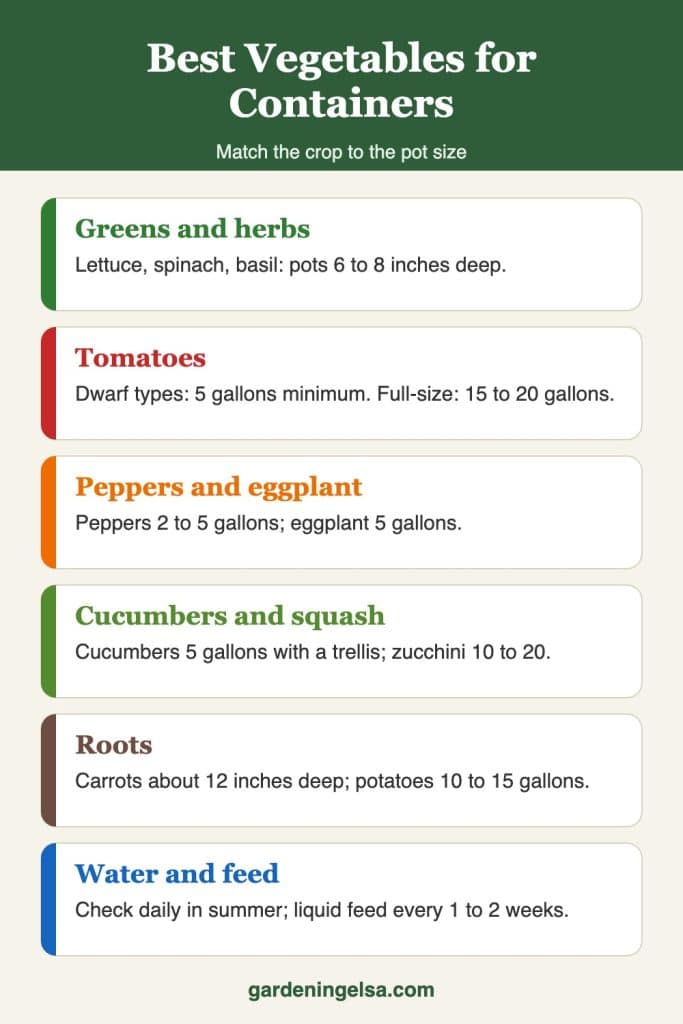
Here’s a full pot size reference for the crops in this guide:
| Crop | Minimum Pot Size |
|---|---|
| Lettuce, spinach, arugula | 6 to 8 inches deep |
| Radishes | 6 inches deep |
| Herbs | 6 to 8 inches deep, about 1 gallon |
| Green onions | 6 inches deep |
| Peppers | 2 to 5 gallons |
| Eggplant | 5 gallons |
| Determinate or dwarf tomatoes | 5 gallons minimum, 10 gallons better |
| Indeterminate tomatoes | 15 to 20 gallons with a cage |
| Bush cucumbers | 5 gallons with a small trellis |
| Bush beans | 2 to 3 gallons |
| Pole beans and peas | 5 gallons, about 12 inches deep, with a trellis |
| Zucchini | 10 to 20 gallons |
| Carrots | 12 inches deep (long), 6 to 8 inches (short) |
| Potatoes | 10 to 15 gallon grow bag |
| Cabbage | 5 gallons per plant |
Choosing the Right Potting Mix
Always use a quality potting mix in containers. I like to mix in some compost to add nutrients and improve moisture retention.
Never use garden soil in pots. It compacts in containers, drains poorly and can carry weed seeds, pests and disease. Roots need air as much as they need water.
Potting mix stays light and fluffy, which lets roots spread and water drain freely. It’s worth paying a little more for a good bag.
Drainage and Container Material
Every container needs drainage holes. Without them, water collects at the bottom and roots can rot. If you love a decorative pot without holes, use it as an outer cover and set a draining pot inside.
Container color matters in summer. Dark pots absorb heat and can warm the soil enough to stress roots. In hot climates, lighter colors or fabric grow bags are a better choice.
Other material notes:
- Plastic pots are light and hold moisture well
- Terra cotta looks great but dries out faster
- Fabric grow bags drain well and help prevent root circling
- Wooden containers insulate roots but should be untreated for food crops
If you’re planning a whole garden in a tiny footprint, my guide to small-space vegetable gardening has more layout ideas.
Watering and Feeding Container Vegetables
Container vegetables need water whenever the top inch of soil is dry and regular fertilizer through the season. Pots dry out and lose nutrients much faster than garden beds.
How to Water Container Plants
The simplest test is to stick your finger into the soil. If the top inch feels dry, it’s time to water.
In hot weather, many pots need water daily. Big plants in small pots, like a tomato in a 5-gallon container, may need water twice a day during a heat wave.
Water slowly and deeply until it runs out of the drainage holes. That tells you the whole root zone got wet. A quick splash on top doesn’t reach the lower roots.
My watering tips:
- Water in the morning so plants are ready for afternoon heat
- Aim water at the soil, not the leaves
- Group pots together to reduce evaporation
- Add a thin layer of mulch to help hold moisture
Feeding Your Plants
Every time you water, some nutrients wash out of the drainage holes. That’s why container plants need regular feeding.
You have two easy options. Feed with a balanced liquid fertilizer every 1 to 2 weeks, or mix a slow-release fertilizer into the potting mix at planting time.
Follow the label directions closely. More fertilizer isn’t better, and too much can burn roots or give you lots of leaves and little fruit. Store fertilizers safely away from kids and pets, and check the label for any safety guidance.
Refreshing Potting Mix Each Year
You don’t have to throw out your potting mix every year. Refresh it by removing old roots and mixing in fresh compost before replanting.
The exception is disease. If your plants had a soil-borne disease, replace the mix completely. Reusing it can spread the problem to next year’s crops.
Rotating what you grow in each pot also helps. Try not to plant tomatoes, peppers or eggplant in the same mix back to back, since they share many of the same problems.
Frequently Asked Questions
What vegetables grow best in containers?
The easiest vegetables for container growing are lettuce, spinach, herbs, radishes, green onions, peppers and bush beans. Determinate tomatoes, bush cucumbers and potatoes also do very well with the right pot size. Look for varieties labeled patio, bush, compact or dwarf.
What size pot do I need for tomatoes?
Determinate or dwarf tomatoes need a 5-gallon pot at minimum, and 10 gallons is better. Indeterminate tomatoes need 15 to 20 gallons of soil plus a sturdy cage. Bigger pots hold more water, which helps prevent stress and blossom end rot.
Can you grow potatoes in a container?
Yes, potatoes grow very well in a 10- to 15-gallon grow bag. Plant seed potatoes in a few inches of mix and keep adding soil around the stems as they grow. When the foliage dies back, tip out the bag to harvest.
How often should I water container vegetables?
Water whenever the top inch of soil feels dry. In hot weather, that often means daily, and large plants in small pots may need water twice a day. Always water until it drains out the bottom of the pot.
Can I reuse potting mix for vegetables?
Yes, you can reuse potting mix if your plants were healthy. Remove old roots and mix in fresh compost each year to restore nutrients. If your plants had a disease, replace the mix completely instead.

Hello there! I’m Elsa, and gardening is my passion. As an avid gardener, I created GardeningElsa.com to share my knowledge and experience with fellow enthusiasts. My website is a comprehensive resource for gardeners of all levels, offering expert advice on a wide range of topics, including plants, flowers, herbs, and vegetable gardening. Whether you’re a beginner looking to start your first garden or a seasoned pro seeking to expand your knowledge, GardeningElsa.com has something for everyone. Read more about me.