
Most peace lilies that won’t flower are healthy plants missing one thing: enough light. That white “flower” is a modified leaf called a spathe, and the plant only builds new ones when it has extra energy to spare.
Many store-bought plants also bloomed in the first place because the nursery treated them with gibberellic acid, a plant hormone that triggers flowers on young plants.
If your peace lily is not flowering, move it to bright indirect light, feed it lightly with a balanced fertilizer in spring and summer, keep it in a snug pot with steady moisture, and give a young plant up to a year to mature.
Most plants respond within a few months once light and roots are right, and you’ll know what to change after reading the leaves and checking the soil.
How Do Peace Lilies Bloom?
Peace lilies (Spathiphyllum) bloom when a mature plant has enough stored energy, and each bloom is a hooded leaf wrapped around a spike of tiny true flowers. If you are stocking up, a balanced liquid fertilizer is the first thing I would pick up.
Indoors, peace lily flowering peaks in spring and early summer, and a single bloom stays attractive for several weeks before it fades.
What Are the Spathe and Spadix?
The white, sail-shaped part is the spathe. It’s a modified leaf, so it contains chlorophyll and behaves more like foliage than a delicate petal.
The upright spike in the center is the spadix. The real flowers are the tiny bumps packed along it, and they shed a little pollen as they open.
Peace lilies belong to the arum family (Araceae), along with anthuriums and calla lilies. They aren’t true lilies, which matters for pet owners.
According to the ASPCA, peace lilies contain insoluble calcium oxalate crystals that cause mouth irritation, drooling, and vomiting in cats and dogs, but they don’t cause the kidney failure linked to true Lilium lilies.
When Do Blooms Appear, and How Long Do They Last?
Healthy indoor plants bloom most heavily from late spring through summer, when days are longer and light is stronger. A well-sited plant can put up flowers more than once a year, with a few stragglers in fall.
Each spathe opens pale green or creamy white, turns bright white, and lasts about four to six weeks. Then it fades to green and finally browns.
Peace lily blooming slows to almost nothing in the darkest months of winter. A plant with no flowers in December is behaving normally.
Why Did My Store-Bought Peace Lily Stop Blooming?
Your store-bought plant probably stopped blooming because its first flowers came from nursery conditions you can’t copy at home. Growers time plants to arrive at the store in full bloom, and those flowers don’t predict how the plant will act in your living room.
How Nursery-Grown Plants May Be Induced to Flower
Commercial growers often spray young peace lilies with gibberellic acid, a natural plant hormone. It makes plants flower months or even years before they would on their own.
Those plants also grow in greenhouses with controlled light, warmth, humidity, and feeding. So a small plant can arrive covered in white spathes even though it isn’t old enough to bloom by itself.

You won’t find gibberellic acid in typical garden-center products for this purpose, and I don’t recommend trying to copy commercial treatments at home. Good light and patience work without the guesswork.
What to Expect After the First Blooms Fade
The nursery blooms usually fade together over a few weeks because they opened at the same time. After that, plan on several months of leaf growth while the plant adjusts to lower light and drier air.
That green-only stretch is normal. If new leaves keep coming in glossy and full-sized, the plant is building the energy it needs for its first home-grown bloom.
Some plants rebloom within the first year. Others take until the following spring, especially if you bought them in fall.
Is Your Peace Lily Getting Enough Light to Flower?
Insufficient light is the number one reason peace lilies stay green, because these plants survive in dim rooms but only bloom with bright indirect light.
Peace lilies are low-light tolerant, and “tolerant” is the key word: tolerance keeps the plant alive, while brighter light pays for flowers.
Where to Place It Near an East-, North-, West-, or South-Facing Window
Bright indirect sunlight means the plant sees a wide view of sky but the sun’s rays don’t land directly on its leaves for long. Here’s how I’d place it by window direction:
| Window direction | Where I’d put a peace lily |
|---|---|
| East | 1 to 3 feet away; gentle morning sun is fine |
| North | Right at the window, within about 1 foot |
| West | 4 to 6 feet back, or behind a sheer curtain |
| South | 4 to 6 feet back, or behind a sheer curtain |
East windows are my first choice. North windows work in the Southeast and Southwest, where sky light is strong, but they’re often too dim in the Northeast and Pacific Northwest in winter.
Watch for warning signs. Pale, bleached, or scorched patches mean too much sun, while long, stretched leaf stems that lean hard toward the glass mean too little.
If you move a plant from a dark corner to a bright window, do it over a week or two. Leaves used to shade can scorch quickly in a sudden change.
When a Grow Light Can Help
A grow light makes sense if your only spots are far from windows, or if you live in a northern state with short, gray winters.
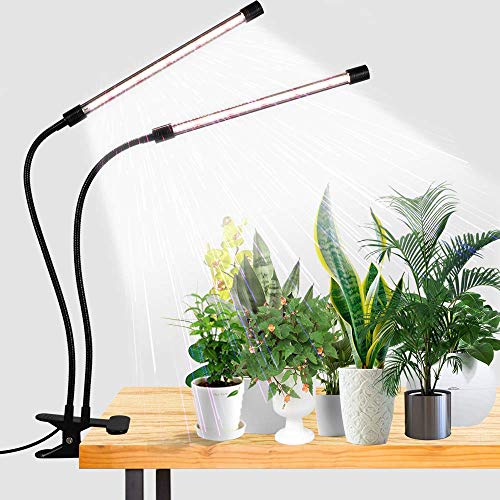
A full-spectrum LED placed 12 to 24 inches above the plant and run for 10 to 12 hours a day gives a peace lily plenty of usable light.
You don’t need a large fixture. A single clip-on or bar light covers one plant, and I keep a list of the best grow lights for indoor plants if you’re choosing one.
Plug the light into an outlet timer. Consistent daily hours help more than an extra-bright light that you forget to turn on.
Is Your Plant Mature Enough to Bloom on Its Own?
A peace lily needs to be established, usually at least a year old with a full clump of leaves, before it blooms without help. Young plants spend their energy on roots and foliage first.
How Age and Established Growth Affect Flowering
Most peace lilies start blooming on their own somewhere between one and three years old. Size is a better clue than age, since you rarely know exactly how old a store plant is.
I look for a plant with several crowns (the clusters of leaves that rise from the soil) and roots that fill most of the pot. A plant with just a few thin leaves in a 4-inch pot is still growing up.
Compact types such as ‘Piccolino’ and ‘Chopin’ tend to bloom at a smaller size than giant floor types such as ‘Sensation’.
Why a Young Plant Needs Patience After Nursery Blooms
A small plant that was forced into bloom has to catch up to its own flowers. Expect it to focus on new leaves for several months while it grows roots.
You can help by giving it good light and steady care. Avoid repotting, dividing, or heavy feeding during this period, since each one sets back root growth.
A good sign is each new leaf coming in a little larger than the last. That steady progress means the plant is moving toward blooming age.
Could Fertilizer Be Preventing Flowers?
Fertilizer affects blooms, but too much does more harm than too little. Over-fertilizing pushes lush leaves, burns roots, and leaves salt crusts in the soil, all of which hold back flowers.
Choose a Balanced Liquid Fertilizer Before a Bloom Booster
My first pick is a balanced liquid houseplant fertilizer, such as a 20-20-20 or 10-10-10, mixed at half the label strength. It gives steady nutrition without forcing growth the plant can’t support.
Bloom-booster formulas are high in phosphorus (the middle number). They won’t make a plant in a dark corner flower, and the extra phosphorus can build up in the soil.
If light, roots, and age are all good and the plant still won’t bloom, you can try a bloom booster at half strength for one season. I’d treat that as a last tweak.
You can compare options in my guide to liquid fertilizer for indoor plants.
Feed Lightly During Active Growth and Watch for Excess
Feed every 6 to 8 weeks from about March through September, when the plant is making new leaves. Stop in late fall and winter, when growth slows. For a broader schedule across your collection, see how often to fertilize indoor plants.
Signs you’re overdoing it:
- Brown, crispy leaf tips or edges
- A white crust on the soil or the pot rim
- Lots of big leaves but no blooms
- Wilting even though the soil is moist
If you see these, flush the pot. Run plain water slowly through the soil for a few minutes, let it drain fully, and skip the next feeding.
Always water first and feed second. Fertilizer poured onto bone-dry roots burns them.
Does Pot Size Affect Flowering?
Pot size affects flowering because a slightly snug peace lily blooms better than one swimming in a big pot of wet soil. A root-bound peace lily can bloom well, but a severely crowded one gets stressed.
Tell a Snug Pot from Severely Crowded Roots
Snug is good. Roots fill the pot and a few peek out of the drainage holes, but the soil still holds water for a normal stretch between waterings.
Severely crowded looks different. Watch for these signs together:
- Water runs straight through and out the bottom
- The plant wilts just 2 or 3 days after a thorough watering
- Thick mats of roots circle the bottom of the pot
- New leaves come in smaller and growth stalls
When several of these show up at once, it’s time to repot.
Repot at the Right Time Without Oversizing the Pot
Repot in spring, just as growth picks up. Move up only 1 to 2 inches in diameter, for exa