
The ASPCA lists lemon grass (Cymbopogon citratus) as toxic to cats, dogs, and horses, so I treat it as a plant to keep away from pets. Is lemongrass safe for cats?
No, the plant is toxic to cats, but most cases involve mild stomach upset, while lemongrass essential oil is far more dangerous.
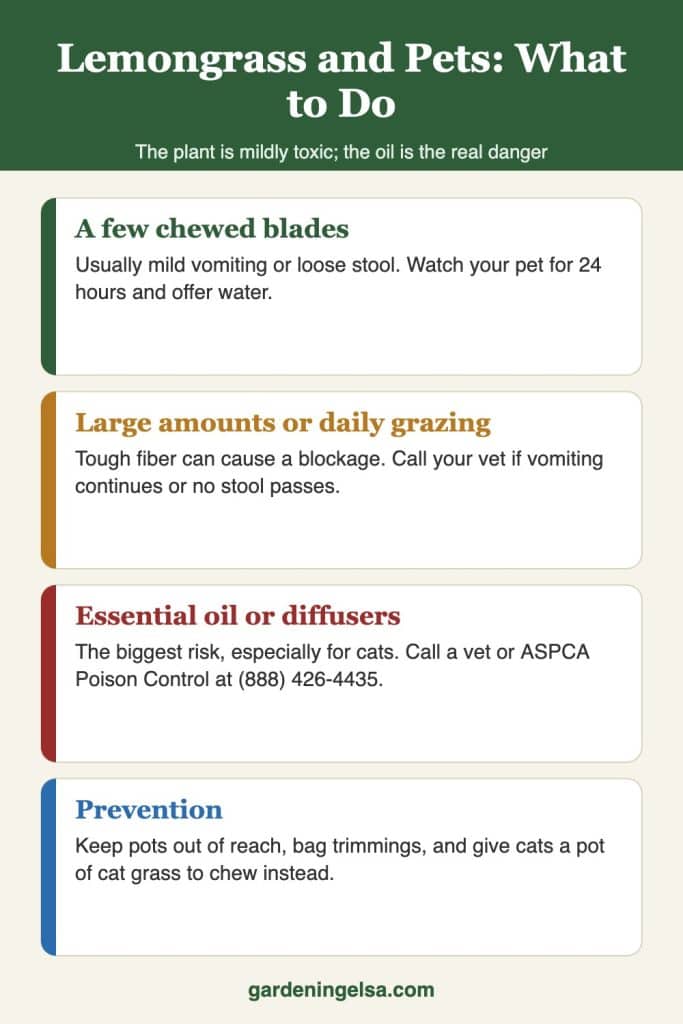
A few chewed blades usually mean some vomiting or loose stool that passes on its own. A spilled bottle of oil, a running diffuser, or a cat that grazes on your potted plant every day is a different story.
Knowing which situation you’re in helps you decide whether to watch and wait or call a vet right away.
The Short Answer for Pet Owners
Lemongrass belongs on the “keep out of reach” list for every pet in your home. The fresh plant mostly causes stomach trouble, and the concentrated oil can cause serious illness, with cats at the highest risk.
How Does a Nibble Compare with an Essential Oil Exposure?
A nibble on a fresh blade gives your pet a small dose of plant oils mixed with a lot of tough fiber. The usual result is drooling, vomiting, or diarrhea that clears within a day.
Essential oil is the plant’s scent compounds boiled down into a few drops. One lick of a spill, or oil on the fur, delivers far more of those compounds than a mouthful of leaves.
| Exposure | Typical risk | My advice |
|---|---|---|
| One or two chewed blades | Mild stomach upset | Watch your pet for 24 hours |
| Repeated chewing or a large amount | Upset plus possible blockage | Call your vet |
| Licked, spilled, or diffused oil | Serious, especially for cats | Call a vet or poison line now |
Which Pets Need the Most Caution?
Cats top my list. Their livers process many essential oil compounds slowly, so those compounds build up in the body.
Kittens, small cats, toy dog breeds, and older pets with liver or kidney problems also need extra care. Their small bodies and weaker systems leave less room for error, even with plant chewing.
Pets with asthma or other breathing problems are a concern around diffusers. Rabbits, guinea pigs, and birds deserve caution too, since their bodies are small and sensitive.
What the ASPCA Says and Why Lemongrass Causes Problems
The ASPCA’s toxic plant database names lemon grass, also called oil grass, as toxic to dogs, cats, and horses. It points to two toxic principles: essential oils and cyanogenic glycosides. The plant’s fibrous build adds a third, physical risk.
Which Pets Does the ASPCA List?
The ASPCA lists Cymbopogon citratus, a member of the Poaceae family (the true grasses), as toxic to three animals:
- Dogs: stomach upset
- Cats: stomach upset
- Horses: trouble breathing and weakness, with death in rare cases
That’s the West Indian lemongrass you buy at the grocery store and grow in herb pots. The listing covers the live plant, so the same rule applies to stalks sitting on your kitchen counter.

How Can Plant Compounds and Tough Leaves Cause Trouble?
The essential oils in the leaves, mainly citral, irritate the lining of the stomach and gut. That irritation is what causes most of the drooling and vomiting.
Cyanogenic glycosides release small amounts of cyanide when the leaves are chewed. In lemongrass, the amount is low, and a pet would need to eat a large quantity for that part to become dangerous.
The leaves themselves are the third problem. They’re stiff, fibrous, and edged sharply enough to cut skin, so they don’t break down well in a small stomach. A big wad of chewed blades can scrape the throat or bunch up in the gut.
What Happens If a Cat Eats Lemongrass?
Most cats that chew lemongrass get a short bout of stomach upset. Lemongrass for cats is a poor choice even as an occasional treat, because some cats keep coming back to it.
Why Can a Few Bites Still Upset a Cat?
Cats are small, so a few blades make up a bigger share of their body weight than they would for a large dog. The citral in fresh leaves is enough to irritate a cat’s stomach.
Common results include:
- Drooling or lip licking
- Vomiting, sometimes with bits of grass
- Soft stool or diarrhea
- A belly that seems tender or a little swollen
- Hiding or skipping a meal
These signs usually settle within 12 to 24 hours if the cat ate only a little. If your cat craves greens, a pot of cat grass is a safer thing to chew.

When Does Repeated Chewing Raise the Risk?
Lemongrass poisoning in cats gets more serious when a cat grazes on the plant day after day. Each session adds more irritation, and the swallowed fiber builds up.
A cat that eats a large amount risks a blockage in the stomach or intestines. Constant vomiting, no appetite, and no stool are red flags for that.
Pesticides add another layer. Nursery plants and grocery stalks sometimes carry sprays, and those chemicals can hurt your cat more than the plant does.
If your cat chews grass compulsively, I’d mention it to your vet. Strong cravings for odd items, called pica, sometimes point to a health issue.
What Happens If a Dog Eats Lemongrass?
Dogs that eat a little lemongrass usually end up with a mild stomach upset. Bigger dogs handle a few blades better than toy breeds, but a dog that gulps a whole clump faces more risk.
How Do Small and Large Exposures Differ?
A small exposure, like a dog that pulls a few leaves off a patio pot, mostly causes vomiting or diarrhea. Many dogs act normal again within a day.
A large exposure is mainly a fiber problem. Dogs tend to swallow without chewing much, and a mass of tough blades can block the intestines. Blockages are emergencies.
Watch for these signs of a possible blockage after a big meal of grass:
- Repeated vomiting, especially after drinking water
- Straining with little or no stool
- Belly pain or a hunched posture
- Refusing food for more than a day
Size changes the math. A 10-pound Chihuahua that eats half a pot is in far more trouble than a 70-pound Lab that ate the same amount.
What Else Might Be in Lemongrass-Flavored Food?
A lick of Thai curry or soup is a bigger worry for what else is in the dish. Lemongrass recipes often include garlic, onion, shallots, or chiles.
Garlic and onions damage red blood cells in dogs and cats, according to the ASPCA. Spicy chiles and rich coconut milk upset stomachs too.
If your dog got into a lemongrass dish, check the recipe or label for these:
- Onion, garlic, shallots, or chives
- Chiles or hot sauce
- Fish sauce or other high-salt seasonings
- Xylitol in sweetened drinks or desserts
Tell your vet about every ingredient, not just the lemongrass.
Can Rabbits and Other Small Pets Have Lemongrass?
I wouldn’t make lemongrass a regular part of a rabbit’s or guinea pig’s diet. Some rabbit keepers offer tiny pieces, but there’s no official safety listing for small pets, and the sharp leaves carry a physical risk.
Why Isn’t an ASPCA Listing for Dogs and Cats an Answer for Rabbits?
The ASPCA’s plant database covers dogs, cats, and horses. It doesn’t rate plants for rabbits, guinea pigs, hamsters, chinchillas, or birds.
Rabbits and guinea pigs digest plants very differently from cats. They’re built to eat grass, so some owners treat lemongrass like any other herb.
Their guts are also sensitive to sudden changes and strong plant oils. A rabbit’s digestion can slow down fast, and that slowdown (called GI stasis) is a vet emergency.
My advice is to ask a vet who treats exotic pets before offering it. If you do, keep it to a very thin slice of the soft lower stalk alongside unlimited hay, and never offer essential oils.
What Risks Do Tough, Sharp Leaves Pose?
Mature lemongrass blades have rough, sharp edges. They can cut the mouth and gums of a small pet.
Long, stringy fibers can also wrap or tangle in a small gut. Hamsters and gerbils may pouch them in their cheeks, where the edges scratch.
Keep live plants away from free-roaming rabbits. A rabbit will chew through the base of a potted clump, and that’s a lot more than a treat-sized bite.
Why Are Lemongrass Oil and Diffusers a Bigger Risk?
Lemongrass essential oil is the most dangerous form of this plant for pets. It packs the plant’s oils into a strong liquid that can enter the body through the mouth, skin, or lungs.
Citronella oil, which comes from close relatives of lemongrass, carries similar concerns. You’ll find it in bug sprays, candles, and some “natural” flea products.
The ASPCA Animal Poison Control Center has seen problems from essential oil flea products containing lemongrass, even at concentrations under 5 percent. Reported signs include drooling, vomiting, weakness, wobbly walking, and tremors.
How Can Cats Be Exposed Through Their Fur, Skin, or Air?
Cats are the main concern here. Their livers lack enough of an enzyme that breaks down many oil compounds, so the oil lingers in their bodies.
Cats get exposed in three common ways:
- Fur: oil droplets land on the coat, and the cat licks them off while grooming.
- Skin: oils soak through the skin fast, even without licking.
- Air: active diffusers spray tiny droplets that a cat breathes deep into its lungs.
Passive options, like reed diffusers, put out less oil. They still leave a cat in a scented room it can’t escape, and they can be tipped over.
I’d skip diffusing lemongrass or citronella oil in any home with cats. With dogs, keep diffusers in rooms the dog can leave, and never put oil on a pet’s coat.
What Should You Do If an Oil Spills or a Diffuser Causes Symptoms?
Act fast with a spill:
- Move your pet to another room and close the door.
- Turn off the diffuser and open windows for fresh air.
- Wipe the spill with paper towels and wash the area with dish soap and water.
- If oil got on your pet’s fur, wash it off with a mild dish soap and lukewarm water.
- Keep the bottle so you can read the label to the vet.
Call your vet or a poison line if your pet shows drooling, pawing at the mouth, coughing, fast breathing, or wobbly walking. Breathing trouble needs an emergency vet right away.
Which Symptoms Should You Watch For?
Most signs after chewing the plant are stomach-related. Signs that point to nerves, breathing, or a blockage need prompt help.
Common Signs After Chewing the Plant
These are the mild signs I’d expect after a small nibble:
- Drooling
- Lip licking or gagging
- Vomiting once or twice
- Soft stool or diarrhea
- Mild belly discomfort
- Lower appetite for a meal or two
Keep your pet near you for 24 hours. Offer fresh water, and watch whether the signs fade or grow.
Warning Signs That Need Prompt Veterinary Advice
Call a vet without waiting if you see any of these:
- Vomiting more than two or three times, or vomiting that won’t stop
- Bloody vomit or stool
- No food for more than 24 hours, or 12 hours for a cat
- Straining with no stool
- A hard, swollen, or painful belly
- Weakness, tremors, wobbly walking, or seizures
- Fast, labored, or open-mouth breathing (cats should not pant)
- Pale or bright red gums
- Signs of dehydration, like dry gums or sunken eyes
Any of these after an essential oil exposure is an emergency.
What Should You Do If Your Pet Ate Lemongrass?
Stop the exposure first, then gather details, then call for advice. Staying calm and organized gets your pet better help faster.
Remove Access and Record What Your Pet Was Exposed To
Take the plant, stalks, or oil away, and move your pet to a quiet room. Gently pull any loose leaves from your pet’s mouth if you can do it safely.
Then write down:
- What your pet ate (plant, dried herb, food, or oil)
- About how much, and when
- Your pet’s weight and age
- Any product name and label details
- Every symptom, with the time it started
Save a sample or the packaging to show the vet.
When Should You Call a Vet or Animal Poison Control?
Call right away for any essential oil exposure, a large amount of plant, a kitten or very small pet, or any warning sign from the list above.
These lines are open 24 hours and charge a consultation fee:
- ASPCA Animal Poison Control: (888) 426-4435
- Pet Poison Helpline: (855) 764-7661
A vet may give fluids for dehydration, activated charcoal for oils, or X-rays to check for a blockage. For a single small nibble with no symptoms, a call to your regular vet is a reasonable step.
What Shouldn’t You Try at Home?
Skip these common mistakes:
- Don’t make your pet vomit unless a vet tells you to. Hydrogen peroxide is unsafe for cats and can harm dogs.
- Don’t give milk, oil, or salt. None of these help, and some make things worse.
- Don’t give human medicines like antacids or anti-diarrhea pills without vet approval.
- Don’t wash a pet with more essential oils or scented shampoos after an oil spill.
- Don’t wait for symptoms after an oil exposure. Oil signs can show up hours later.
Is Your Plant Lemongrass or Citronella Grass?
Your plant could be either one, since lemongrass and citronella grass look a lot alike in a nursery pot. Both belong to the Cymbopogon genus, and both carry similar oils, so I treat them the same way around pets.
How Does Cooking Lemongrass Differ from Citronella Grasses?
Cooking lemongrass is Cymbopogon citratus, often called West Indian lemongrass. It has a thick, pale bulb at the base that you slice for soups and curries.
Citronella grass is Cymbopogon nardus or Cymbopogon winterianus. It’s grown mostly for oil used in bug repellents, and its stems often show a reddish tint at the base.
Many “citronella plants” sold at big box stores are scented geraniums instead of grasses. My guide on citronella vs lemongrass shows how to tell them apart by leaf and smell.
Why Does the Plant’s Label Matter for Pet Safety?
The scientific name on the tag tells your vet or poison line exactly what your pet ate. “Lemongrass,” “oil grass,” and “citronella” get used loosely in garden centers.
Keep the plant tag, or snap a photo of it when you buy the pot. If there’s no tag, a photo of the leaves and base helps the vet.
How Can You Grow Lemongrass Around Pets?
Lemongrass and pets can share a home if the plant lives where pets can’t reach it. Pair smart placement with a safe grass for chewing, and keep cut pieces cleaned up.
Where Should You Place a Live Plant?
Height and barriers work best. A plant shelf, a hanging basket, or a closed sunroom keeps blades out of reach.
Remember that cats jump. A spot 4 feet up isn’t safe if there’s a chair or counter next to it.
Outside, a fenced herb bed or a tall raised bed keeps dogs out. If you grow lemongrass in pots, you can move the plant wherever your pets don’t go. My lemongrass care guide covers watering and feeding once you’ve picked a spot.
How Do Sun and Seasonal Moves Affect Placement?
Lemongrass needs 6 or more hours of direct sun, and that can pull it toward windowsills pets love. Read up on how much sun lemongrass needs before you choose a window.
It’s a tropical grass hardy only in USDA zones 10 to 11, and zone 9 with protection. In the Northeast, Midwest, and Pacific Northwest, most people grow it in pots.
Set pots outside once nights stay above 60°F. Bring them in before nights drop below 50°F.
That fall move is the risky time. A plant that sat safely on the patio all summer suddenly lands in your living room. If you grow lemongrass indoors over winter, pick a sunny room you can close off, like a spare bedroom.
What Can You Offer a Cat That Likes to Chew Grass?
Give your cat a pot of cat grass. It’s usually wheat, oat, or barley seedlings, and cats can chew it safely.
Cat-friendly grasses grow fast. Sprinkle seed on moist potting mix, keep it at room temperature, and it’s ready in about 7 to 10 days. Start a new pot every two weeks so you always have fresh blades.
Catnip is another safe plant, according to the ASPCA. Set the cat grass near where your cat likes to sit, far from the lemongrass.
How Can You Keep Trimmings and Harvested Stalks Out of Reach?
Loose clippings tempt pets more than the plant does. When you harvest lemongrass, bag the stalks right away.
The same goes for leaves you trim lemongrass to remove. Put them in a lidded bin or compost them where dogs can’t dig.
In the kitchen, store stalks in the fridge or a sealed container. Don’t leave a bundle soaking in a glass of water on a counter your cat can reach.
Frequently Asked Questions
Is lemongrass toxic to cats?
Yes, the ASPCA lists lemon grass as toxic to cats. Most cats that chew a little get mild stomach upset, but lemongrass essential oil is much more dangerous for them.
Is lemongrass safe for dogs?
No, the ASPCA lists lemongrass as toxic to dogs too. A small bite usually causes mild vomiting or diarrhea, while a large amount can cause a blockage.
Can rabbits eat lemongrass?
Some rabbit keepers offer a thin slice of the lower stalk, but I’d ask an exotic pet vet first. Keep it tiny, never give oils, and keep rabbits away from mature, sharp-edged plants.
Is lemongrass essential oil safe for pets?
No, lemongrass essential oil is unsafe for pets, and cats face the highest risk. Keep bottles locked away, skip diffusers around cats, and call a vet or poison line after any exposure.
Why does my cat eat lemongrass?
Cats are drawn to grassy textures and strong scents, and lemongrass offers both. A pot of cat grass gives that urge a safe outlet, and you should mention constant grass chewing to your vet.

Hello there! I’m Elsa, and gardening is my passion. As an avid gardener, I created GardeningElsa.com to share my knowledge and experience with fellow enthusiasts. My website is a comprehensive resource for gardeners of all levels, offering expert advice on a wide range of topics, including plants, flowers, herbs, and vegetable gardening. Whether you’re a beginner looking to start your first garden or a seasoned pro seeking to expand your knowledge, GardeningElsa.com has something for everyone. Read more about me.