ZZ Plant Care: How to Grow a Nearly Unkillable Houseplant
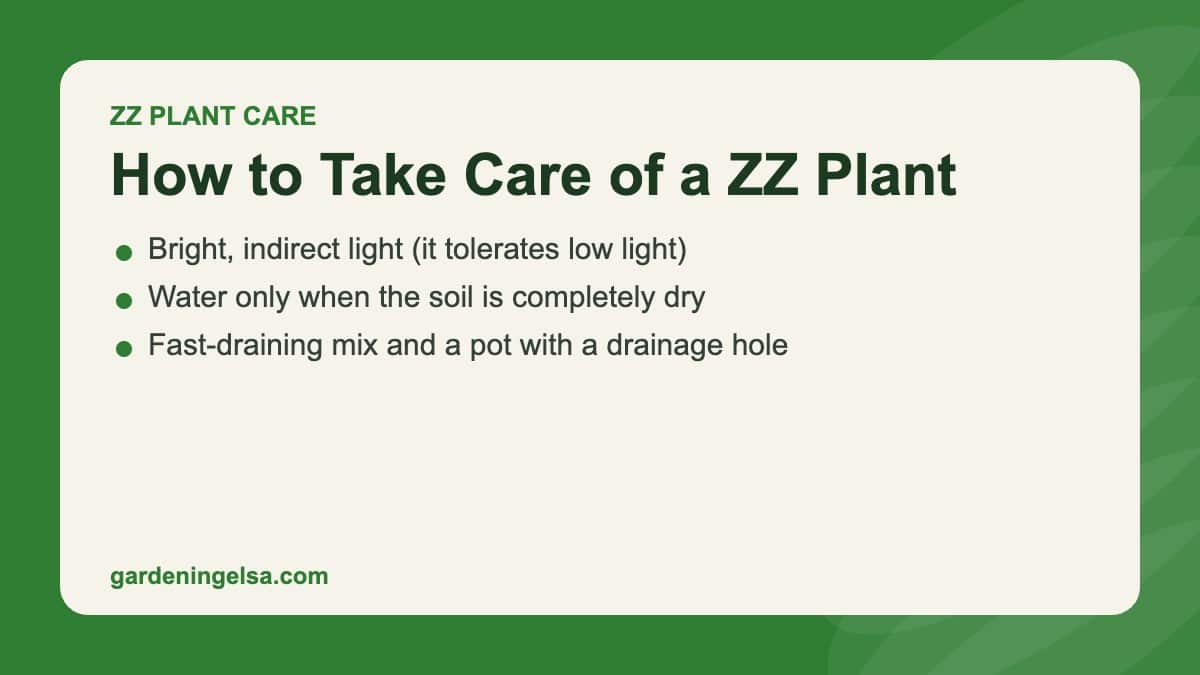
ZZ plants need bright indirect light, water only when the soil is dry, and fast-draining soil. Here is how to care for one, plus fixes for common problems.

Check out all our blog posts on Indoor gardening.
ZZ plants need bright indirect light, water only when the soil is dry, and fast-draining soil. Here is how to care for one, plus fixes for common problems.

If you want a houseplant that stays green in a dim room and shrugs off missed waterings, the ZZ plant earns its reputation. Zamioculcas zamiifolia is an aroid from eastern Africa that stores water in thick underground rhizomes, so it handles drought and low light better than most indoor plants. The real ZZ plant benefits … Read more >>

Powdery mildew on indoor plants looks like someone dusted your leaves with flour, and it keeps spreading until you change the conditions that let it grow. The fix is to isolate the plant, cut off the worst leaves, spray the rest with potassium bicarbonate or neem oil, and then give the plant more space, steadier … Read more >>

Yes, air plants need sun. They make all their food from light, the same as any houseplant, even though they never touch soil. Air plants need bright indirect sunlight for most of the day, and a few hours of gentle morning sun is fine for most of them, but hot afternoon sun through glass will … Read more >>

Yes, an air plant dies after it flowers, but it takes its time. Each air plant blooms only once, and after flowering the mother plant slowly declines over several months to a couple of years while it grows new baby plants called pups. It doesn’t wilt and collapse the week the flower fades. So if … Read more >>

Air plants grow slowly. Most air plants add only a few new leaves a year, and a young pup takes about 1 to 3 years, sometimes longer, to reach blooming size. Small, green types like Tillandsia ionantha sit at the quick end of that range, while big silver ones like T. xerographica can take 3 … Read more >>

You can’t grow a new air plant from a leaf or stem cutting. Air plants (Tillandsia) don’t root from pieces the way pothos or succulents do. The way to grow air plants from cuttings is to separate the pups, the baby plants that form at the base of a mature plant after it blooms, once … Read more >>

Most air plants need very little trimming, and that’s good news. To trim air plants, snip brown leaf tips at a slight angle with clean, sharp scissors, peel away dead lower leaves by hand, cut long roots if you like the look, and remove a spent flower stalk once it turns brown, all without ever … Read more >>

To attach air plants to wood safely, fix only the base of the plant to clean, dry, untreated wood using a dab of waterproof, plant-safe glue, a loose loop of fishing line, or non-copper wire, and keep every leaf free. That one rule protects the plant, because air plants drink and feed through their leaves. … Read more >>

Most air plants can sit for about two weeks without water before they start to suffer real harm. Silvery, fuzzy types can stretch closer to three weeks, while greener, smoother types start struggling after 7 to 10 days. A month or more without water causes damage that some plants never recover from. That two-week window … Read more >>