
Plant 8 pole beans per square foot, in two rows of four, along a trellis set on the north edge of the square. That spacing gives each vine about 3 inches of room at the base while the trellis carries the growth 6 to 8 feet up, where light and airflow are plentiful.
I like square foot gardening pole beans because one 12-inch square, picked every few days, keeps producing for weeks after a bush bean square has quit.
The catch is that a tall vine wall shades its neighbors and holds moisture if you place it badly. Get the trellis spot, the planting time, and the feeding right, and the rest is mostly picking.
How Many Pole Beans Fit in One Square Foot?
Eight is the standard count for one square, and it works because pole beans grow up, leaving the soil below lightly crowded. You can drop to four or six plants when your summers are humid or your variety is extra vigorous.
Where Do Eight Seeds Go in a 12-Inch Square?
Picture the square split into two narrow rows running east to west, parallel to the trellis. Each row holds four seeds about 3 inches apart.
- Row 1: about 2 inches in from the north edge, right at the base of the trellis.
- Row 2: about 4 to 5 inches in from the north edge, so those vines lean back onto the same support.
- Seed spacing: roughly 3 inches between seeds in each row, staggered so the second row’s seeds sit between the first row’s.
I’d buy a packet of pole bean seeds with at least 50 seeds so you have extras for gaps. Hang a panel of trellis netting with 6-inch openings right above Row 1, and both rows have something to grab within a few days of sprouting.
When Should You Give the Vines More Room?
Cut back to 4 to 6 plants per square when air circulation is a real problem in your yard. Humid Southeast summers, beds tucked against a fence, and big heirlooms like Kentucky Wonder all lead to dense, damp foliage.
White mold and bacterial blight spread fastest in that kind of crowded, wet growth. Fewer vines dry off faster after rain and morning dew, and you’ll find the pods more easily.
In a dry, breezy spot like much of the Southwest or the Plains, the full 8 is fine.
Where Should the Trellis Go in the Grid?
The trellis belongs on the north side of your bed, across the back edge of the bean squares. That spot lets 6- to 8-foot vines catch full sun without throwing shade over shorter crops, and it keeps a clear airflow path along the front.

Why Place Climbing Beans on the North Edge?
In the US, the sun tracks across the southern sky, so shadows fall to the north. A tall bean wall on the north edge throws its shade onto the path behind the bed, leaving your other squares with full sun.
If your bed runs north to south, put the beans in the squares at the north end and run the trellis east to west across them.
A row of three or four bean squares along one north edge gives you a solid vertical gardening wall, and you’ll find more layouts in my vertical garden ideas.
Leave a little open space between the vine wall and any fence or building. A gap of a foot or more keeps air moving behind the leaves.
What Support Works for a 6- to 8-Foot Vine?
Pick a support at least 6 feet tall, and 7 to 8 feet if you’re growing a long-vined heirloom. Most pole beans climb 6 to 10 feet, so anything shorter leaves the tips flopping and tangling.
| Support type | Height | Strength | Best for |
|---|---|---|---|
| Livestock (cattle) panel on T-posts | 4 to 5 ft panel, posts extend higher | Very strong, lasts years | Several squares in a row |
| Netting on wood or metal frame | 6 to 8 ft | Moderate | One to four squares |
| Bamboo teepee | 6 to 8 ft | Good in wind | A single square |
| Electrical conduit frame with string | 6 to 7 ft | Strong | A full 4-foot bed edge |
A loaded vine wall catches wind like a sail, so drive posts at least 12 inches deep, through the bed and into the ground below. Set the support before you plant so you don’t stab roots later.
Which Pole Bean Varieties Suit a Small Bed?
Fast, productive snap beans make the best use of one square, and a few classic pole bean varieties fit that well. Your season length and summer heat should steer the pick, and some gardeners do better with bush beans in part of the bed.
Choosing Snap Beans for Your Growing Season
Days to maturity tells you if a variety fits your frost-free window. Count back from your first fall frost and leave a few extra weeks of picking time.
- Blue Lake: about 60 days, 6-inch round green pods. A good all-around pick for short Northern seasons.
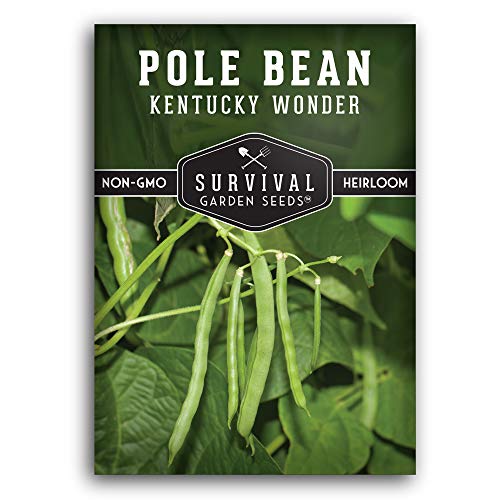
- Kentucky Wonder: about 65 days, a hardy heirloom with long vines. Eat it fresh or let it dry for shell beans.
- Blauhilde: about 65 days, 10-inch purple pods that are easy to spot among the leaves.
- Musica: about 67 days, flat Romano-style pods.
- Gold Nectar: about 70 days, straight yellow pods.
- Speckled Calico: about 84 days, better for long Southern seasons.
If you garden where July days sit above 90°F, look for seed descriptions that mention heat tolerance. Beans drop blossoms in steady heat, so a heat-tolerant type keeps setting pods.
Pole Beans vs. Bush Beans in a Square-Foot Grid
Pole beans give more beans per square over a longer season, while bush beans give a quicker, shorter burst with no trellis.
| Pole beans | Bush beans | |
|---|---|---|
| Plants per square | 8 | 9 |
| Support needed | 6 to 8 ft trellis | None |
| First pods | 60 to 70 days | About 50 to 55 days |
| Harvest window | Many weeks, until frost | About 2 to 3 weeks |
| Shade on neighbors | Yes, place on north edge | Minimal |
My advice is to grow pole beans when you want steady picking all summer and you have a north edge for a trellis.
Bush beans make sense for open middle squares or for a quick crop between spring and fall plantings. My list of the best plants for square foot gardening covers other crops that pair well with both.
When Can You Sow Pole Beans Outdoors?
Sow pole beans outside once frost danger has passed and your soil reaches at least 60°F, which falls roughly 2 to 4 weeks after your last spring frost. Seeds sown earlier sit in cold, wet mix and rot.
Check Frost Dates and Soil Temperature
A soil thermometer is the most reliable guide. Push it 4 inches into the mix in the morning and wait for several days in a row at 60°F or higher.
Raised beds warm faster than ground soil, which gives square-foot gardeners a small head start. At 70 to 80°F, seedlings come up in about 8 to 10 days; at the low end of the range, plan on 10 to 14 days.
Don’t start pole beans indoors. They dislike transplanting, and direct-sown seeds catch up fast in warm soil.
Adjust Planting Time for Your US Region
The date moves with your climate zone, but the trigger stays the same: warm soil and settled weather.
| Region (USDA zone) | Spring sowing window | Fall crop |
|---|---|---|
| Northern tier, mountains (3 to 4) | Late May to early June | Not practical; sow once by mid-July |
| Midwest, Northeast, Pacific Northwest (5 to 6) | Mid-April to mid-May | Sow by late July for a late harvest |
| Southeast, lower Midwest (7 to 8) | Early April | Second sowing from late July |
| Deep South, Southern California, low desert (9 to 10) | March to April | August to mid-September |
In zones 9 and 10, skip sowing in June and July. The fall crop there is often the stronger one because cooler nights help pods fill.
How Should You Prepare the Square Before Planting?
Beans want a loose, fast-draining mix with moderate fertility. A standard square-foot blend handles drainage, and a light hand with compost keeps the vines from turning leafy without pods.
Fill the Bed with Loose, Well-Draining Mix
Fill your bed at least 6 inches deep. The classic blend is equal thirds by volume of mixed compost, peat moss or coco coir, and coarse vermiculite.
That mix stays fluffy, drains after a heavy rain, and never needs tilling. Well-draining soil is the main defense against seed rot and root problems in beans.
If you’re building a bed over clay or a poor spot, my notes on how to prepare soil for vegetable garden beds help you get the base right.
Aim for a pH between 6.0 and 6.8. Lay down your grid with string, lath strips, or thin boards so each square stays clear.
Add Compost Without Overfeeding Beans
One trowel of finished compost mixed into the top few inches of the square is plenty for beans. They’re light feeders and pull nitrogen from the air through their roots.
Skip fresh manure and heavy feeds at planting. Too much nitrogen gives you a huge green vine with very few pods.
A packet of bean inoculant, dusted on damp seeds right before sowing, helps the roots fix nitrogen in a brand-new bed that has never grown legumes.
How Do You Plant Eight Pole Bean Seeds Step by Step?
Install the trellis first, then mark two rows of four and sow 1 inch deep. The rest of the work is keeping the seed zone moist and nudging young vines toward the support.
Set Up the Support and Mark Two Rows of Four
- Drive your posts at the north edge of the square, at least 12 inches deep.
- Attach netting or string so the bottom edge sits at soil level. Vines need to reach it right away.
- Draw Row 1 in the mix with your finger, about 2 inches from the trellis.
- Draw Row 2 about 2 to 3 inches south of Row 1.
- Mark four spots in each row, about 3 inches apart, offset between rows.
Sow, Water, and Guide Young Vines
- Poke each hole 1 inch deep. In the hot weather of a late-summer sowing, go up to 2 inches so seeds stay moist.
- Drop one seed per hole, cover, and firm the mix gently.
- Water slowly until the top few inches are evenly damp.
- Keep the surface moist until sprouts appear, but don’t leave it soggy.
- Fill gaps after two weeks with extra seeds if any fail.
- Guide the first tendrils onto the netting by hand. Pole beans twine counterclockwise, so wrap them that way.
When the vines reach the top of the trellis, pinch off the growing tips. That keeps the top tidy and sends energy into flowers and pods.