
Gardeners often wonder about the best ways to nourish their cucumber plants. Mushroom compost is a popular soil amendment that can benefit many vegetables. Mushroom compost is good for cucumbers, providing nutrients and improving soil structure to support healthy plant growth.
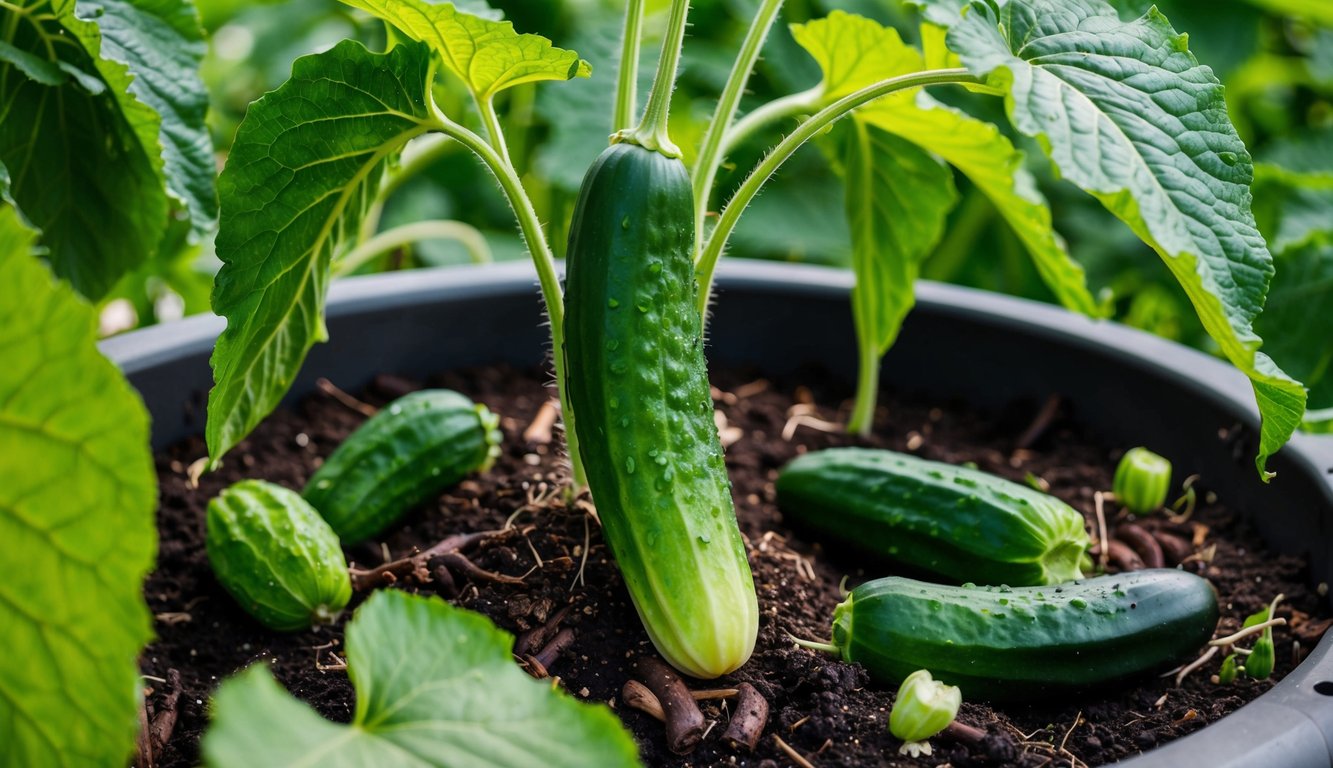
This organic material is made from the leftover substrate used to grow mushrooms. It contains high levels of organic matter, nitrogen, phosphorus, and potassium. These nutrients are essential for cucumber plants to thrive and produce a bountiful harvest. Mushroom compost also helps retain moisture in the soil, which is important for water-loving cucumber plants.
Using mushroom compost in the garden can lead to sturdier cucumber plants that are more resistant to pests and diseases. The compost’s calcium content is particularly beneficial for cucumbers, promoting strong plant growth and crisp fruit development. Gardeners who add mushroom compost to their cucumber beds often see larger, crunchier cucumbers as a result.
The Basics of Mushroom Compost
Mushroom compost is a nutrient-rich soil amendment made from organic materials. It offers many benefits for improving soil health and plant growth.
Defining Mushroom Compost
Mushroom compost is the leftover growing medium from mushroom farms. After mushrooms are harvested, the used substrate is recycled into compost. This compost is full of nutrients and organic matter.
The composting process breaks down the materials. It creates a dark, crumbly substance. Mushroom compost has a soft, spongy texture. It smells earthy and fresh.
Composition of Mushroom Compost
Mushroom compost contains a mix of organic ingredients. Common components include:
- Wheat or rye straw
- Peat moss
- Animal manure (often chicken or horse)
- Gypsum
- Lime
The exact recipe can vary between producers. Some may add grape pomace, cottonseed meal, or other plant materials.
As the materials break down, they form a rich blend. This blend is full of nutrients and beneficial microorganisms.
Benefits of Mushroom Compost as Soil Amendment
Mushroom compost improves soil in many ways:
• Adds organic matter • Boosts nutrient levels (especially nitrogen, phosphorus, and potassium) • Enhances soil structure • Increases water retention • Promotes healthy soil microbes
It helps sandy soils hold more water. In clay soils, it improves drainage. The compost slowly releases nutrients as it breaks down.
Mushroom compost is slightly acidic. This makes it good for acid-loving plants. It’s also calcium-rich, which helps prevent blossom end rot in some crops.
Cucumbers in the Garden
Cucumbers are popular vegetables that thrive in well-structured soil with proper moisture and nutrients. They need specific care to grow successfully in home gardens.
Understanding Cucumber Growth Requirements
Cucumbers prefer warm temperatures between 65-75°F. They need full sun for at least 6 hours daily. Water deeply and regularly, keeping soil moist but not waterlogged.
Cucumbers have shallow roots, so mulch helps retain moisture. Feed with balanced fertilizer every 2-3 weeks. Provide support like trellises for vining varieties.
Space plants 12-18 inches apart in rows 3-5 feet wide. This gives roots room to spread. Good air circulation prevents diseases.
Importance of Soil Structure for Cucumbers
Loose, well-draining soil is crucial for cucumber growth. Sandy loam enriched with organic matter is ideal. It allows roots to penetrate easily and access nutrients.
Good soil structure improves water retention and drainage. It prevents waterlogging that can lead to root rot. Loamy soil also warms up faster in spring.
Add compost or aged manure to improve structure. This feeds beneficial soil microbes too. Avoid compacting soil by not walking on garden beds.
Mushroom Compost and Soil Health
Mushroom compost boosts soil health in several ways. It improves soil structure and promotes beneficial microbial activity. These changes create better growing conditions for cucumbers and other plants.
Improving Soil Structure with Mushroom Compost
Mushroom compost adds organic matter to soil. This organic matter helps bind soil particles together. The result is better soil structure with improved water retention and drainage.
Soil with good structure has more pore spaces. These spaces allow air, water, and roots to move easily through the soil. Cucumbers need well-draining soil to thrive.
The compost also increases the soil’s ability to hold nutrients. This means plants can access food more easily. Cucumbers grown in amended soil may produce more fruit.
Impact on Microbial Activity and Disease Suppression
Mushroom compost supports helpful microorganisms in the soil. These tiny life forms break down organic matter. They release nutrients plants can use.
The compost contains beneficial fungi. These fungi form partnerships with plant roots. This helps cucumbers take up more water and nutrients.
Some microbes in mushroom compost fight plant diseases. They can suppress harmful pathogens in the soil. This natural protection may lead to healthier cucumber plants.
The compost’s high calcium content can also help prevent certain plant diseases. Calcium strengthens cell walls, making plants more resistant to infection.
Nutritional Profile and Plant Health
Mushroom compost offers a rich blend of nutrients that can boost cucumber growth. It supplies key elements and improves soil conditions to help plants thrive.
Essential Nutrients Supplied by Mushroom Compost
Mushroom compost is packed with vital plant nutrients. It contains high levels of nitrogen, phosphorus, and potassium – the big three that cucumbers need to grow strong. The compost also has calcium from gypsum, which helps cucumbers develop properly.
Trace elements like iron, zinc, and manganese are found in mushroom compost too. These micronutrients play important roles in plant processes. The organic matter in the compost slowly breaks down, feeding soil life and releasing nutrients over time.
Impact on Nutrient Uptake by Cucumber Plants
Cucumber plants grown in soil with mushroom compost can take up nutrients more easily. The compost improves soil structure, allowing roots to spread out and access more nutrients. It also boosts the soil’s ability to hold water and nutrients.
Studies show mushroom compost can increase cucumber yields by up to 20%. The nutrients it provides help cucumbers grow bigger and produce more fruit. Plants look healthier too, with greener leaves and stronger stems.
The slow-release nature of mushroom compost means nutrients are available throughout the growing season. This steady supply helps prevent nutrient deficiencies in cucumber plants as they develop.
Optimizing Conditions for Cucumbers
Cucumbers grow best in specific soil conditions. The right pH level and moisture are key for healthy plants and a good harvest.
pH Level and Mushroom Compost
Cucumbers like soil with a pH between 6.0 and 7.0. Mushroom compost can help adjust the pH. It’s often slightly acidic, which works well for cucumbers.
The compost adds organic matter to the soil. This improves soil structure and helps roots grow. It also feeds helpful soil microbes.
If the soil is too acidic, adding lime can raise the pH. For alkaline soil, gypsum can lower the pH. Always test the soil before making changes.
Moisture and Water Retention
Cucumbers need consistent moisture. Mushroom compost helps with this. It acts like a sponge, holding water in the soil.
The compost improves drainage in clay soils. This stops roots from getting too wet. In sandy soils, it helps keep water from draining away too fast.
Water cucumbers deeply once or twice a week. Aim for about 1 inch of water. Mulch around plants to keep moisture in the soil.
Check the soil often. It should feel damp but not soggy. Too much water can lead to root rot. Too little can cause bitter fruit.
Application and Usage
Mushroom compost can boost cucumber growth when used properly. It adds nutrients and improves soil structure for healthier plants.
How to Apply Mushroom Compost in Cucumber Beds
Mix mushroom compost into the top 6-8 inches of soil before planting cucumbers. Use 2-3 inches of compost per 100 square feet of garden bed. For container growing, blend 1 part compost with 3 parts potting soil.
As a mulch, spread a 2-inch layer around cucumber plants. Keep the mulch a few inches away from plant stems to prevent rot. This helps retain moisture and control weeds.
In raised beds, add a 1-2 inch layer of mushroom compost on top of the soil each spring. Work it in lightly with a garden fork.
Frequency and Timing of Mushroom Compost Application
Apply mushroom compost once a year in spring before planting cucumbers. This gives plants nutrients throughout the growing season.
For established cucumber beds, add a thin layer (1/2 to 1 inch) of compost as a topdressing in mid-season. This provides a nutrient boost when plants are fruiting heavily.
Avoid applying mushroom compost in fall or winter. The nutrients may leach away before plants can use them in spring.
If soil tests show low organic matter, you can apply compost twice yearly – once in spring and again in mid-summer.
Potential Issues and Considerations
Mushroom compost can be great for cucumbers, but there are some important things to watch out for. Gardeners should be aware of its effects on soil chemistry and potential contaminants.
Managing Salinity and Alkalinity
Mushroom compost often has high salt levels. This can harm cucumbers and other plants if used too much. It’s best to mix it with other soil or compost to lower the salt content. The compost is also alkaline, with a pH around 8.0. This may not suit acid-loving plants.
For cucumbers, use mushroom compost sparingly. Add it to soil a few weeks before planting. This gives time for salts to leach out. Water the soil well after adding the compost. Test soil pH regularly when using mushroom compost. Add sulfur if needed to lower pH for optimal cucumber growth.
Weed Seed Content and Pathogen Risk
Spent mushroom compost may contain weed seeds. These can sprout and compete with your cucumbers. Look for sterilized compost to avoid this issue. Some composts may have harmful fungi or bacteria. These could cause root rot in cucumbers.
To be safe, buy mushroom compost from trusted sources. Ask if it’s been heat-treated to kill weed seeds and pathogens. Mix it with garden soil rather than using it alone. This dilutes any potential issues. Watch your plants for signs of disease or stunted growth when using new compost.
Comparative Analysis with Other Amendments
Mushroom compost offers unique benefits compared to other soil amendments. Its nutrient content and effects differ from alternatives like peat moss and chemical fertilizers.
Mushroom Compost vs. Other Organic Amendments
Mushroom compost has some advantages over other organic options. It’s richer in nutrients than peat moss, which is mainly used to improve soil structure. Peat moss is more acidic, while mushroom compost is closer to neutral pH.
Aged mushroom compost beats fresh manure in safety and ease of use. It won’t burn plants like raw chicken manure can. The composting process makes nutrients more available to plants.
Mushroom compost adds more organic matter to soil than many other amendments. This helps soil hold water and nutrients better. It also improves soil texture over time.
Mushroom Compost vs. Chemical Fertilizers
Organic mushroom compost works differently than chemical fertilizers. It releases nutrients slowly as it breaks down. This feeds plants over a longer time. Chemical fertilizers give a quick nutrient boost but don’t last as long.
Mushroom compost improves soil health in ways chemical fertilizers can’t. It adds beneficial microbes and organic matter. This builds soil structure and supports plant roots.
Chemical fertilizers are more concentrated. They can supply exact nutrient ratios. But they don’t add organic matter or improve soil long-term like mushroom compost does.
Mushroom compost is less likely to cause nutrient burn or runoff than chemical fertilizers. It’s a good choice for organic gardens and eco-friendly growing methods.
Beyond Cucumbers: General Use in Gardens
Mushroom compost is a versatile soil amendment that benefits many plants and garden types. It improves soil structure and adds nutrients that help a wide range of crops and ornamentals thrive.
Versatility in Vegetable Gardens and Beyond
Mushroom compost works well for many vegetables besides cucumbers. Tomatoes and peppers grow vigorously with this nutrient-rich addition. Herbs also benefit from the improved soil texture and fertility.
The compost helps retain moisture in sandy soils. This is good for thirsty plants like squash and melons. It loosens clay soils too, making it easier for root crops to grow.
Fruit trees gain from mushroom compost mixed into the soil at planting time. It gives young trees a nutrient boost as they get started. Older trees benefit from a layer spread around their drip lines each year.
Benefits for Ornamental and Flowering Plants
Flowering plants bloom more with mushroom compost. It adds organic matter that feeds soil microbes. These microbes then release nutrients slowly over time.
Rose bushes produce more flowers when mushroom compost is mixed into their planting holes. Annual flowers in beds or containers grow fuller and healthier.
Lawns become greener and more lush with a thin layer raked in each spring. The compost helps grass roots grow deeper and stronger.
Acid-loving plants like azaleas and blueberries may need less mushroom compost. Its slightly alkaline nature could change soil pH over time.
Frequently Asked Questions
Mushroom compost can benefit cucumber plants in various ways. Its use impacts different vegetables and growing methods. Let’s explore some common questions about using mushroom compost for cucumbers and other plants.
What benefits does mushroom compost offer to cucumber growth?
Mushroom compost helps cucumbers grow better. It adds nutrients to the soil. The compost improves soil structure. This helps roots grow stronger. Cucumbers can absorb water and nutrients more easily. The compost also helps retain moisture in the soil.
Are there any vegetables that should not be planted in mushroom compost?
Most vegetables grow well in mushroom compost. Some plants may not like its high salt content. Seedlings and young plants can be sensitive to it. It’s best to mix mushroom compost with regular soil. This reduces the risk of burning delicate plants.
How does mushroom compost impact tomato and cucumber co-planting?
Tomatoes and cucumbers both like mushroom compost. The compost gives them nutrients they need. It helps both plants grow stronger. The improved soil structure benefits their root systems. Tomatoes and cucumbers can grow well together with mushroom compost.
Can mushroom compost be used for cucumbers grown in containers?
Mushroom compost works well for container-grown cucumbers. It helps retain moisture in pots. This is good for cucumbers, which need lots of water. Mix the compost with potting soil for best results. Don’t use too much, as it can be strong in containers.
What plants show the most improvement when fertilized with mushroom compost?
Many plants grow better with mushroom compost. Vegetables like cucumbers, tomatoes, and peppers do well. Leafy greens such as lettuce and spinach also benefit. Flowers, especially roses, often show big improvements. The compost helps plants that need lots of nutrients.
Does the use of mushroom compost differ when gardening in specific climates, such as in Texas?
In hot climates like Texas, mushroom compost helps retain soil moisture. This is good for cucumbers in dry weather. The compost can heat up quickly in sun. It’s best to mix it with other soil in hot areas. In Texas, use mushroom compost in spring or fall plantings.
Conclusion
Mushroom compost is a great choice for growing cucumbers. It provides many benefits to cucumber plants and helps them thrive.
The high nutrient content in mushroom compost supports healthy cucumber growth. It’s especially rich in calcium, which cucumbers need.
Cucumber plants grown in mushroom compost tend to be stronger and more resistant to pests and diseases. This leads to better harvests.
The organic matter in mushroom compost improves soil structure. This helps cucumber roots grow deeper and access more nutrients and water.
Gardeners can expect larger, crunchier cucumbers when using mushroom compost. The plants produce more abundant yields as well.
While not suitable for all vegetables, mushroom compost works very well for cucumbers. It creates ideal growing conditions for these plants.
Adding mushroom compost to cucumber beds is an effective way to boost plant health and productivity. Gardeners looking for a natural fertility option should consider using it.

Hello there! I’m Elsa, and gardening is my passion. As an avid gardener, I created GardeningElsa.com to share my knowledge and experience with fellow enthusiasts. My website is a comprehensive resource for gardeners of all levels, offering expert advice on a wide range of topics, including plants, flowers, herbs, and vegetable gardening. Whether you’re a beginner looking to start your first garden or a seasoned pro seeking to expand your knowledge, GardeningElsa.com has something for everyone. Read more about me.
