
Growing eggplants from seeds at home lets gardeners enjoy fresh, homegrown produce while saving money. These versatile vegetables add rich flavor to many dishes and come in several varieties to suit different garden spaces.
Starting eggplant seeds indoors 8-10 weeks before the last spring frost gives plants the best chance of success. The seeds need warm soil temperatures between 75-85°F (24-29°C) to sprout and grow into healthy seedlings.
A simple setup with seed-starting mix, small containers with drainage holes, and a sunny windowsill or grow light creates the right environment for young eggplants. Once the seedlings emerge, they need consistent moisture and weekly feeding with diluted fertilizer to develop into strong plants ready for the garden.
Understanding Eggplant Basics
Eggplants come in diverse shapes, sizes, and colors, offering gardeners many options for home growing. These nutritious vegetables thrive in warm conditions and can produce abundant harvests with proper care.

Eggplants (Solanum melongena) belong to the Solanaceae family, alongside tomatoes and peppers. These warm-season vegetables grow as bushlike plants that reach 2-4 feet tall.
Each plant can produce 5-10 fruits during a growing season. The fruits develop after purple or white star-shaped flowers bloom.
Eggplants need temperatures between 70-85°F (21-29°C) to grow well. They take 100-120 days from seed to harvest, making timing important for successful growing.
Popular Varieties of Eggplant
Classic Large Varieties:
- Black Beauty – Dark purple, oval fruits weighing 1-3 pounds
- Long Purple – Slim fruits 8-10 inches long with tender skin
Smaller Asian Types:
- Little Fingers – Slender, dark purple fruits growing 6-8 inches
- Fairy Tale – Mini purple-striped eggplants, 4 inches long
The plants’ growth habits vary by variety. Large-fruited types need stronger support, while compact varieties work well in containers.
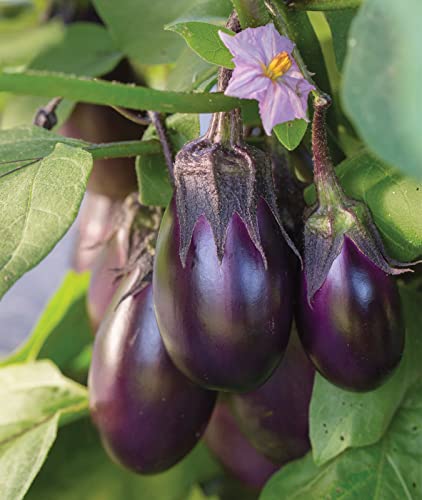
Most home gardeners start with Black Beauty eggplants since they’re reliable and produce well. Asian varieties often give earlier harvests and more fruits per plant.
Getting Started with Eggplant Seeds
Growing eggplants from seeds requires selecting the right varieties and creating optimal growing conditions for successful germination. Seeds need warmth, moisture, and proper soil to sprout into healthy seedlings.
Choosing the Right Eggplant Seeds
Black Beauty remains a top choice for home gardeners with its large, glossy purple fruits and reliable growth. Rosa Bianca offers creamy, mild-flavored fruits ideal for Italian dishes.
For small spaces, compact varieties like Patio Baby and Fairy Tale produce abundant harvests on shorter plants. These dwarf varieties work well in containers.

Seeds should come from trusted suppliers to ensure good germination rates. Fresh seeds give the best results, so check package dates before buying.
Seed Starting Fundamentals
Start seeds indoors 8-10 weeks before the last spring frost. The seeds need temperatures between 75-85°F (24-29°C) to sprout.
Fill seed trays or 5-inch pots with a light, well-draining seed starting mix. Mix equal parts compost, perlite, and peat moss for best results.
Plant seeds 1/4 inch deep and keep soil consistently moist. A clear dome over the containers helps maintain humidity.
Seeds typically sprout in 7-10 days under ideal conditions. Once seedlings emerge, provide bright light for 14-16 hours daily.
Feed seedlings with diluted liquid fertilizer two weeks after germination. Mix 1 tablespoon fertilizer per gallon of water.
Soil Preparation and Seed Planting
Good soil preparation and proper seed planting create the foundation for healthy eggplant growth. The right soil conditions and planting depth make a big difference in germination success.
Optimizing Soil Conditions
The ideal soil pH for eggplants ranges from 5.5 to 7.5. A pH test kit can help check these levels before planting.
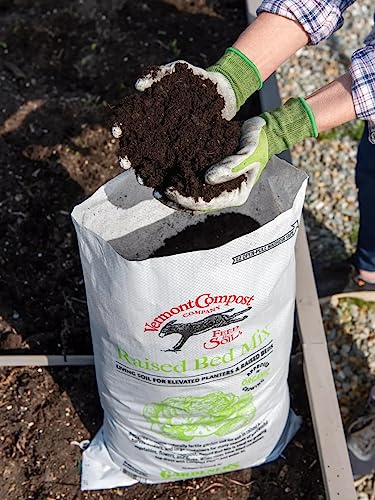
Mix organic compost or aged manure into the top 6 inches of soil. This adds nutrients and improves drainage.
The soil temperature must reach at least 70°F (21°C) for successful germination. Using a soil thermometer helps track this.
Soil Requirements:
- Well-draining potting mix
- Rich in organic matter
- Loose texture
- Moisture-retaining
Planting Eggplant Seeds
Plant seeds 1/4 inch deep in seed trays or small pots. Space seeds about 2 inches apart if planting multiple seeds per container.
Keep soil temperature between 80-90°F (27-32°C) during germination. A heat mat can help maintain warm temperatures.
Planting Timeline:
- Start seeds indoors 6-8 weeks before last frost
- Use clean containers with drainage holes
- Plant in high-quality seed starting mix
- Water gently to keep soil moist but not wet
Seeds typically sprout in 7-14 days when conditions are right. After sprouting, thin seedlings to one plant per pot.
Caring for Eggplant Seedlings
Young eggplant seedlings need specific care to grow into strong, productive plants. The right mix of warmth, water, and nutrients will help them thrive and produce healthy fruits.

Transplanting Eggplant Seedlings
Seedlings are ready for transplanting when they reach 4-6 inches tall and have at least 2-3 sets of true leaves. The outdoor soil temperature must be above 60°F before moving plants outside.
Harden off seedlings by placing them outdoors for 1-2 hours on the first day. Add an hour each day for 7-10 days.
Plant seedlings 18-24 inches apart in rows spaced 30-36 inches wide. Dig holes twice the size of the root ball and add compost to the soil.
Water thoroughly after transplanting. Add a layer of mulch around plants to retain moisture and prevent weeds.
Nutrition and Watering Needs for Eggplants
Eggplants are heavy feeders that need regular nutrients. Mix in a balanced fertilizer (10-10-10) at planting time.
Feed plants with liquid fertilizer every 2-3 weeks during the growing season. Stop fertilizing once fruits begin to form.
Keep soil consistently moist but not waterlogged. Water deeply 1-2 times per week, providing 1-1.5 inches of water.
Check soil moisture by inserting a finger 1 inch deep – if it feels dry, it’s time to water.

Pruning and Supporting Eggplant Plants
Remove any yellowed or damaged leaves to prevent disease spread. Pinch off suckers that grow between branches and the main stem.
Support Requirements:
- Stakes or cages installed at planting time
- Plants tied loosely to supports with soft twine
- Support structures 4-5 feet tall
Prune to 4-6 main branches per plant. This improves air circulation and directs energy to fruit production.
Remove any flowers that appear in the first 2-3 weeks after transplanting to help establish strong roots.
Protecting Eggplants from Pests and Diseases
Growing healthy eggplants requires vigilant monitoring and preventive measures against common threats. Regular garden inspections and early intervention help prevent serious damage to your plants.
Common Eggplant Pests and Prevention
Flea beetles pose one of the biggest threats to eggplants. These tiny black beetles create small holes in leaves and can damage young plants.
Installing row covers over seedlings provides effective protection against flea beetles and other early-season pests.
Aphids cluster on stems and leaves, sucking plant juices and weakening the plant. A strong spray of water can knock aphids off plants. Natural predators like ladybugs help control aphid populations.
Prevention tips:
- Keep garden areas clean and free of debris
- Plant companion flowers to attract beneficial insects
- Check plants twice weekly for pest damage
- Remove affected leaves promptly
Managing Eggplant Diseases
Crop rotation helps prevent soil-borne diseases. Don’t plant eggplants where other nightshade family crops grew in the past 3 years.
Verticillium wilt causes yellowing and wilting of leaves. Plants with this disease should be removed and destroyed to prevent spread.
Disease prevention strategies:
- Space plants 18-24 inches apart for good air circulation
- Water at soil level to keep leaves dry
- Choose disease-resistant varieties when possible
- Remove infected plant material from the garden
Good soil drainage and proper watering practices reduce disease risk. Most fungal diseases thrive in wet conditions.
Growing Eggplants in Your Garden
Successful eggplant growth depends on proper garden conditions and smart planting strategies. Creating the right environment and choosing compatible companion plants leads to healthy, productive eggplants.

Creating an Ideal Grow Environment
Eggplants need full sun exposure for at least 6-8 hours daily. Pick a spot with good air circulation and protection from strong winds.
The soil temperature must stay above 65°F (18°C) for optimal growth. Add a 2-3 inch layer of black plastic mulch to warm the soil and retain moisture.
Garden beds should be enriched with compost and well-aged manure before planting. Space plants 18-24 inches apart in rows set 30-36 inches apart.
Water deeply and consistently, providing 1-1.5 inches of water per week. Use drip irrigation or soaker hoses to keep leaves dry and prevent disease.
Companion Planting with Eggplants
- Herbs: basil, thyme, oregano
- Vegetables: beans, peppers, spinach
- Flowers: marigolds, nasturtiums
These plants help deter pests and improve eggplant growth. Marigolds specifically repel nematodes that can damage roots.
Avoid planting eggplants near:
- Fennel
- Potatoes
- Corn
Plant tall companions on the north side of eggplants to prevent shading. Keep shorter companions on the south side where they won’t block sunlight.
A border of aromatic herbs around eggplant beds helps confuse and repel many common garden pests.
Harvesting Your Homegrown Eggplants
Fresh eggplants taste best when picked at just the right time and properly handled during harvest. The perfect harvest window ensures optimal flavor and texture.
When and How to Harvest Eggplants
Eggplant fruits are ready to pick when they reach full size and have glossy skin. Most varieties should be harvested when they’re 6-8 inches long.
Press gently on the fruit’s skin with your thumb. The flesh should slightly spring back but leave no dent. If it doesn’t spring back, the fruit is overripe.
Signs of a Ready-to-Harvest Eggplant:
- Glossy, firm skin
- Uniform color
- Gentle spring-back when pressed
- Seeds inside are light colored
Cut the fruit from the plant using clean, sharp pruning shears. Leave a short piece of stem attached to the eggplant. Don’t pull or twist the fruits off, as this can damage the plant.
Check plants every 2-3 days during peak season. Regular harvesting encourages more fruit production. Remove any overripe or discolored fruits promptly.
Store freshly harvested eggplants in a cool place around 50-54°F. They typically stay fresh for 5-7 days after picking.
Frequently Asked Questions
Growing eggplants from seeds requires specific conditions, proper planting techniques, and ongoing care. The right setup leads to healthy plants and a productive harvest.
What are the required conditions for growing eggplant indoors from seeds?
Eggplants need at least 6 hours of direct sunlight daily. A bright south-facing window or grow lights work well. The temperature should stay between 70-85°F during the day and above 65°F at night. Humidity levels between 50-60% create optimal growing conditions. A humidifier or pebble tray can help maintain moisture.
What are the steps involved in planting eggplant seeds?
Fill seed trays with moist seed-starting mix. Plant seeds 1/4 inch deep. Space seeds 2-3 inches apart in containers or cell packs. Keep the soil consistently moist but not waterlogged during germination.
How can I accelerate the germination of eggplant seeds?
Soak seeds in warm water for 24 hours before planting to soften the seed coat. Use a heat mat to maintain soil temperatures between 75-85°F. Cover seed trays with plastic wrap to retain moisture until sprouts emerge.
What is the lifespan of an eggplant plant, and how does it affect indoor cultivation?
Eggplants are tender perennials that live 2-3 years in optimal conditions. Indoor plants typically produce fruit for one growing season, about 4-6 months. Most gardeners grow them as annuals since production decreases after the first season.
How long does it typically take for an eggplant to grow from seed to harvest?
Seeds germinate in 7-14 days under proper conditions. Most varieties take 70-90 days from transplant to harvest. The first fruits appear about 65-80 days after germination.
Can eggplants be effectively grown in containers, and if so, how?
Use containers at least 5 gallons in size with good drainage holes. Choose compact or dwarf varieties bred for container growing. Fill pots with rich potting mix and place them in a spot that receives 6-8 hours of sunlight. Water deeply when the top inch of soil feels dry.

Growing Tips and Next Steps
Growing eggplants from seeds takes patience and attention to detail. The process starts 8-10 weeks before the last frost date.
Start seeds indoors in cell trays or 5-inch pots with high-quality seed starting mix. Keep soil temperature between 75-85°F for best germination.
Water the seedlings gently and maintain consistent moisture. A spray bottle works well to avoid disturbing young plants.
Transplant seedlings outdoors when soil temperatures reach 65°F and all frost danger has passed. Choose a sunny spot with well-draining soil.
Key success factors:
- Provide warmth during germination
- Use proper growing medium
- Give plenty of sunlight
- Water consistently
- Harden off before transplanting
With proper care and the right conditions, homegrown eggplants can produce fresh fruits all season long. Most varieties will be ready to harvest in 65-80 days after transplanting.
Remember to watch for pests and maintain good air circulation around plants. Regular feeding with balanced fertilizer helps support healthy growth and fruit production.

Hello there! I’m Elsa, and gardening is my passion. As an avid gardener, I created GardeningElsa.com to share my knowledge and experience with fellow enthusiasts. My website is a comprehensive resource for gardeners of all levels, offering expert advice on a wide range of topics, including plants, flowers, herbs, and vegetable gardening. Whether you’re a beginner looking to start your first garden or a seasoned pro seeking to expand your knowledge, GardeningElsa.com has something for everyone. Read more about me.