
Yes, you can plant cabbage next to asparagus, as long as “next to” means beside the bed and never inside it.
Plant cabbage at least 18 to 24 inches outside the edge of your asparagus bed, so you can dig, feed, and harvest cabbage without touching the asparagus crowns. The two crops don’t harm each other chemically, and they don’t attract the same main pests.
The trouble is the digging. Asparagus is a permanent crop that can produce for 15 to 20 years, while cabbage comes and goes each season.
Every time you set a transplant, pull a stump, or work in compost, you’re disturbing soil. I want that disturbance happening well away from the crowns that feed you spears for two decades.
The Short Answer: Plant Beside the Bed, Not in It
Planting cabbage next to asparagus works well when the cabbage has its own strip of soil just outside the asparagus bed. In a vegetable garden where space is tight, that edge strip is a smart way to use garden space that would otherwise sit empty.
Before you plant anything, I’d use a quick soil test kit along the bed edge. Asparagus likes a pH of about 6.5 to 7.0, and cabbage does best around 6.5 to 6.8, so one test tells you whether both crops can share that edge happily.
How Far Outside the Asparagus Bed Should Cabbage Go?
Keep cabbage at least 18 to 24 inches outside the outer row of asparagus crowns. Measure from the crowns themselves, since the plants spread wider every year.
Here’s how I’d set it up:
- Mark the bed edge with stakes or a board so it stays visible after the ferns die back.
- Leave an 18- to 24-inch buffer between the last crown row and your first cabbage row.
- Space cabbages 12 to 24 inches apart in that row, depending on the variety.
- Add a path if you can, so you never step on the asparagus bed to reach the cabbage.
If your bed is a few years old, I’d lean toward the full 24 inches. Older crowns throw roots farther out than most people expect.
Why Is an Established Bed Safer Than Newly Planted Crowns?
An established bed of three years or older handles nearby planting better than new crowns do. Newly planted asparagus crowns are still building their root system, and they can’t compete with weeds or neighbors at all.

New beds also need care that cabbage gets in the way of. You fill the planting trench in stages, about 2 inches every two weeks as the shoots grow. You also skip harvest in year one and pick lightly in year two.
During those first two years, I’d keep the bed edge clear and weeded. Once the crowns are settled and you’re taking full harvests, adding a cabbage row along the outside makes more sense.
Why Does the Asparagus Bed Need Its Own Space?
An asparagus bed needs its own space because it stays in one spot for 15 to 20 years and turns into a tall summer hedge of ferns. Companion planting ideas that suit annual beds don’t fit a permanent crop like this one.
A Permanent Crop Versus a Seasonal Crop
Most companion plants, interplanting schemes, and intercropping setups assume every crop gets pulled at the end of the season. Asparagus breaks that pattern.
Cabbage lives a few months. Early varieties mature about 60 to 70 days after transplanting, and late types take 80 to 100 days or more. Then you cut the head, pull the plant, and rework the soil.

Cabbage also needs crop rotation. Cabbage and its relatives should move out of a spot for 3 to 4 years to keep clubroot and black rot from building up.
You can’t rotate cabbage through a permanent asparagus bed. You can rotate it along a strip beside the bed, or better, among several nearby beds.
How Summer Ferns Change the Light
After the spring harvest ends, asparagus spears grow into ferns 4 to 6 feet tall. Those ferns stand all summer and into fall, shading whatever grows on their shady side.
Cabbage wants full sun, at least 6 hours a day. A cabbage row on the north side of tall ferns can lose much of its afternoon light by midsummer.
I’d put cabbage on the south or west side of the asparagus bed in most US gardens. In hot Southern summers, a little afternoon shade from the east side can help, but cabbage isn’t usually growing in the Deep South in summer anyway.
How Can Cabbage Roots and Digging Affect Asparagus?
Cabbage roots themselves aren’t the big threat; your trowel and spade are. Asparagus crowns sit close enough to the surface that ordinary garden chores can slice into them.
Where Crowns and Feeder Roots Grow
Asparagus crowns sit about 6 to 8 inches deep. From each crown, thick fleshy roots spread sideways, and they keep spreading as the bed ages.
That means the root zone extends well past where you see spears. Digging a hole for a cabbage transplant, which needs about 6 inches of depth plus compost, lands right in that zone if you plant too close.
The same problem shows up with root crops. Carrots, beets, and potatoes all require digging at harvest, and horseradish spreads aggressively and is nearly impossible to remove.
I keep all of these out of the asparagus bed for the same reason I keep cabbage at the edge.
How to Transplant and Harvest Without Disturbing Them
You can work the cabbage strip safely if you treat the bed edge as a no-dig line.
- Use a narrow trowel to set transplants, and dig only as wide as the root ball.
- Angle your tools away from the asparagus bed when you loosen soil.
- Cut cabbage at the base with a sharp knife, then snip the stump at soil level instead of yanking the root mass out.
- Skip the tiller within 2 feet of the outer crowns.
- Hand-pull weeds near the bed edge so you don’t hoe into roots.
Leaving cabbage roots in the soil to break down is fine. It saves you from pulling up a clump of soil that might hold asparagus roots too.
What Layout Gives Both Crops Enough Room?
The best layout puts cabbage in a row along the outside edge of the asparagus bed or in a separate bed nearby. Each crop keeps its own soil, and you can reach both without stepping where you shouldn’t.
Plant Cabbage Along the Outside Edge
For an in-ground bed, I’d run a single cabbage row parallel to the asparagus, 18 to 24 inches out from the last crown row. Leave a walking path on the far side.
In that row, space most cabbage 18 inches apart. Small early types fit at 12 inches, and big late types want 24. If you follow the square-foot method, you’ll find the grid for cabbage in a square foot garden uses one plant per square foot.
Low crops like lettuce and spinach fit nicely between cabbage transplants early in the season. They’re harvested before the cabbage heads fill out.
A living mulch of low clover or a few nasturtiums along the outer side of the cabbage row can cover bare soil too, as long as you keep them from creeping into the asparagus bed.

Use a Separate Raised Bed When Space Is Tight
When your yard is small, a separate raised bed beside the asparagus is my first choice. You get clean separation and an easy place to rotate crops.
A 4 by 8 foot bed at least 12 inches deep holds about 8 cabbages at 18-inch staggered spacing. For exact numbers by variety, my guide to cabbage spacing in a raised bed walks through the math.
Strawberries are a classic edge planting for asparagus, but I wouldn’t crowd them in with cabbage. If you’re tempted, read about planting cabbage and strawberries together first, since cabbage is a heavy feeder that competes hard.
When Should You Plant Cabbage Around the Asparagus Harvest?
Timing cabbage around asparagus is easiest when you plant spring cabbage early and fall cabbage after the ferns are up. Both windows keep you out of the bed during the weeks you’re cutting spears.
Spring Transplants and Emerging Spears
For a spring crop, start cabbage seed indoors 6 to 8 weeks before your last spring frost. Harden off the seedlings and transplant them 2 to 4 weeks before the last frost.
That lines up with the start of asparagus season, when you’re walking the bed every day or two to cut spears. Set your cabbage transplants before spears appear if you can, so you’re not kneeling beside the bed while it’s actively producing.
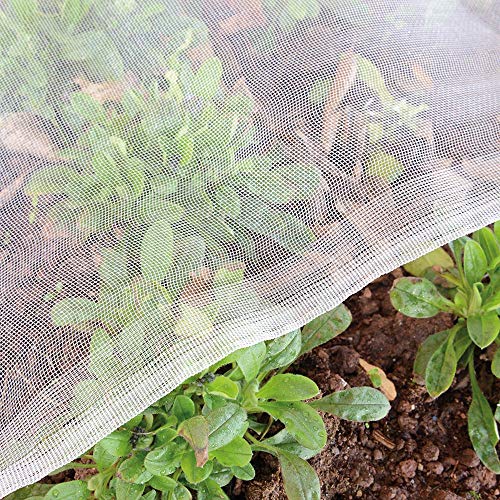
Cover new transplants with row covers right away. That shields them from late frost and keeps egg-laying moths and butterflies off from day one.
Watch out for young plants with pencil-thick stems that sit at 40 to 50°F for several weeks, since that can trigger bolting.
Fall Plantings After the Ferns Grow Tall
For fall cabbage, start seed 10 to 12 weeks before your first fall frost. That usually means midsummer, when the asparagus ferns are already tall.
Plant fall cabbage on the sunny side of the ferns, since late-summer shade slows growth. Established cabbage handles hard frost into the low to mid 20s°F, and a light frost makes the leaves sweeter.
Fall is also a good time to practice crop rotation in your cabbage strip. If cabbage grew there in spring, I’d put fall cabbage in a different bed and plant something unrelated, like lettuce or peas, along the asparagus edge.
How Should You Feed and Water Both Crops?
Feed and water the two crops on their own schedules, keeping cabbage’s heavy feeding in its own strip and giving asparagus a light top-dressing from above. This protects soil nutrients and soil fertility in the asparagus bed without disturbing roots.
Check Soil pH and Add Compost Without Digging Around Crowns
Test soil pH before you plant. Asparagus likes 6.5 to 7.0, and cabbage likes 6.5 to 6.8, so lime acidic soil if needed. Liming also helps prevent clubroot in cabbage.
In the cabbage strip, work compost into the soil before planting. My guide to preparing soil for a vegetable garden covers how much to add.
On the asparagus bed, spread 1 to 2 inches of compost on the surface in early spring or after harvest ends. Let rain and worms carry it down.
Cabbage needs extra nitrogen, so side-dress it about 3 weeks after transplanting and again when heads start forming, keeping fertilizer on the cabbage side of your buffer.
Keep Moisture Steady Without Burying the Crowns
Cabbage needs about 1 to 1.5 inches of water a week, delivered evenly. A heavy soak after a dry spell splits heads, so steady watering is the goal.
Asparagus likes moist, well-drained soil but hates soggy ground. A soaker hose along the cabbage row lets you water cabbage generously without flooding the crowns.
Mulch helps both crops. For tips on materials and depth, see my post on mulching a vegetable garden. On the asparagus bed, keep mulch to about 2 to 3 inches so spears can push through in spring.
Which Pests Need Attention in a Shared Garden Area?
Cabbage and asparagus attract mostly different pests, so you’ll handle pest control for each crop separately. Cabbage draws caterpillars, flea beetles, aphids, and slugs, while asparagus has its own beetles.
Protect Cabbage From Caterpillars and Flea Beetles
The main cabbage pests are cabbage worms (the velvety green larvae of white butterflies), cabbage loopers, and diamondback moth larvae, which wriggle and drop on a silk thread. Flea beetles chew tiny shot holes in young leaves.
Here’s what I’d do:
- Row covers or insect netting from planting day, tucked in at the edges.
- Hand-pick caterpillars from leaf undersides every few days.
- Use Bt (Bacillus thuringiensis) for caterpillars only.
- Spray insecticidal soap on gray, waxy clusters of cabbage aphids.
- Set iron phosphate bait or beer traps for slugs.
My guide to common vegetable garden pests can help you spot the difference between caterpillar damage and slug damage.
Check Asparagus Separately for Beetles
The asparagus beetle is the main pest on the other side of the buffer. Adults are small and colorful, and their gray larvae chew spears and ferns.
Walk the asparagus bed during harvest and hand-pick adults and larvae into soapy water. Cut spears promptly so beetles have less to feed on.
Beneficial insects like lady beetles and small parasitic wasps help with both crops. Avoid broad sprays that knock them out along with the pests.
Which Plants Make Better Asparagus Neighbors?
Tomatoes, parsley, and basil are the neighbors I’d put closest to asparagus. They stay out of the crown zone when planted at the edge and don’t require digging at harvest.