
Winter care is a light problem first and a water problem second.
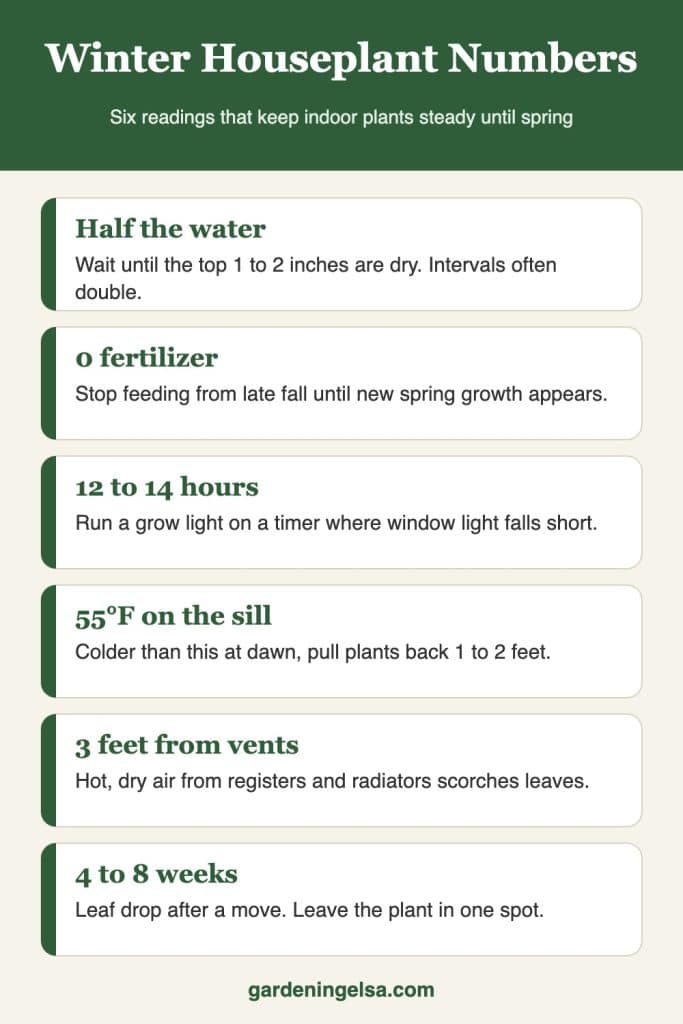
Most houseplants slow down from November to February because the days are short, so they need about half the water, no fertilizer, and the brightest spot you can give them away from cold glass and heat vents.
The rule: water and feed for the light the plant actually gets, not for the calendar or for how dry the air feels.
The Winter Numbers
| What to check | Target | What changes it |
|---|---|---|
| Daytime room temperature | 65 to 75°F | Cacti and succulents accept 50 to 60°F |
| Night temperature | About 10°F lower than day | Below 55°F hurts most tropicals |
| Sill temperature at dawn | Above 55°F | Single-pane and older windows run colder |
| Distance from heat vents | At least 3 feet | Closer only if the airflow is deflected |
| Watering | When the top 1 to 2 inches are dry | Succulents: when the whole pot is dry |
| Fertilizer | None | Plants growing under lights or in bloom |
| Light | 6+ hours of bright light | South windows give the most in winter |
| Grow light | 12 to 14 hours a day | Fewer hours in a bright south window |
| Humidity | 40 to 50% for tropicals | Ferns and calatheas want 50% or more |
The finger test works for most pots. For deep pots, large planters and plants you tend to overwater, a moisture meter is more reliable.
Push the probe two-thirds of the way down. The top of the soil can be dry while the root zone is still wet, and wet roots in cool soil are how winter rot starts.
Water Less, but Not on a Schedule
A plant uses water in proportion to its light and warmth. A pothos that needed water every 7 days in July may need it every 12 to 16 days in January.

The same plant 2 feet from a south window may still need it every 9.
Check, do not count days. Lift the pot after watering so you learn its wet weight, then lift it again a week later. Most people can feel the difference within a few tries.
When you do water, water fully. Pour until water runs from the drainage holes, then empty the saucer within 30 minutes. Small sips keep the top inch damp and leave the lower roots dry.
Use room-temperature water. Water straight from a cold tap in winter can be 45 to 50°F, and if it splashes African violet leaves, it leaves pale ring spots that never fade.
More on timing in our guide to the best time of day to water indoor plants.
| Plant type | Typical winter watering | Light | Minimum night temperature |
|---|---|---|---|
| Cacti and succulents | Every 3 to 5 weeks, fully dry | Brightest window | 45 to 50°F |
| Snake plant, ZZ plant | Every 4 to 6 weeks | Low to bright | 50°F |
| Pothos, philodendron, monstera | Every 10 to 16 days | Bright, indirect | 55 to 60°F |
| Ferns, calatheas | Every 5 to 8 days, never dry | Medium | 60°F |
| African violets | When the top feels dry | Bright, east or west | 60°F |
| Moth orchids | Every 7 to 10 days, when the bark is dry | Bright, indirect | 55 to 60°F |
Move Plants Toward the Light
The winter sun sits low in the sky. A south-facing window that was too hot in summer becomes the best spot in the house from November to February, and sun reaches several feet deeper into the room.
East and west windows get weaker. North windows give very little.
Move light-loving plants closer to the glass, within 1 to 3 feet. Turn each pot a quarter turn every week so it does not lean.
Wipe dusty leaves with a damp cloth once a month, because dust you can wipe off on a fingertip is light the leaf never gets.
Signs of too little light: new leaves smaller than old ones, long gaps between leaves on the stem, variegated plants turning plain green, and soil that stays wet for 2 weeks or more.
Add Light Where the Window Falls Short
If your plants sit more than 4 feet from a window, or your windows face north, a grow light solves the problem more reliably than moving furniture.
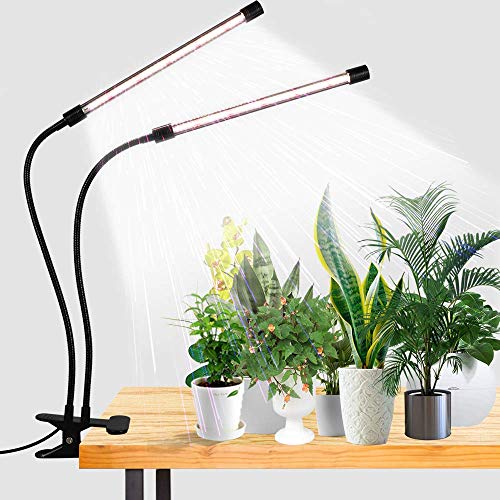
Set it on a timer for 12 to 14 hours a day. Hang most LED fixtures 12 to 24 inches above the leaves, closer for low-wattage strips, or follow the distance on the label.
A plain white LED is enough for foliage plants. Our comparison of lights for indoor plants covers the common types.
Field note: a plant under lights for 12 or more hours keeps growing through winter. Keep using the finger test, and feed it at half strength once a month.
Keep Leaves Off Cold Glass
Start with a thermometer on the sill. A digital hygrometer with min/max memory makes the job easy, because it records the overnight low and reads humidity too.

Windows are the coldest surface in a heated room. On a 10°F night, the inside of a single-pane window can sit near freezing, and a leaf touching it gets chilling damage: dark, water-soaked patches that turn brown and papery within days.
Check your own windows this way:
- Set a thermometer on the sill at bedtime, beside the plants.
- Read it just after dawn, when the room is coldest.
- If it reads under 55°F, move tropical plants 1 to 2 feet back from the glass on cold nights.
- If it reads under 45°F, move succulents back as well.
- Never close curtains between plants and the window at night. That traps them in the coldest air.
Cold drafts do similar harm. A plant near an exterior door gets a blast of freezing air every time it opens. Ficus and gardenias often drop leaves after a week of that.
Keep Plants Away From Heat Vents
Forced-air heating blows hot, very dry air. A plant within 3 feet of a register or radiator dries out noticeably faster than pots across the room and often shows crispy brown edges on new leaves. Spider mites thrive there too.
If the only good window sits over a radiator, put the pot on a stand beside it, not on top, or fit a vent deflector that sends the air into the room.
Humidity: Measure Before You Fix It
Indoor humidity often falls to 20% or lower once the heat runs all day. Most tropical foliage plants do best at 40 to 50%, and ferns and calatheas want more. Read the hygrometer from the window test at plant height before you buy anything.
Grouping plants together raises humidity around their leaves a little. A small humidifier raises it far more. Misting has almost no lasting effect. Our guide on humidity for houseplants covers targets by plant and the right humidifier setup.
Stop Feeding Until Spring
Fertilizer feeds growth, and most houseplants make very little of it in winter. Salts from unused fertilizer build up in the soil and burn the roots, which shows as brown leaf tips and a white crust on the pot.
Stop feeding in late October or November. Start again at half strength when new leaves appear in March.
Exceptions are plants that are actively growing: those under grow lights, African violets in bloom, and winter-blooming orchids. For the rest of the year, see how often to fertilize indoor plants.
Repotting also waits. Disturbed roots heal slowly in low light. Only repot in winter if the roots are rotting or the pot has cracked.
How Much Room for Error
Some winter mistakes are forgiving. Others are not.
You can get away with a pot that dries out a few days too long. Most foliage plants wilt and recover within hours of a thorough watering.
You can also skip dusting, miss a quarter turn, or let humidity sit at 30% for a month. The plant will look a little tired, nothing more.
You cannot get away with soil that stays wet for weeks in a cool room. That is root rot, and by the time leaves yellow, many roots are already gone.
You also cannot get away with one night of leaves pressed against frozen glass, or a calathea parked over a heat vent.
Some change is normal. A few lower leaves yellowing and dropping, slower growth, and a ficus shedding leaves after a move are the plant adjusting to less light. I would only worry when new growth is affected.
Watch for Winter Pests
Dry, warm air suits spider mites, and wet soil in cool rooms brings fungus gnats. Look under the leaves every time you water, and keep new plants apart for 2 weeks.
Our guides to spider mites on indoor plants and fungus gnats cover the fixes. If a plant looks worse every week despite all this, see why your houseplant is dying.
The Checklist for Winter
- Move light-loving plants within 1 to 3 feet of the brightest window.
- Run the dawn thermometer test on every sill.
- Pull pots at least 3 feet from vents and radiators.
- Check soil 2 inches down before every watering.
- Empty saucers within 30 minutes.
- Stop fertilizer until spring growth starts.
- Read the hygrometer, and see the humidity guide if it shows under 30%.
- Look under leaves for pests each time you water.
Technical Questions About Winter Houseplant Care
Do houseplants go dormant in winter?
Most tropical houseplants do not go truly dormant. They slow down because of shorter days and lower light. A few, such as caladiums and some cacti, do rest completely and need almost no water until spring.
Will a grow light raise my power bill?
Very little. A 30-watt LED running 12 hours a day uses about 11 kilowatt-hours a month, roughly $2 at typical US electricity rates. Larger panels cost proportionally more.
Is it OK to open a window near my plants on a mild winter day?
Fresh air is fine when it is above about 50°F outside. Avoid opening a window directly beside tropical plants when it is colder than that, because the cold air sinks onto the nearest leaves.
Why is white fuzz growing on the soil?
It’s usually a harmless mold that wet soil and still air bring on in winter. Scrape it off, let the top 2 inches of soil dry before the next watering, and give the plant a little more air movement.
Can I use ice cubes to water houseplants in winter?
I would not. Ice chills the roots in a season when they are already cool, and it gives too little water to wet the whole pot. Use room-temperature water and water thoroughly instead.

Hello there! I’m Elsa, and gardening is my passion. As an avid gardener, I created GardeningElsa.com to share my knowledge and experience with fellow enthusiasts. My website is a comprehensive resource for gardeners of all levels, offering expert advice on a wide range of topics, including plants, flowers, herbs, and vegetable gardening. Whether you’re a beginner looking to start your first garden or a seasoned pro seeking to expand your knowledge, GardeningElsa.com has something for everyone. Read more about me.