
Tiny dark flies drifting up from your pots every time you water? Those are almost always fungus gnats. They’re annoying, they multiply fast, and they show up in even the tidiest homes.
The good news is that you can get rid of fungus gnats with simple, cheap steps. The trick is to hit the adults and the larvae at the same time, and to keep going for a full life cycle.
Here are the seven fixes I trust, plus how to keep the gnats from coming back.
What Fungus Gnats Are and Why You Have Them
Fungus gnats are tiny flies that breed in damp potting soil. You have them because something in your pots stays wet long enough for their larvae to thrive.
What Adults and Larvae Look Like
Adult fungus gnats belong to the family Sciaridae, and the most common ones are in the genus Bradysia. They’re about 1/8 inch long, dark gray to black, with long legs and clear wings. Most people say they look like tiny mosquitoes.
The adults are weak fliers. They hover around pots, run across the soil surface, and gather at nearby windows. They’re mostly a nuisance and don’t bite.
The larvae are the real problem. They’re white or clear-bodied worms with shiny black heads, about 1/4 inch long when grown. They live in the top 1 to 2 inches of damp soil.
Larvae feed on fungi and decaying organic matter in the mix. In large numbers, they also chew on fine roots. That can stunt seedlings, cuttings, and young plants.
Why Damp Soil Draws Them In
Constantly moist soil is the root cause. Female gnats look for wet potting mix to lay their eggs in, and the larvae need that moisture to survive.
These are the usual triggers I see:
- Overwatering, or watering on a fixed schedule instead of checking the soil
- Peat-heavy mixes that hold water for a long time
- Decaying organic matter like fallen leaves sitting on the soil
- Water left sitting in saucers or decorative outer pots
- New plants or bags of potting soil that already carry eggs or larvae
Gnats also tend to spike in fall and winter. Plants use less water when light is low, but many of us keep watering like it’s summer.
The Products You’ll Want on Hand
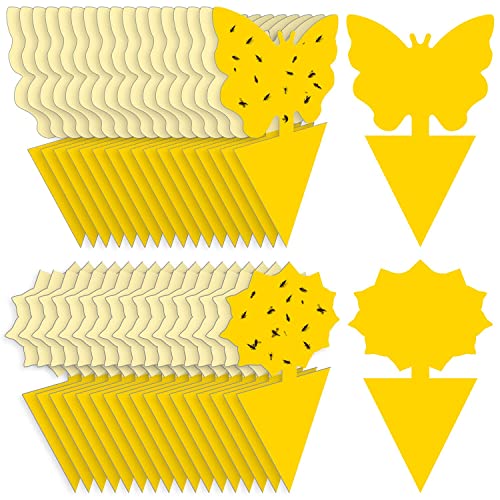
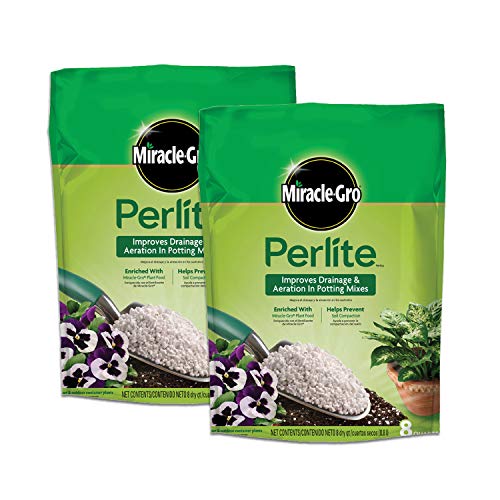
Before you start, I’d pick up two basics. Yellow sticky traps catch the flying adults and show you how bad the problem is. A bag of perlite lets you lighten a soggy mix so it dries faster.
Neither costs much. Together, they cover monitoring and prevention while you treat the larvae with the other fixes below.

Fungus Gnats vs. Fruit Flies
Fungus gnats are slim, gray-black flies with long legs that hang around potted plants. Fruit flies are tan or brownish, rounder, and hover around ripe fruit and drains.
How to Tell Them Apart
Getting the ID right matters, because the fixes are different. Fruit fly traps baited with vinegar won’t do much for gnats, and drying out your soil won’t stop fruit flies.
| Trait | Fungus gnats | Fruit flies |
|---|---|---|
| Color | Gray to black | Tan or brownish, often red eyes |
| Body shape | Slim, long legs, mosquito-like | Rounder, stockier |
| Where they hang out | Potted plants, soil, windows | Ripe fruit, trash, sink drains |
| Flight | Weak, slow, short hops | Quicker, more direct |
| Breeding spot | Damp potting soil | Fermenting food and drain gunk |
A Quick Way to Confirm
Watch where the flies rise from. If small dark flies lift off the soil when you water or bump the pot, you’ve got gnats.

To check for larvae, set a slice of raw potato on the soil for a couple of days. Lift it and look for tiny clear worms with black heads underneath. I treat this as a detection trick only, not a cure.
If you’re seeing specks that jump or crawl on leaves instead of flying, my guide to tiny black bugs on indoor plants will help you sort out springtails, thrips, and aphids.
Let the Soil Dry Out First
Drying the top layer of soil is the single most important fix. Without moist soil, eggs and young larvae can’t survive.
How Dry Is Dry Enough
Let the top 1 to 2 inches of soil dry before you water again. Push your finger into the mix to check, or use a wooden skewer and see if damp soil clings to it.
Lifting the pot helps too. A light pot means the soil has dried, and a heavy one means it’s still holding water.
Don’t let your plant wilt to make a point. The goal is a dry surface, not a bone-dry root ball. Thirsty plants still need a real drink once the top layer dries.
Bottom Watering Keeps the Surface Dry
Bottom watering is my favorite way to water during a gnat outbreak. It lets roots drink while the top of the soil stays dry and unfriendly to egg-laying females.

Here’s how I do it:
- Set the pot in a saucer or sink with an inch or two of water.
- Leave it for 15 to 30 minutes, until the mix has soaked up what it needs.
- Lift it out, let it drain, and empty the saucer completely.
Never leave water standing under the pot. That pool keeps the bottom of the mix soggy and invites root rot.
Why Drying Alone Isn’t Enough
Drying the soil slows gnats down, but adults will keep laying eggs in any damp pocket they can find. Larvae deeper in the pot can also hang on.
That’s why I pair this step with traps and a larvae treatment. Think of drying as the foundation, and the other fixes as the finishing work.
Don’t overwater when you apply drenches, either. Each treatment counts as a watering, so skip your regular one that day.
Yellow Sticky Traps for Adult Gnats
Yellow sticky traps catch adult gnats before they lay more eggs. They also show you how many gnats you have and whether your treatments are working.
How to Place the Traps
Adult gnats are drawn to bright yellow. You can lay a trap flat on the soil surface, or stick an upright card into the pot just above the soil.
I like upright cards in larger pots and flat squares in small ones. Put one in every pot that has gnats, plus a spare near the window where they gather.
Keep traps away from leaves. A sticky card can tear foliage if a leaf brushes against it.
Use Them to Track Progress
Traps double as a scoreboard. Check them every few days and note how many gnats you see.
A rough guide:
- Lots of gnats in a few days: active breeding, keep treating the soil
- Fewer each week: your larvae treatment is working
- None for two weeks: you’ve likely broken the cycle
Replace traps weekly, or sooner if they’re covered in gnats or dust. A full card stops catching new flies.
What Traps Can’t Do
Sticky traps only catch adults. They don’t touch the larvae chewing away in the soil, and those larvae will keep hatching into new flies.
Each adult lives about a week and can lay up to 200 eggs. Traps cut down that egg-laying, but you still need a soil treatment to finish the job.
Mosquito Bits and Bti for Larvae
Bti is the most reliable way to kill fungus gnat larvae in the soil. It’s sold as mosquito bits or mosquito dunks, and it’s what I reach for first.
What Bti Is and Why It Works
Bti stands for Bacillus thuringiensis israelensis. It’s a natural soil bacterium that kills the larvae of certain flies, including fungus gnats and mosquitoes.
The larvae eat it while feeding in the soil, and it stops them from developing. Adults aren’t affected, which is why traps still matter.
Bti is safe for people and pets when used as directed. The EPA considers it very low risk.
Check the label before you buy. You want the israelensis strain. The kurstaki strain is sold for caterpillars and won’t touch gnats.
How to Mix and Apply It
Making a Bti soak is simple:
- Add about 1 tablespoon of mosquito bits, or a quarter of a dunk, to a gallon of water.
- Let it steep for 30 minutes.
- Strain out the bits if you like, then water the soil with it.
Use this soaked water in place of your regular watering. Apply it every 1 to 2 weeks for about a month.
Some people sprinkle bits directly on the soil surface. I prefer the soak, because it carries the bacteria down into the top few inches where larvae live.
How Long Until You See Results
Bti works on larvae within days, but you won’t see fewer adults right away. Gnats that were already pupating will still emerge.
Keep treating for the full month. The fungus gnat life cycle runs about 3 to 4 weeks, from egg through four larval stages and a pupa to an adult. Stopping early leaves the next generation behind.
Hydrogen Peroxide Soil Drench
A diluted hydrogen peroxide drench kills fungus gnat larvae on contact. It’s a fast option, but it needs the right ratio and a little caution.
The Right Ratio
Use ordinary 3% hydrogen peroxide from the drugstore. Mix 1 part peroxide with 4 parts water.
For a small batch, that’s 1/4 cup of peroxide to 1 cup of water. Stronger mixes can burn roots, so don’t eyeball it.
How to Apply It
Wait until the top inch or two of soil is dry, then water the pot with the mix as you normally would. You’ll hear and see fizzing as it reacts with organic matter. That’s normal.
Let the pot drain fully and empty