
A balcony herb garden is one of the easiest ways to cook with fresh flavor every day, even without a yard. A few pots of basil, thyme, and mint can turn a small outdoor space into a working kitchen garden.
My advice is to start small, match your herbs to your light, and build from there. If you’re still planning the whole space, my guide to making a balcony garden covers the bigger picture. Here, I’ll focus on herbs.
Read Your Balcony First
Before you buy a single plant, measure your sun, check your rules, and think about wind. These three things decide which herbs will thrive and which will struggle.
A balcony herb garden lives or dies by its conditions. It pays to spend a day or two watching your space before you plant.
Track Your Sunlight
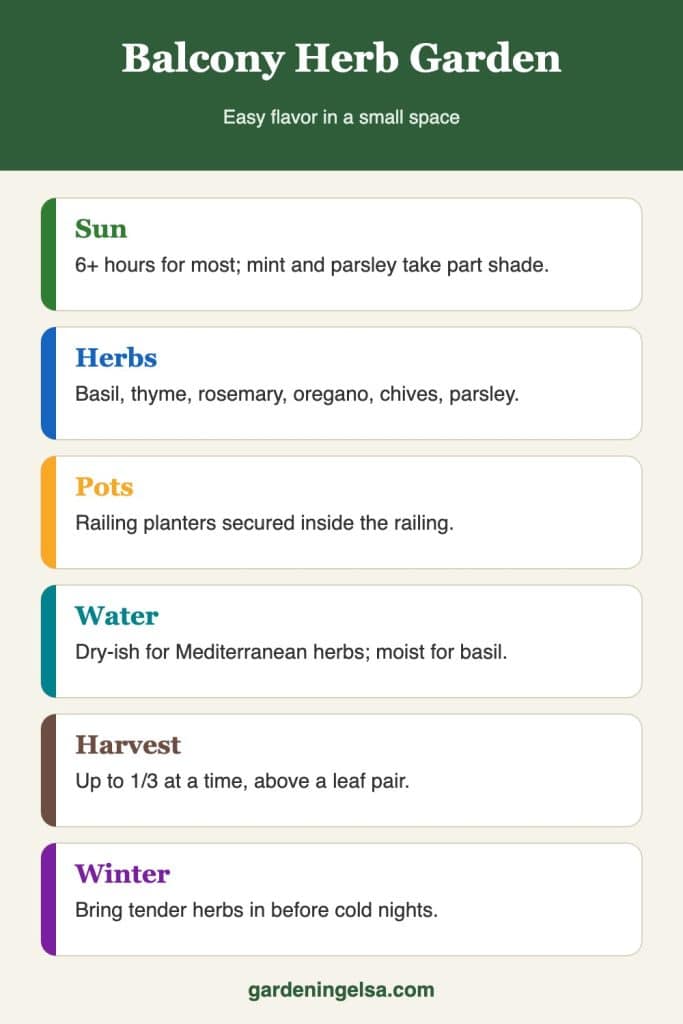
Most popular herbs need 6 or more hours of direct sun. That includes basil, rosemary, thyme, oregano, and sage.
Mint, parsley, cilantro, and chives tolerate part shade. They can get by on about 4 to 6 hours of sun.
Direction matters a lot. South- and west-facing balconies are the sunniest. North-facing balconies are shady, and east-facing ones usually get gentler morning light.
Here’s an easy way to measure your light:
- Check your balcony every hour or two on a clear day.
- Note when direct sun hits the spot where your pots will sit.
- Add up the hours of direct sun, not bright shade.
- Watch for shadows from walls, overhangs, and the balcony above you.
| Balcony Direction | Typical Light | Good Herb Choices |
|---|---|---|
| South-facing | Full sun most of the day | Basil, rosemary, thyme, oregano, sage |
| West-facing | Strong afternoon sun | Rosemary, thyme, oregano, basil |
| East-facing | Morning sun, afternoon shade | Parsley, chives, mint, cilantro |
| North-facing | Mostly shade | Mint, parsley, chives |
Check Weight Limits and Building Rules
Balconies have weight limits. Wet soil is heavy, and a row of large pots adds up fast.
Check your lease, building rules, or HOA guidelines before you set anything up. Some buildings restrict railing planters or anything that hangs over the edge.
Lightweight containers help a lot here. Plastic pots and fabric pots weigh far less than clay or ceramic.
Plan for Wind and Neighbors
Balconies, especially higher ones, can get windy. Wind dries out soil fast and can tip tall pots.

Group pots together so they shelter each other. Place taller plants against a wall, not at the open edge.
Think about the people below you too. Use saucers under pots so water doesn’t drip onto a neighbor’s balcony.
Products That Make Setup Easier
Two products make a real difference on most balconies. The first is a set of sturdy railing planters, which free up floor space and put herbs right in the sun.

The second is a fast-draining potting mix. Herbs hate soggy roots, and a light, airy mix keeps them healthy while keeping pots lighter.
Best Herbs for a Balcony
The best herbs for a balcony are the ones that match your light and your cooking. Basil, thyme, rosemary, oregano, and sage love sun, while mint, parsley, chives, and cilantro handle partial shade.

If you want a broader list beyond herbs, see my roundup of the best plants for a balcony. For herbs, these are my top picks.
Sun-Loving Herbs
These herbs want 6 or more hours of direct sun. They’re perfect for south- and west-facing balconies.
- Basil: A warm-weather annual that loves heat. It wants evenly moist soil.
- Rosemary: A woody perennial that likes to dry out between waterings.
- Thyme: Low and compact, great for railing planters and pot edges.
- Oregano: Tough, spreading, and very forgiving.
- Sage: Soft gray leaves and a strong flavor. It prefers dry conditions.
Rosemary, thyme, oregano, and sage are Mediterranean herbs. They prefer a gritty mix, little feeding, and soil that dries out between drinks.

Basil is different. It likes steady moisture and regular harvesting. If you love basil, my guide to growing basil in a square foot garden has spacing and pinching tips that work in containers too.
Herbs for Part Shade
These herbs do fine with about 4 to 6 hours of sun. They’re a smart choice for east-facing balconies or spots with afternoon shade.
- Mint: Fast, vigorous, and nearly impossible to kill. It spreads aggressively, so it needs its own pot.
- Parsley: A biennial usually grown as an annual. It likes evenly moist soil.
- Chives: A hardy perennial with a mild onion flavor and edible purple flowers.
- Cilantro: A cool-season herb that bolts in summer heat.
Cilantro deserves a special note. It goes to seed quickly once it gets hot. Sow a new batch every 3 to 4 weeks for a steady supply.
Group Herbs by Their Needs
The easiest way to keep herbs happy is to group them by water and light needs. Mixing a thirsty herb with a dry-loving one in the same pot means one of them will suffer.
| Group | Herbs | Water | Sun |
|---|---|---|---|
| Mediterranean | Rosemary, thyme, oregano, sage, lavender | Let dry between waterings | 6+ hours |
| Moisture lovers | Basil, parsley, cilantro, chives | Evenly moist | 4 to 6+ hours |
| Solo grower | Mint | Evenly moist | 4 to 6 hours |
If you’re brand new to herbs, my guide to starting an herb garden walks through the basics. On a balcony, I’d start with three to five herbs you actually cook with.
Choosing Pots and Railing Planters
Choose pots at least 6 to 8 inches wide with drainage holes, and keep them light. Railing planters, fabric pots, and plastic containers all work well on balconies.
The right container makes watering easier and keeps your plants healthy. It also keeps your balcony safe.
Pot Size and Drainage
Every herb pot needs drainage holes. Without them, water pools at the bottom and roots rot.
Use pots at least 6 to 8 inches wide for single herbs. Bigger is better for shrubby herbs like rosemary and sage, which grow large over time.
Larger pots also hold more soil. More soil means more moisture, so you’ll water less often in summer.
- Small herbs (thyme, chives): 6 to 8 inches wide
- Medium herbs (basil, parsley, cilantro): 8 to 10 inches wide
- Large herbs (rosemary, sage, mint): 10 to 12 inches or more
Material Choices
Each pot material has strengths and weaknesses. On a balcony, weight is a big factor.
| Material | Weight | Moisture | Best For |
|---|---|---|---|
| Plastic | Light | Holds water well | Basil, parsley, mint |
| Fabric | Very light | Dries faster | Rosemary, thyme, sage |
| Terra cotta | Heavy | Dries fast | Mediterranean herbs, low balconies |
| Self-watering | Light to medium | Stays evenly moist | Basil, parsley, chives |
Self-watering planters are a lifesaver on hot balconies. They keep moisture-loving herbs like basil and parsley from drying out between waterings.
Terra cotta looks great and suits Mediterranean herbs. Just remember it’s heavy and dries out quickly in wind and sun.
Railing Planters and Vertical Options
Railing planters are perfect for herbs. They catch the most sun, save floor space, and keep herbs at a handy height for snipping.
Always secure railing planters on the inside of the railing. That way, if anything shifts, it falls onto your balcony instead of onto someone below.
Railing planters work a lot like window boxes. My guide to a productive window box has planting ideas that translate well to railings.
Other vertical options include:
- Tiered shelves for several small pots
- Wall pocket planters for thyme, parsley, and chives
- Hanging baskets for trailing herbs like oregano or mint
Anchor everything securely. Wall pockets also dry out faster than regular pots, so check them more often.
Potting Mix and Planting
Use a quality potting mix, never garden soil, and plant herbs at the same depth they grew in their nursery pots. Add extra grit for Mediterranean herbs.
Good soil is the foundation of a healthy herb garden. Planting well gives your herbs a strong start.
Pick the Right Potting Mix
Garden soil packs down hard in pots. It drains poorly and can carry pests and diseases.
A light, fluffy potting mix holds moisture while letting excess water drain away. It’s also much lighter, which matters on a balcony.
For Mediterranean herbs, I like to add extra drainage:
- Mix in coarse sand, perlite, or fine gravel.
- Aim for a gritty texture that drains quickly.
- Skip moisture-holding additives for rosemary, thyme, oregano, and sage.
For basil, parsley, cilantro, and chives, a standard potting mix works well. These herbs prefer steady moisture.
Transplants or Seeds
My advice is to start most herbs from transplants. You’ll get a faster harvest, and young plants are much more forgiving than seeds.

A few herbs are better from seed. Cilantro, dill, and parsley don’t love being moved because of their long taproots, so sow them directly in their pots.
| Herb | Best Start | Why |
|---|---|---|
| Basil | Transplant | Faster harvest |
| Rosemary | Transplant | Very slow from seed |
| Thyme, oregano, sage | Transplant | Slow to establish from seed |
| Mint, chives | Transplant | Quick and easy |
| Cilantro | Seed | Dislikes transplanting; sow often |
| Dill | Seed | Long taproot |
| Parsley | Seed | Long taproot |
How to Plant
Planting herbs in containers is simple. A little care at this stage pays off all season.
- Fill the pot with moist potting mix, leaving about an inch below the rim.
- Gently loosen the roots if they’re circling the root ball.
- Set the plant at the same depth it grew before.
- Fill in around the roots and press lightly.
- Water thoroughly until water runs out the bottom.
For seeds, follow the depth on the packet. Most herb seeds go in shallow, and the soil should stay evenly moist until they sprout.
Give each herb room to grow. Crowded pots stay damp and invite disease.
Watering and Feeding
Water when the top inch of soil feels dry, and feed lightly. Mediterranean herbs need less water and food, while basil and parsley want steady moisture.

Watering is where most balcony herbs succeed or fail. Containers dry out much faster than garden beds, especially in sun and wind.
How to Water
The finger test is your best tool. Push a finger about an inch into the soil.
If it’s dry, water deeply until it runs out the drainage holes. If it’s still moist, wait.
Different herbs need different schedules:
- Basil, parsley, cilantro, chives: Keep evenly moist, never soggy.
- Mint: Likes steady moisture and is thirsty in heat.
- Rosemary, thyme, oregano, sage: Let the soil dry out between waterings.
In the heat of summer, small pots may need water every day. Water in the morning so plants are ready for the afternoon sun.
Signs of Watering Trouble
Herbs will tell you when something’s off. Learning the signs helps you adjust quickly.
| Symptom | Likely Cause | Fix |
|---|---|---|
| Wilting in dry soil | Underwatering | Water deeply, check more often |
| Wilting in wet soil | Overwatering or root rot | Let soil dry, improve drainage |
| Yellow lower leaves | Too much water | Water less, check drainage holes |
| Crispy leaf edges | Heat or wind stress | Water more, add shelter |
Remember your saucers. Empty standing water so roots don’t sit in it, and so nothing drips on your neighbors.
Feeding Your Herbs
Herbs don’t need much fertilizer. Too much can make them grow fast but taste weaker.
Mediterranean herbs need very little feeding. Their best flavor comes from lean conditions.
Basil, parsley, and other leafy herbs appreciate a light liquid feed. A diluted dose every few weeks during the growing season keeps them leafy and green.
Potting mix loses nutrients over time as you water. That’s why leafy herbs in pots benefit from occasional feeding.
Harvesting for Steady Growth
Harvest often, but never take more than one-third of a plant at a time. Cut just above a leaf pair to encourage bushy new growth.
Regular harvesting is good for your herbs. It keeps them compact, productive, and full of flavor.
The One-Third Rule
Taking up to one-third of a plant at once leaves enough leaves to keep it growing strong. Cutting more can stress the plant and slow it down.
Cut stems just above a pair of leaves. New shoots will sprout from that spot, making the plant fuller.
This works especially well for:
- Basil
- Mint
- Oregano
- Sage
- Thyme
For parsley and cilantro, harvest the outer stems first. New growth comes from the center.
Chives are easy. Snip leaves a couple of inches above the soil, and they’ll regrow.
Pinch Off Flowers
Many herbs change once they flower. The plant puts energy into seeds, and leaf production slows.
Pinch off basil flower buds as soon as you see them. This keeps the plant focused on leaves.
Cilantro is harder to stop once it bolts in heat. That’s why sowing it every 3 to 4 weeks matters so much.
Some flowers are worth keeping. Chive blossoms are edible and pretty, and herb flowers attract bees.
Best Time to Harvest
Morning is a great time to harvest herbs. Leaves are fresh and full of flavor before the afternoon heat.
Use clean, sharp scissors or snips. Clean cuts heal faster than torn stems.
Here’s a quick harvest guide:
| Herb | How to Harvest | Tip |
|---|---|---|
| Basil | Cut above a leaf pair | Pinch flowers early |
| Mint | Cut stems above leaves | Harvest often to control growth |
| Parsley | Cut outer stems at base | Leave the center growing |
| Cilantro | Cut outer stems | Resow every 3 to 4 weeks |
| Chives | Snip leaves near the base | Flowers are edible |
| Rosemary | Snip soft tips | Avoid cutting into old woody stems |
| Thyme, oregano | Shear tips lightly | Keeps plants compact |
Winter Care for Balcony Herbs
Many perennial herbs can survive winter outdoors, but tender herbs like basil need to come inside before cold nights. Your climate zone decides what stays out.
Winter care depends on which herbs you grow and where you live. Some will come back next spring, and others are done for the year.
Know Your Annuals and Perennials
Knowing each herb’s life cycle tells you what to protect and what to replace.
| Type | Herbs | Winter Plan |
|---|---|---|
| Perennial | Rosemary, thyme, oregano, sage, chives, mint | May survive outdoors with protection |
| Annual | Basil, cilantro, dill | Replant next year or bring basil inside |
| Biennial | Parsley | Usually grown as an annual |
Rosemary hardiness varies by variety. Many types are hardy in zones 7 to 10, so it may need to come inside in colder areas.
Basil is very tender. Bring it indoors before cold nights arrive, or enjoy a final big harvest.
Protecting Herbs Outdoors
Containers get colder than garden soil. Roots in a pot aren’t insulated by the earth around them.
To help hardy herbs through winter outdoors:
- Move pots against a wall, away from wind.
- Group containers together for shared warmth.
- Wrap pots with burlap or bubble wrap to insulate roots.
- Water less, since herbs grow slowly in cold weather.
- Raise pots slightly so they don’t sit in water and freeze.
Mediterranean herbs hate wet, cold soil more than cold itself. Good drainage is key to getting them through winter.
Growing Herbs Indoors
Bringing herbs inside lets you keep harvesting through winter. Light is the biggest challenge.
Indoors, herbs need a south-facing window with 6 or more hours of light. Without that, use a grow light for about 12 to 16 hours a day.
Indoor herbs grow more slowly. Water less often, and harvest lightly until spring.
Check plants for pests before bringing them in. When spring returns, my list of apartment balcony gardening ideas can help you plan your next season outside.
Frequently Asked Questions
What herbs grow best on a balcony?
The best herbs for a balcony herb garden are basil, rosemary, thyme, oregano, sage, mint, parsley, chives, and cilantro. Sunny balconies suit the Mediterranean herbs and basil, while shadier ones suit mint, parsley, and chives. Pick the herbs you cook with most.
Can herbs grow on a shady balcony?
Yes, some herbs handle partial shade well. Mint, parsley, chives, and cilantro can grow with about 4 to 6 hours of sun. Sun lovers like basil and rosemary will struggle on a mostly shaded balcony.
How often should I water balcony herbs?
Water when the top inch of soil feels dry. In summer heat, small pots may need water every day. Let rosemary, thyme, oregano, and sage dry out between waterings, but keep basil and parsley evenly moist.
Can balcony herbs survive winter?
Many perennial herbs can, including thyme, oregano, sage, chives, mint, and rosemary in milder zones. Protect pots from wind and wrap them to insulate the roots. Bring tender herbs like basil indoors before cold nights.
Should I start balcony herbs from seed or plants?
My advice is to start most herbs from transplants for a faster harvest. Sow cilantro, dill, and parsley from seed, since they dislike being moved. Sow cilantro every 3 to 4 weeks for a steady supply.

Hello there! I’m Elsa, and gardening is my passion. As an avid gardener, I created GardeningElsa.com to share my knowledge and experience with fellow enthusiasts. My website is a comprehensive resource for gardeners of all levels, offering expert advice on a wide range of topics, including plants, flowers, herbs, and vegetable gardening. Whether you’re a beginner looking to start your first garden or a seasoned pro seeking to expand your knowledge, GardeningElsa.com has something for everyone. Read more about me.