
An areca palm can live in a dim room for months, sometimes longer, but it won’t stay full and lush there.
An areca palm in low light survives by slowly using up its stored energy, so it grows thin, drops lower fronds, and stays wet at the roots until you give it brighter indirect light or a grow light.
The areca palm (Dypsis lutescens, once called Chrysalidocarpus lutescens) is also sold as butterfly palm or golden cane palm. It comes from Madagascar, where it grows as a clump of cane-like stems with arching, feathery fronds under filtered forest-edge light.
That’s a lot brighter than a living room corner. With the right spot, watering habits, and maybe a light, you can keep this popular indoor palm looking good even in a home that doesn’t get much sun.
Can an Areca Palm Survive in a Dim Room?
Yes, it can survive in a dim room, but survival and healthy growth are two very different results. A dim spot slows the palm down until it’s living off reserves, and the right brightness range is easy to check at home. If you are stocking up, a LED grow light is the first thing I would pick up.
Why Survival Isn’t the Same as Healthy Growth
Areca palms store energy in their canes. That stored energy lets a palm in a dark corner coast for weeks or months while it looks “quiet” and mostly fine.
Under the surface, it’s spending more than it earns. Each frond carries dozens of narrow leaflets, and all that leaf surface needs steady light to feed it.
When light runs short, the palm gives up its oldest, lowest fronds first and sends out fewer, smaller new ones.
By the time the clump looks bare at the base and top-heavy, it’s usually been short on light for months. That slow decline is why so many people think their palm suddenly started dying when the problem began long before.
How Bright Should the Room Be?
I aim for bright indirect light for 6 to 8 hours a day. In numbers, that’s roughly 1,000 to 3,000 lux (about 100 to 300 foot-candles) measured at the top of the fronds.
Below about 500 lux, new frond growth stalls. A free light-meter app on your phone gives you a rough reading that’s good enough for placing a plant.
You can also use the shadow test at midday. Hold your hand about a foot above the fronds:
- Soft, fuzzy shadow: good bright indirect light.
- Sharp, dark shadow: direct sun that may scorch the fronds.
- No shadow at all: too dim for an areca palm.
Your eyes adjust to dim rooms fast. A room that feels fine for reading can still be far too dark for a tropical palm.
What Does Too Little Light Do to an Areca Palm?
Too little light thins out the whole clump and throws off the watering balance. You’ll see sparse new growth above the soil and soggy potting mix below it.
Why New Fronds Become Sparse
In low light, the palm can’t build full new fronds. New spears open with fewer, smaller leaflets, and the gaps between fronds get wider.
The stems also stretch and lean toward the nearest window. Fronds may look flat and dull instead of holding their upright, V-shaped leaflet pairs.
Meanwhile, the lower fronds yellow and drop without replacements. If you’re seeing yellowing, my guide to areca palm leaves turning yellow helps you sort light-related yellowing from other causes.

Here’s the frustrating part: old stretched fronds never shrink back. Once you fix the light, the improvement shows up in the next new fronds, not the old ones.
Why Potting Mix Stays Wet Longer
A palm in dim light makes less food, so it pulls up and uses less water. The soil can stay damp for two weeks or more after a normal watering.

Wet soil means less air around the roots. That’s how a light problem turns into a root problem, with yellow lower fronds, fungus gnats, and eventually rot.
If the pot feels heavy for weeks while the fronds stretch, I’d suspect light first. Spider mites also love stressed palms in still, dry corners, so check the undersides of fronds for fine speckling or webbing.
Where Should You Put It in a Dim Home?
Put the palm as close as you can to your brightest window, where it gets plenty of daylight but no hot afternoon sun. Keeping an areca palm indoors near good light makes every other part of its care easier.
Choose the Brightest Window Without Harsh Afternoon Sun
Here’s how I’d rank windows for this palm:
| Window direction | Where to place the palm | Notes |
|---|---|---|
| East | Right at the window or within 2 feet | Gentle morning sun is fine; best year-round pick |
| South | 3 to 5 feet back, or behind a sheer curtain | Brightest overall; filter summer sun |
| West | 3 to 5 feet back or behind a sheer | Hot afternoon sun can scorch fronds |
| North | As close to the glass as possible | Usually too dim; plan on a grow light |
Hot afternoon sun through glass bleaches or yellows leaflets fast. If you’re moving a palm from a dim spot into a much brighter one, do it in steps over a week or two.
The most common mistake I see is a pretty floor planter set six feet from the window. The pot looks great there, but the fronds sit in dim room light.
A rolling plant caddy lets you keep a big palm near the glass and still move it for cleaning.
Keep it away from heating and air-conditioning vents too. Blowing air dries the leaflets and browns the tips.
Account for Seasons and Distance From the Glass
Light drops off fast as you move away from a window. A spot one foot from an unblocked south window might get 5,000 lux or more, while six feet back it can fall to 200 to 400 lux.
Seasons shift things too. A spot that worked in June often falls short by December, especially in the Northeast, Midwest, and Pacific Northwest, where winter days are short and gray.
I’d move the palm closer to the glass in fall and pull it back again in spring before the sun gets strong. Around March and April is when many palms get scorched because owners forget the light has changed.
In winter, don’t let fronds touch cold glass. Keep the palm above 50°F, and aim for 65 to 85°F.
How Should You Water It in Lower Light?
Water less often in lower light, but water deeply when you do. A dim palm uses water slowly, so a calendar schedule will drown it.
Check the Top 1 to 2 Inches Before Watering
Push your finger into the soil. Water only when the top 1 to 2 inches feel dry.
For a big floor pot, the top can feel dry while the bottom stays wet. I’d also lift or tip the pot to feel its weight, or use a long wooden skewer pushed deep into the mix. If it comes out damp and dark, wait.
In a dim room, that check might show dry soil only every two to three weeks, and even less often in winter. That’s normal.
Overwatering is one of the top killers of indoor palms, and my article on areca palm overwatering covers the warning signs, like a sour smell or soft cane bases.
Water Thoroughly, Then Let the Pot Drain
When it’s time, water slowly and evenly until water runs out of the drainage hole. Small sips every few days leave the bottom roots dry and the top soggy.
Let the pot drain fully, then empty the saucer or decorative outer pot. Standing water in a cachepot hides the problem until roots rot.
Areca palms are sensitive to fluoride, chlorine, and salt buildup, which brown the leaflet tips. If tips keep browning, switch to filtered, distilled, or rainwater, and flush the pot with plain water every few months.
You’ll find more fixes for brown tips on areca palm leaves if that’s your main issue.
Why Do the Pot and Soil Matter More in Shade?
In shade, soil dries slowly, so a dense mix or oversized pot can keep roots wet far too long. A fast-draining setup gives you a safety margin when light is weak.
Use a Drainage Hole and an Airy Potting Mix
Always use a pot with drainage holes. No mix can save roots sitting in a pool at the bottom.
For the soil, I like a well-draining potting mix based on peat or coir, with perlite and fine bark added for air. It should hold some moisture but drain quickly after watering. Skip garden soil, since it packs down hard in pots.
If you mix your own, roughly two parts potting mix to one part perlite and one part fine bark works well. My guide to the best soil for indoor plants goes deeper on picking a bagged mix.
Avoid Oversized Pots That Stay Wet
Areca palms like a snug pot. A huge pot holds a big mass of soil the roots can’t reach, and that soil stays wet for weeks in a dim room.
Repot every 2 to 3 years in spring, going only 1 to 2 inches wider. Keep the canes at the same depth as before; burying them deeper invites rot.
For sizing help, see my article on choosing a pot size for an areca palm. Unglazed terracotta dries faster than plastic, which helps a bit in a dark room.
Can a Grow Light Make Up for a Dark Window?
A grow light can make up for a dark window, and it’s the most reliable fix for a north-facing room or a spot far from glass. Pick a decent light, keep it on a timer, and watch the fronds for signs it’s too strong.
Choose a Full-Spectrum Light and a Consistent Schedule
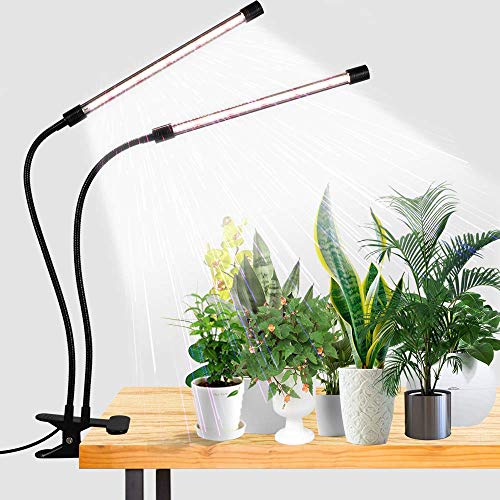
I’d go with a full-spectrum LED grow light. It gives off white light that looks normal in a living room and covers the colors plants use.
Run it 10 to 14 hours a day on a timer. Plants do better with the same schedule every day than with a light you remember to switch on now and then.
A single small clip-on bulb won’t cover a big clumping palm. For a floor-size areca, I’d look at a panel light or two lights aimed from different sides.
My roundup of the best grow lights for indoor plants explains what to look for in a fixture.
Position the Light and Watch for Leaf Stress
Hang or aim the light 12 to 24 inches above the top fronds. Stronger lights go higher, and weaker ones go closer.
Watch the next few weeks of growth:
- Pale, bleached, or crispy patches on the fronds nearest the light mean it’s too close or too strong.
- Continued leaning and small new fronds mean it’s too far or too weak.
- Full-sized, evenly green new fronds mean you’ve found the right setup.
Once the light is working, the soil will dry faster. Check it more often so you don’t go from wet roots to a thirsty palm.