
Hydroponic gardening
Grow food without soil
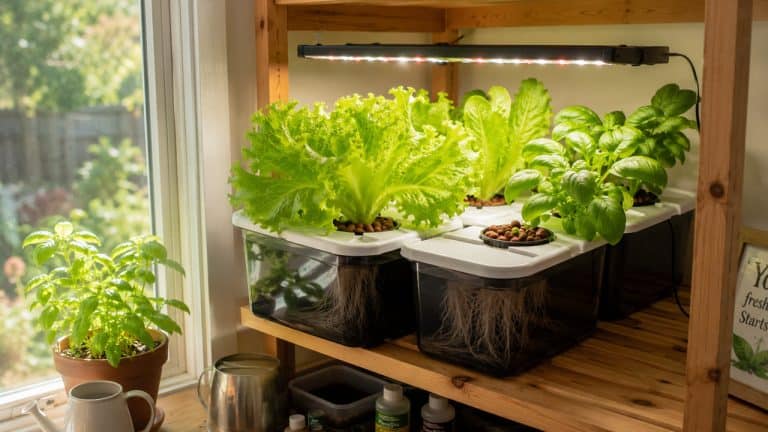
Lettuce on the kitchen counter, herbs through winter, and vegetables in a spare room. 7 guides on setting up a hydroponic garden at home, from countertop kits to DIY systems.
 7free guides
Start here
New to hydroponics? Read these four first
Hydroponics means growing in nutrient-rich water instead of soil. Plants get exactly what they need, so they grow faster in less space, and there are no weeds. In return you check the water instead of the dirt.
BeginnerHydroponics for beginners
How soil-free growing works, and the simplest way to try it.
Read the guide →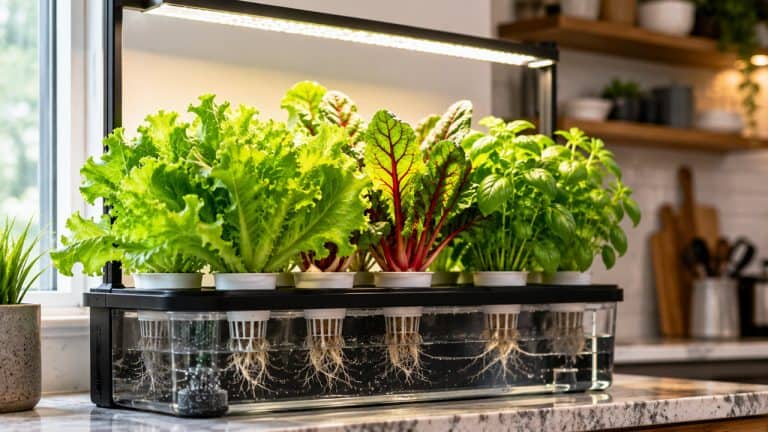 What to grow
14 best plants for hydroponics
Lettuce, herbs and greens that thrive with roots in water.
Read the guide →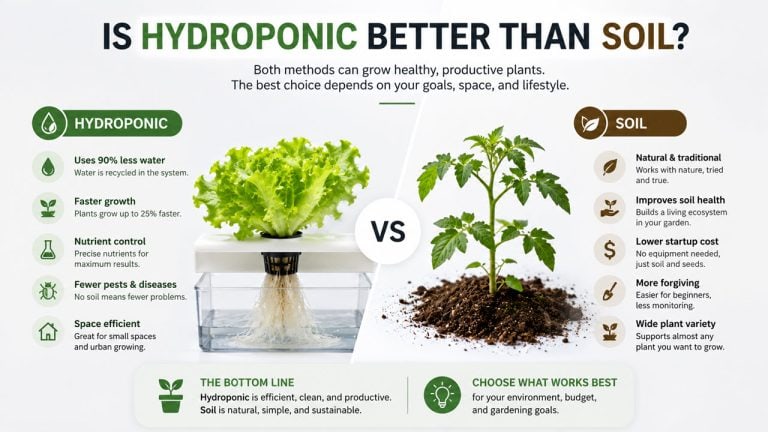 Compare
Hydroponic vs soil
Where water growing wins, and where soil still beats it.
Read the guide →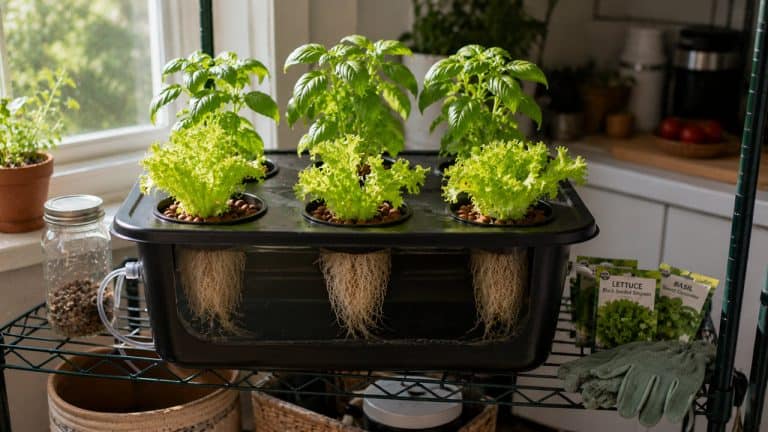 DIY
DIYBuild a small system at home
A countertop setup from parts you can buy anywhere.
Read the guide →How it works
The four things a hydroponic garden needs
Get these right and the rest is easy.
Water & oxygen
Roots sit in nutrient solution, but they still need air. An air stone or a pump that keeps the water moving prevents root rot.
Nutrients
Everything comes from the bottle. Mix to the label, top up with plain water as the level drops, and change the solution every 2 to 3 weeks.
pH
Aim for 5.5 to 6.5. Outside that range, plants cannot take up nutrients even when the solution is full of them.
Light
12 to 16 hours a day of strong light. Leafy greens and herbs cope with less, fruiting crops need the most.
All guides
Every hydroponic guide on the site
Seven guides covering setup, plant choice, seedlings and whether it beats soil for what you want to grow.
My gear
The hydroponic gear I actually use
Four things that cover a first system: somewhere to grow, food for the water, enough light, and a way to check pH.
As an Amazon Associate I earn from qualifying purchases. Prices and availability come from Amazon.

Countertop hydroponic garden
The easiest way in. Pods, pump and light in one unit, so you can grow lettuce and basil on a kitchen counter without plumbing or a reservoir to mix.
Check the price on Amazon →
Hydroponic nutrient solution
Plants in water get nothing from soil, so every mineral comes from the bottle. A complete liquid feed covers nitrogen, phosphorus, potassium and the trace elements.
Check the price on Amazon →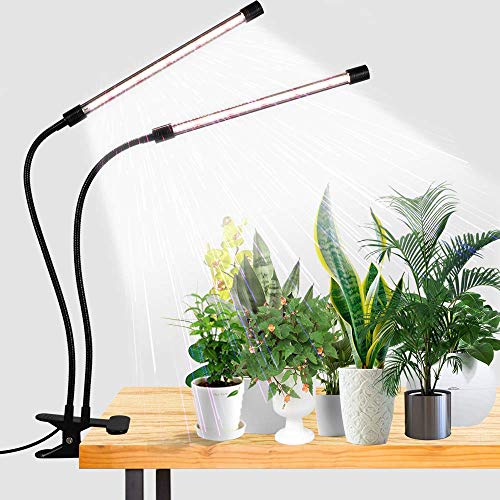
Full-spectrum grow light
Even a bright window rarely gives hydroponic greens the 12 to 16 hours they want. A clip light keeps growth compact instead of stretched and pale.
Check the price on Amazon →
pH and moisture meter
Nutrients only reach roots when the water sits between about 5.5 and 6.5 pH. Check weekly, because it drifts as plants drink.
Check the price on Amazon →Keep exploring
More from Gardening Elsa
Growing in soil as well? These hubs cover the rest of the garden.
Hydroponic gardening questions I get asked most
What is hydroponic gardening?
Growing plants in nutrient-rich water instead of soil. Roots sit in the solution, or in an inert material such as coco coir or clay pebbles, and take up minerals directly. Growth is usually faster than in soil because nothing is left to chance.
Is hydroponics hard for beginners?
No, if you start with a countertop kit and leafy greens. Lettuce, basil and mint are forgiving. The two jobs are topping up water and replacing the nutrient solution every 2 to 3 weeks.
What grows best hydroponically?
Lettuce, spinach, kale, basil, mint, parsley and strawberries do very well. Tomatoes, peppers and cucumbers also work but need much more light and support. Root crops such as carrots and potatoes are not worth the trouble.
Do hydroponic plants need special nutrients?
Yes. Regular houseplant fertilizer is not complete enough, because soil normally supplies trace elements. Use a solution made for hydroponics, and mix it to the strength on the label rather than guessing.
How often do I change the water?
Top up with plain water as the level drops, and replace the whole solution every 2 to 3 weeks. Change it sooner if the water smells or turns cloudy, which usually means algae or root rot.
Does hydroponics use more electricity than growing in soil?
It uses some, mostly for the light and a small pump. A countertop unit with an LED light typically costs a few dollars a month to run, far less than most people expect.