
The classic mint mistake is planting it straight into a garden bed. Grow it in a pot instead, or in a sunken container with the rim sticking up.
Skip that step and in two summers it’s in your lawn, your path and the middle of your thyme.
Do this instead: buy one healthy plant, pot it in a container at least 12 inches wide, and keep the soil damp. Cut it hard and often. A potted plant cut every few weeks gives you more usable leaves than a sprawling patch.
Planting It Straight in the Ground (Pot It Instead)
People do it because the label says “perennial” and a bed looks like the obvious home. Fair enough. Mint spreads by runners, though, some along the surface and some just under it. One plant can cover several square feet in a single season.
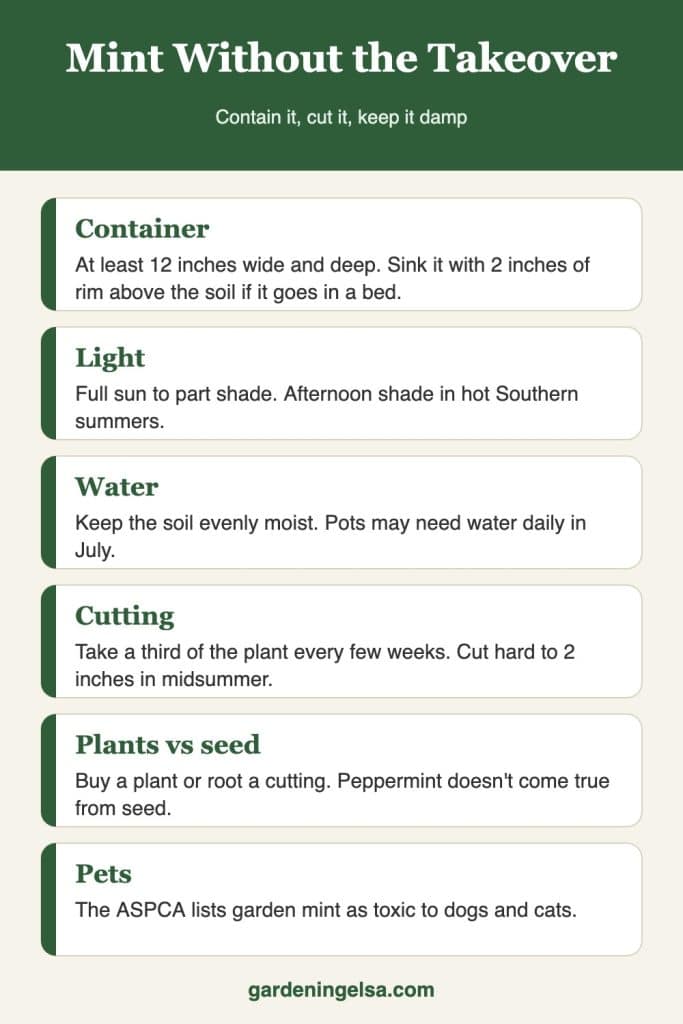
So contain it. A plain plastic nursery pot is all you need, 12 inches across and about as deep, the 5-gallon size. Set it on a patio, a deck or right by the kitchen door.
Fill it with a bagged potting mix, not dirt from the yard. Garden soil packs down in a pot and stays soggy at the bottom.
If you want mint in a bed, sink that pot into the ground. Leave 2 inches of rim above the soil.

The rim stops most runners, and the few that arch over it are easy to spot and snip.
Roots can also sneak out the drainage holes, so cover them with a scrap of landscape fabric and lift the pot once a year to trim anything poking through.
If it’s already loose in a bed, you’ll know. Shoots pop up a foot or more from the original plant, and pulling one drags up a white, rope-like root.
Sinking a Barrier That’s Too Shallow (Go 10 Inches Down)
This one is sneaky. People bury a strip of lawn edging, 4 or 5 inches deep, and think they’re done. Mint runs right under it.
Any barrier needs to go down at least 10 to 12 inches, with a couple of inches above ground.
For a mint bed that’s bigger than a pot, a plastic root barrier, the heavy kind sold for bamboo, does the job. Cut it to length and bury it in a ring.

Check the rim every few weeks in summer. Runners do arch over the top if you let them get long, and one runner that touches soil can root within a week or two.
Growing Peppermint From Seed (Buy a Plant You’ve Smelled)
This one catches a lot of people. Peppermint (Mentha × piperita) is a hybrid, and it rarely makes viable seed. A packet labeled peppermint, or just “mint,” can grow into something with a weak or odd flavor.
Spearmint from seed is possible. It’s still slow and variable. You wait weeks for something a $5 nursery plant gives you on day one.
Buy a plant and smell it first. Rub a leaf. If it smells right, it’ll taste right. Spearmint (Mentha spicata) is the sweet one for mojitos and lamb. Peppermint is the sharp, cooling one for tea.
If a seed-grown batch tastes flat, pull it and start over with a plant or a cutting from a friend. A 4-inch stem roots in a glass of water in 1 to 2 weeks.
Never Cutting It (Take a Third Every Few Weeks)
Gardeners tend to treat herbs gently. Mint doesn’t want that. Left alone, it gets tall and floppy, goes woody at the base and flowers by midsummer. The flavor fades once it blooms, and the leaves get smaller and tougher.
Cut it every few weeks from late spring on. Cut back about one stem in three each time, snipping each stem just above a pair of leaves.
Two new shoots grow from that spot. A pair of garden scissors kept by the back door makes it a 30-second job.

In early to midsummer, when it starts to look tired or set flower buds, cut the whole thing down to 2 inches. It looks brutal. In 3 to 4 weeks you’ll have a fresh flush of tender leaves.
Letting the Pot Dry Out (Water at the First Dry Inch)
People hear “mint is tough” and water it like rosemary. Wrong herb. Mint wants evenly moist soil. In a pot in full sun, in a Texas or Georgia July, that can mean water every day.
A dried-out mint wilts flat, drops lower leaves and gets crispy brown edges. It usually comes back with a soak, but every wilt costs you leaves.
So use a big pot (small ones dry out by lunchtime), fresh potting mix and a drainage hole. Water when the top inch feels dry. In the hot South, give it a spot with afternoon shade. In the North, full sun is fine.
Planting Different Mints Together (One Pot Each)
Mixing spearmint, peppermint and chocolate mint in one bed sounds charming. In practice the strongest grower takes over within a season or two. And any seedlings that sprout from crossed flowers come up with muddled flavor.
The old idea that the plants “lose their flavor” just from growing side by side isn’t right, though. An established plant keeps its own taste. It’s the takeover and the seedlings that cause the mix-up.
Give each mint its own pot. Cut off flowers before they set seed.
The exception: if you have a damp, shady strip where nothing else grows, between a fence and a driveway, or a spot under a downspout bordered by pavement, go ahead and let mint run there.
It’s one of the few plants that fills a wet, awkward corner and smells good when you mow the edge.
If You Already Did It
Mint loose in a bed takes a season or two to clear. It’s doable.
- In spring, fork up the patch and pull out every white runner you can find. Even a 1-inch piece can sprout.
- Go back every 2 weeks through summer and pull new shoots while they’re small. Each pull weakens what’s left.
- For a big patch, cut it to the ground and cover it with overlapping cardboard and 3 inches of mulch for a full growing season.
- Before you start, dig up one healthy clump and pot it. You still want mint, just not there.
Expect stragglers the second spring. By the end of year two, most patches are gone.
Winter, Pests and Pets
Spearmint is hardy in the ground in roughly Zones 4 to 9, and peppermint in Zones 5 to 9. It dies back to the roots in cold zones and returns in spring. Cut the dead stems down in fall.
Pots are less hardy than the ground. In Zones 4 to 6, move the pot into an unheated garage after the tops die back, or sink it into a bed for winter.
Water it once a month. For fresh leaves all winter, root a few cuttings for a sunny windowsill.
Our guide to growing herbs indoors covers light and pot size.
Rust is the disease to know. It shows as small orange-brown bumps on the undersides of leaves.
Cut affected stems to the ground and throw them in the trash, not the compost. The fungus overwinters in the roots, so clean up all old stems in fall.
For a badly infected favorite, dig it in early fall, wash the roots and hold them in 111°F water for 10 minutes, checking it with an instant-read kitchen thermometer, then cool them in cold water and replant.
Even a few degrees hotter can kill the roots.
Aphids and spider mites show up on dry, stressed plants in midsummer. A hard spray from the hose every few days knocks both back, and the midsummer cut to 2 inches removes most of them at once.
Mint is on the ASPCA’s toxic list for dogs, cats and horses. The signs it lists are vomiting and diarrhea after a large amount. Most pets avoid it, but keep a pot off the floor if yours chews plants.
What I’d Actually Do
I’d grow every kind of mint I like, each in its own big pot, and never put one in the ground without a deep barrier. Then I’d cut it constantly, because the more you harvest, the better it grows.
- One plant per 12-inch pot, in a sunny spot near the kitchen.
- Water whenever the top inch is dry.
- Snip a third every few weeks, and cut it hard once in midsummer.
- Pinch off flowers before they set seed.
- Clear old stems each fall to keep rust down.
For more herbs that like a container, see our picks for the best herbs to grow in pots, and our guides to growing basil and growing rosemary.
Mint Questions, Answered Plainly
How often should I divide potted mint?
Every 3 to 4 years, or sooner if the center goes bare and woody while the edges crowd the rim. In early spring, slide it out, cut the root mass into quarters with a sharp spade or an old bread knife, and repot the best quarter in fresh mix.
Can I grow mint with other herbs in one planter?
Not for long. Mint roots crowd out basil, parsley and thyme within a season. If you want a mixed planter, keep the mint in its own smaller pot set inside it.
Why does my mint taste bitter?
Usually it flowered, or it’s old and woody. Cut it hard and taste the new growth in a few weeks. If a seed-grown plant is still bland, the plant is the problem. Replace it.
Should I fertilize mint?
Lightly. A little compost in spring, or a half-strength liquid feed once a month for pots, is plenty. Heavy feeding gives big, bland leaves.
Does mint keep bugs away?
Not in any useful way. The smell is strongest when you crush the leaves, and a plant sitting on a patio won’t protect your tomatoes from pests or keep mosquitoes off your deck.

Hello there! I’m Elsa, and gardening is my passion. As an avid gardener, I created GardeningElsa.com to share my knowledge and experience with fellow enthusiasts. My website is a comprehensive resource for gardeners of all levels, offering expert advice on a wide range of topics, including plants, flowers, herbs, and vegetable gardening. Whether you’re a beginner looking to start your first garden or a seasoned pro seeking to expand your knowledge, GardeningElsa.com has something for everyone. Read more about me.