
Cucumbers are one of the most rewarding crops a beginner can plant. They grow fast, climb happily, and a few healthy vines can keep a family in salads and pickles all summer.
Once you learn how to grow cucumbers, you’ll wonder why you ever bought them at the store.
In this guide, I’ll walk you through everything from picking the right variety to harvesting at the perfect size. I’ll cover planting, trellising, watering, pollination, and the pests and diseases that trip up most new growers.
Let’s get your first crop started on the right foot.
Cucumber Types and Best Varieties
The main cucumber types are slicers, picklers, burpless or English cucumbers, and compact bush types. The best variety for you depends on how you plan to eat them and how much space you have.
All of these are the same species, Cucumis sativus. That means they grow the same way, even though the fruit looks and tastes a little different.
Slicers, Picklers and Burpless Cucumbers
Slicing cucumbers are the classic salad type. They have smooth, dark green skin and are best picked at 6 to 8 inches long. Popular choices include ‘Marketmore 76’ and ‘Straight Eight’.
Pickling cucumbers are shorter and blockier, with bumpy skin and crisp flesh. They hold their crunch in brine. Pick them small, at 2 to 4 inches, for the best pickles. ‘Boston Pickling’ and ‘National Pickling’ are reliable heirlooms.
Burpless and English cucumbers are long, thin-skinned, and mild. Many are parthenocarpic, which means they set fruit without pollination and produce few or no seeds. They’re a great pick for greenhouses or for anyone who finds regular cucumbers hard to digest.
Don’t overlook novelty types, either. ‘Lemon’ cucumbers are round, yellow, and sweet. Armenian cucumbers are technically a type of melon, but they eat just like a mild cucumber.
Bush Cucumbers for Small Spaces
Bush cucumbers have short vines, usually just 2 to 3 feet long. They’re perfect for patios, small beds, and pots. Look for varieties like ‘Spacemaster’, ‘Bush Champion’, or ‘Salad Bush’.
A bush cucumber needs a container of at least 5 gallons. Bigger is better, since more soil holds more water. If you’re short on yard space, cucumbers are one of the best vegetables for containers you can grow.
Gear I Recommend Before You Start
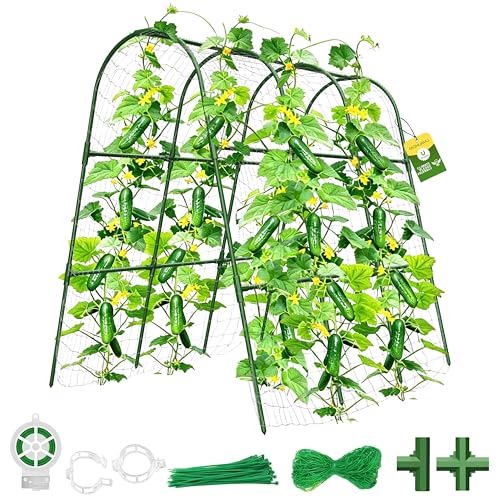
Two simple tools make cucumber growing much easier. The first is a sturdy cucumber trellis, either an A-frame or a panel of cattle fencing. It keeps vines off the ground, saves space, and makes picking a breeze.
The second is a soaker hose. It delivers water slowly at the soil line, right where roots need it. That keeps leaves dry and cuts down on disease.

| Type | Harvest Size | Best Use | Space Needs |
|---|---|---|---|
| Slicer | 6 to 8 inches | Salads, sandwiches | Vining, trellis recommended |
| Pickler | 2 to 4 inches | Pickles, fresh snacking | Vining or semi-bush |
| Burpless/English | 8 to 14 inches | Fresh eating, mild flavor | Vining, trellis strongly recommended |
| Bush | 6 to 8 inches (slicers) | Containers, small beds | 2 to 3 foot vines |
When and Where to Plant Cucumbers
Plant cucumbers 1 to 2 weeks after your last frost date, once the soil is at least 60°F. Choose a sunny spot with rich, well-drained soil.
Cucumbers are warm-season crops. A single frost will kill them, so there’s no prize for planting early.
Timing Your Planting
Soil temperature matters more than the calendar. Cucumber seeds need soil of at least 60°F to sprout, but 70°F is much better. A cheap soil thermometer takes the guesswork out of it.
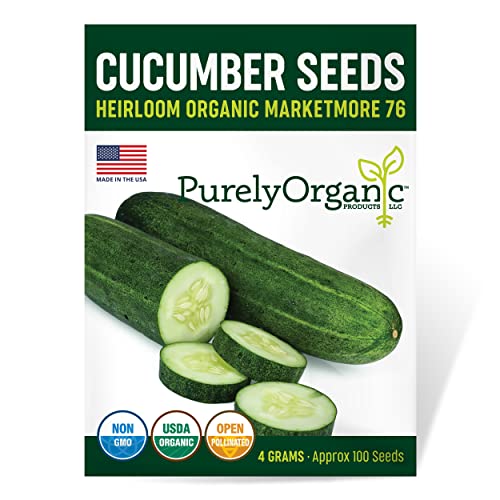
At 70 to 90°F, seeds sprout in about 3 to 10 days. In cold soil, they sit and rot or come up weak. If you plant too early and your seedlings stall, check out my guide on cucumber plants not growing for fixes.
In warm climates, you can often plant a second round in midsummer for a fall harvest. Just count back about 70 days from your first fall frost.
Choosing a Sunny Spot
Cucumbers need at least 6 to 8 hours of direct sun a day. For the best yields, aim for 8 hours or more. If you’re unsure about your yard, read my full breakdown on how much sun cucumbers need.
Too little light causes leggy, pale vines. You’ll also see fewer female flowers, smaller or misshapen fruit, and more powdery mildew.
In very hot regions, the opposite can be a problem. Above about 90°F, cucumbers struggle to set fruit because heat damages pollen. Afternoon shade or a 30 to 40% shade cloth can help a lot.
Beds, Containers and Companion Planting
Raised beds are one of my favorite ways to grow cucumbers. They warm up faster in spring and drain well after heavy rain. A bed 12 inches deep is ideal, though 8 inches is the minimum.
If you’re interested in this method, I’ve written a full guide on growing cucumbers in raised beds. My main tip is to put your trellis on the north side of the bed so it doesn’t shade other crops.
Many gardeners worry about growing cucumbers near squash. Don’t. Cucumbers can’t cross with zucchini, squash, or watermelon, because they’re different species. If you want to try it, here’s my advice on planting zucchini and cucumbers together.
Soil, Spacing and Planting
Cucumbers want loose, compost-rich, well-drained soil with a pH of 6.0 to 6.8. Space trellised plants about 12 inches apart and sprawling plants about 3 feet apart.
Getting these basics right is a huge part of how to grow cucumbers successfully. Healthy soil grows healthy vines.
Preparing the Soil
Start by working 2 to 3 inches of compost into the top several inches of soil. Compost feeds the plants and helps soil hold moisture without getting soggy.

Drainage is critical. Cucumbers sitting in waterlogged soil are prone to root and crown rot. If your soil is heavy clay, raised beds or mounds are a smart fix.
If you’ve never tested your soil, a basic pH test is worth doing. Cucumbers do best in slightly acidic to neutral soil, between 6.0 and 6.8.
Spacing Guidelines
Spacing depends on whether your plants climb or sprawl. Trellised vines take up far less room.
| Growing Method | Spacing in Row | Row Spacing |
|---|---|---|
| Trellised cucumbers | About 12 inches | Along trellis line |
| Sprawling cucumbers | About 3 feet | 4 to 6 feet |
| Bush cucumbers in pots | 1 plant per 5+ gallons | N/A |
Crowding is a common beginner mistake. Packed plants get less airflow, and that invites powdery mildew. Give each vine its room.
Direct Sowing vs. Transplanting
Cucumbers hate having their roots disturbed. For that reason, I prefer direct sowing in most gardens. Plant seeds 1/2 to 1 inch deep, a few per spot, then thin to the strongest seedling.
If you have a short season, you can start seeds indoors 3 to 4 weeks before planting out. Use individual pots so you can move each plant without breaking the root ball.
Don’t let indoor seedlings get too big. Older, root-bound transplants often sulk for weeks after planting. Young plants settle in much faster.
Trellising Cucumbers
Trellising means training cucumber vines to climb up instead of sprawling on the ground. It saves space, reduces disease, and gives you straighter, cleaner fruit.
You don’t strictly need a trellis, but I recommend one for almost every vining variety.
Why Trellising Saves Space and Reduces Disease
A single sprawling cucumber plant can cover a 3 by 3 foot area or more. On a trellis, that same plant needs only about a foot of ground. That means you can fit three times the plants in the same bed.
Vertical vines also stay healthier. Leaves dry faster after rain or dew, and air moves freely through the foliage. Since many cucumber diseases spread in damp, still conditions, this makes a real difference.
Fruit grown off the ground stays clean and doesn’t rot where it touches wet soil. It also hangs straight, which is especially nice for long English types. And picking is much easier when you can see every cucumber.

Trellis Options That Work
You have plenty of choices, from store-bought to homemade. Here are a few that work well:
- A-frame trellis: Two panels leaned together. Plants grow up both sides, and you can grow lettuce in the shade underneath.
- Cattle panel arch: Very sturdy and long-lasting. It creates a fun tunnel you can walk through.
- Netting on posts: Cheap and easy. Use strong netting with openings large enough to reach through.
- Vertical string or twine: Great in greenhouses and small spaces.
Aim for a trellis about 5 to 6 feet tall. Most vining cucumbers easily reach that height in a good season.
Training Vines to Climb
Cucumbers climb with tendrils that grab onto anything nearby. Still, young vines sometimes need a little help getting started.
Gently guide the main stem toward the trellis when it’s about a foot long. You can loosely tie it with soft garden twine or cloth strips. Once the tendrils catch, the plant does most of the work.
Check your vines every few days. Tuck wandering shoots back onto the support so they don’t flop over and break.
Watering, Mulching and Feeding
Cucumbers need 1 to 2 inches of water per week, applied deeply and evenly at the soil line. Mulch helps hold moisture, and a balanced fertilizer keeps vines productive.

Cucumbers are about 95% water, so consistent moisture is everything.
How to Water Cucumbers
Water deeply at the base of the plant, not over the leaves. Wet foliage encourages mildew and other diseases. This is where a soaker hose or drip line really pays off.
Even moisture is the goal. Letting soil dry out completely, then f