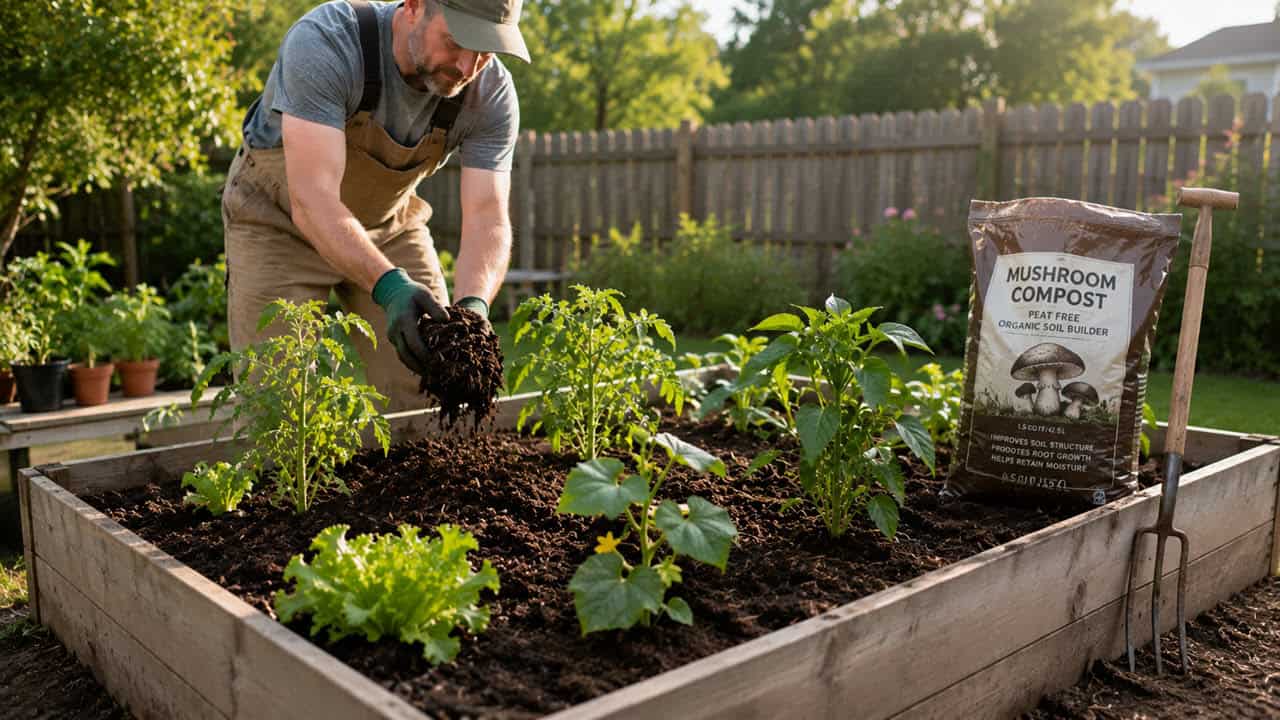
Mushroom compost can be a great addition to vegetable gardens. This organic material is rich in nutrients and improves soil structure. Mixing mushroom compost with garden soil at a ratio of 1:4 can boost vegetable yields by 30-50%.
Gardeners often use mushroom compost to enhance their growing conditions. It helps retain moisture in the soil and provides a good environment for plant roots. Many vegetables thrive in the non-acidic conditions created by mushroom compost.
When using mushroom compost, it’s best to mix it with existing soil rather than use it alone. This ensures plants get the right balance of nutrients. For vegetable gardens, tilling 3 inches of compost into the top 6 inches of soil works well. Crops like broccoli, cauliflower, and potatoes tend to do very well with mushroom compost added to their growing medium.
Mushroom Compost
Mushroom compost is a nutrient-rich soil amendment made from materials used to grow mushrooms. It offers many benefits for vegetable gardens.
What Is Mushroom Compost
Mushroom compost is the leftover growing medium from mushroom farms. It’s made up of organic materials that have been used to cultivate mushrooms. After the mushroom harvest, this “spent” substrate becomes a valuable resource for gardeners.
The compost is dark, crumbly, and smells earthy. It’s full of nutrients that plants love. Gardeners use it to improve soil structure and feed their plants.
Mushroom compost works well for most vegetables. It can boost yields and plant health when mixed with garden soil.
Check out 9 Steps to Start Your Own Organic Garden
Components of Mushroom Compost
The main ingredients in mushroom compost vary but often include:
- Wheat straw
- Peat moss
- Chicken manure
- Gypsum
- Soybean meal or canola meal
These materials are chosen to create an ideal growing environment for mushrooms. They break down during the composting process, releasing nutrients.
The mix is high in organic matter. This helps improve soil texture and water retention. It also contains key nutrients like nitrogen, phosphorus, and potassium.
Composting Process of Mushroom Compost
The composting process for mushroom substrate happens in stages:
- Mixing: Raw materials are combined and wetted.
- Heating: The mix is heated to kill harmful bacteria and weed seeds.
- Cooling: The temperature drops as beneficial microbes grow.
- Spawning: Mushroom spores are added to colonize the compost.
- Growing: Mushrooms grow and are harvested.
- Spent compost: The used substrate becomes mushroom compost.
This process takes several weeks. It transforms raw materials into a nutrient-rich, stable compost. The result is a product that’s safe and beneficial for garden use.
Benefits of Mushroom Compost for Vegetable Gardens
Mushroom compost offers many advantages for vegetable gardens. It boosts soil health and helps plants grow better.
Improving Soil Structure and Nutrient Content
Mushroom compost adds organic matter to soil. This makes soil looser and easier for roots to grow through. It also helps air and water move in the soil.
The compost is rich in nutrients plants need. It has nitrogen, phosphorus, and potassium. These help veggies grow strong and produce more.
Mixing mushroom compost with garden soil makes it better. A good mix is 20-30% compost with 70-80% soil. This gives plants the right balance of nutrients.
Enhancing Water Retention and Drainage
Mushroom compost helps soil hold water. This means plants can get water when they need it. It’s good for areas that don’t get much rain.
The compost also helps extra water drain away. This stops roots from getting too wet. Good drainage keeps plants healthy.
In dry times, gardens with mushroom compost need less watering. This saves time and water. The compost acts like a sponge in the soil.
For best results, don’t use too much compost. Too much can make soil too wet. A little goes a long way in helping plants grow well.
Comparing Mushroom Compost with Other Amendments
Mushroom compost offers unique benefits compared to other soil amendments. It has a special structure and nutrient profile that sets it apart from regular compost and chemical fertilizers.
Mushroom Compost vs. Regular Compost
Mushroom compost and regular compost are both organic materials that improve soil. But they have some key differences.
Mushroom compost has more calcium than regular compost. This makes it great for tomatoes and other calcium-loving plants. It also holds onto nutrients longer because of its porous structure.
Regular compost usually has more nutrients overall. It tends to have a better balance of different nutrients plants need. This makes regular compost good for boosting general soil health.
Mushroom compost is less acidic than regular compost. This helps plants that don’t like acidic soil, like broccoli and cabbage. But it may not work as well for acid-loving plants.
Both types of compost add organic matter to soil. This improves soil structure and helps it hold water better.
Mushroom Compost and Chemical Fertilizers
Mushroom compost and chemical fertilizers work differently in gardens.
Chemical fertilizers add nutrients to soil quickly. Plants can use these nutrients right away. But the effects don’t last long.
Mushroom compost releases nutrients slowly over time. It feeds plants for many months. This steady supply helps plants grow strong and healthy.
Unlike chemical fertilizers, mushroom compost improves soil structure. It makes soil lighter and helps it drain better. This is good for plant roots.
Chemical fertilizers don’t add organic matter to soil. Mushroom compost does. This organic matter feeds helpful soil microbes.
Mushroom compost is safer for the environment than many chemical fertilizers. It won’t harm plants if you use too much. It also doesn’t pollute water like some chemical fertilizers can.
Application of Mushroom Compost in Gardening
Mushroom compost is a versatile soil amendment that can boost vegetable garden health. It adds nutrients and improves soil structure when used properly.
Using Mushroom Compost as Mulch
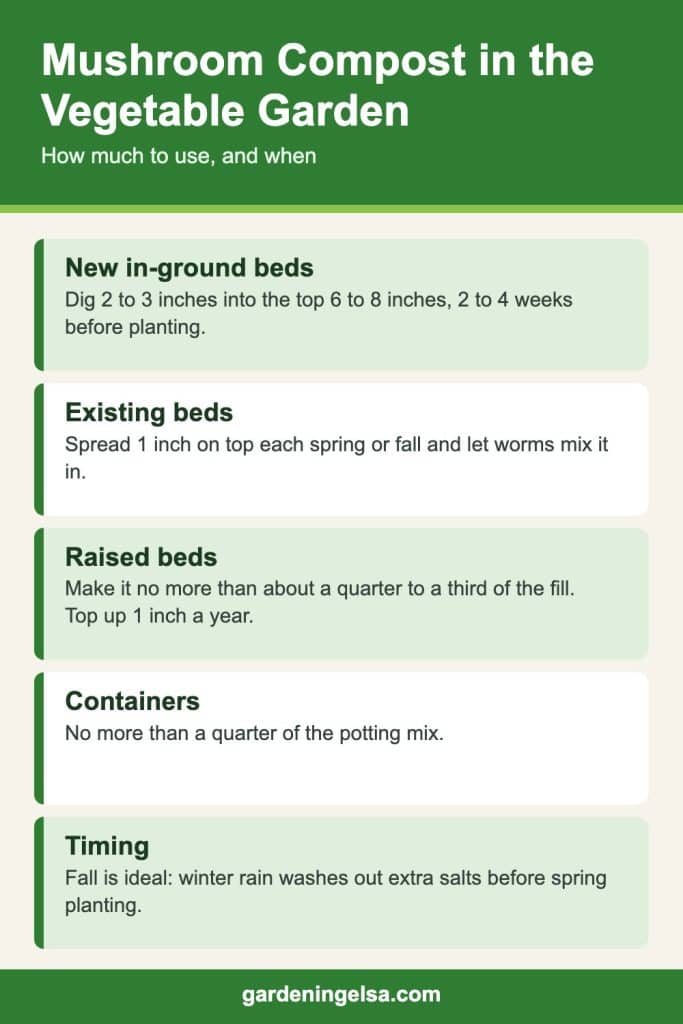
Mushroom compost makes an effective mulch for vegetable gardens. Spread a 2-3 inch layer around plants, keeping it away from stems. This helps retain soil moisture and suppress weeds.
As a mulch, it slowly releases nutrients into the soil as it breaks down. This feeds plants over time. The dark color of mushroom compost can warm the soil in spring.
Reapply mushroom compost mulch as needed throughout the growing season. It will gradually mix into the top layer of soil.
Incorporation into the Soil
Mix mushroom compost into garden soil before planting. Add 1-2 inches and work it into the top 6-8 inches of soil. This improves drainage and adds organic matter.
For new beds, blend mushroom compost with native soil in a 1:4 ratio. In existing gardens, use a 1:3 ratio of compost to soil. This provides nutrients without overwhelming plants.
Mushroom compost can increase vegetable yields by 30-50% when used right. It works well for most veggies, but use less for acid-loving plants.
Considerations for Specific Vegetable Crops
Different vegetables have unique needs when it comes to using mushroom compost. Some plants thrive with it, while others may struggle. Let’s look at how to use this compost for different types of veggies.
Acid-Loving Plants and Mushroom Compost
Mushroom compost is not good for plants that like acidic soil. These include blueberries, rhododendrons, and azaleas. The compost can make the soil less acidic, which these plants don’t like.
For vegetable gardens with acid-loving plants, it’s best to avoid mushroom compost. Instead, use other types of compost or soil amendments that keep the soil acidic.
If you really want to use mushroom compost, mix it with pine needles or peat moss. This can help balance the pH for acid-loving plants.
Best Practices for Fruiting Vegetables
Fruiting veggies like tomatoes, bell peppers, and eggplants do well with mushroom compost. These plants need lots of nutrients to make their fruits.
Mix mushroom compost into the soil before planting. Use about 2-3 inches of compost for each plant. This gives them a good start.
During the growing season, add a thin layer of compost around the plants. This acts as a mulch and slowly feeds the plants.
Be careful not to use too much compost. Too much can lead to leafy growth but fewer fruits. A good rule is to use no more than 30% compost in your soil mix.
Avoid Common Issues with Mushroom Compost
Mushroom compost can be great for vegetable gardens, but it’s important to use it correctly. Some key issues to watch out for are salt levels, pH changes, and potential nutrient imbalances.
Managing Salt Content and Soil pH
Mushroom compost often has high salt levels. This can harm some plants if not managed well. To avoid problems, let the compost age before using it. This helps lower the salt content.
Mix mushroom compost with other soil or compost types. This dilutes the salts and prevents build-up. Avoid using it on salt-sensitive plants or in already salty soils.
The compost can also make soil more alkaline. This is due to lime added during production. Test your soil pH before and after adding mushroom compost. If needed, mix in some acidic materials to balance the pH.
Preventing Nutrient Imbalances and Disease
Mushroom compost is rich in nutrients, especially calcium and nitrogen. While this is often good, it can lead to imbalances if overused.
Don’t rely solely on mushroom compost for fertilizing. Mix it with other nutrient sources. This ensures a balanced diet for your plants.
Too much nitrogen can cause leafy growth at the expense of fruits or flowers. It may also attract pests. Use mushroom compost sparingly on plants that don’t need high nitrogen.
The compost can introduce beneficial microorganisms to your soil. But in some cases, it might bring harmful bacteria too. To reduce risks:
- Buy compost from reputable sources
- Allow it to fully decompose before use
- Avoid using it on diseased plants
These steps help prevent issues like root rot or blossom-end rot in your vegetable garden.

Frequently Asked Questions
Mushroom compost can be very useful in vegetable gardens. It helps improve soil and provides nutrients for plants. Here are some common questions about using mushroom compost for growing vegetables.
What are the benefits of using mushroom compost in a vegetable garden?
Mushroom compost improves soil structure. It helps soil hold more water and air. This compost also adds nutrients that plants need to grow. It can make the soil less acidic, which many vegetables like.
Can mushroom compost be used with all types of vegetables?
Most vegetables grow well in soil with mushroom compost. It’s good for broccoli, cauliflower, cabbage, and potatoes. Some plants that like acidic soil may not do as well. It’s best to mix mushroom compost with regular garden soil.
How does mushroom compost compare to other types of compost for gardens?
Mushroom compost is rich in nutrients. It has more calcium than some other composts. This compost breaks down quickly in soil. It’s often wetter than other composts when you buy it. Mushroom compost works well for most garden plants.
Are there any vegetables that should not be planted in mushroom compost?
Plants that like acidic soil may not grow well in mushroom compost. These include blueberries and azaleas. Most common garden vegetables do fine with mushroom compost. It’s always good to test your soil before adding any compost.
What is the proper way to apply mushroom compost in a garden?
Mix mushroom compost into the top layer of soil. Use about 1 part compost to 4 parts soil for vegetables. Don’t use too much, as it can be strong. Spread a thin layer on top of soil around plants. Water the area after adding compost.
Are there any potential negative effects from using mushroom compost on garden plants?
Using too much mushroom compost can harm plants. It may have high salt levels that can burn roots. Some mushroom compost might contain chemicals used in growing mushrooms. Always buy compost from trusted sources. Let fresh compost age before using it on plants.
Conclusion
Mushroom compost is a great addition to vegetable gardens. It provides many benefits for plants and soil health.
This compost adds nutrients that help vegetables grow better. Many gardeners see bigger harvests when using it properly.
Mixing mushroom compost with regular soil works best. A good ratio is 20-30% compost to 70-80% garden soil. This balance gives plants what they need without making the soil too wet.
Vegetables like broccoli, cabbage, and potatoes do well with mushroom compost. The non-acidic nature suits these crops.
Gardeners should start with small amounts. They can then adjust based on how their plants respond. This careful approach leads to the best results.
Overall, mushroom compost is a valuable tool for vegetable gardeners. When used correctly, it can boost soil quality and plant growth. Many find it helps create a more productive and thriving garden.

Hello there! I’m Elsa, and gardening is my passion. As an avid gardener, I created GardeningElsa.com to share my knowledge and experience with fellow enthusiasts. My website is a comprehensive resource for gardeners of all levels, offering expert advice on a wide range of topics, including plants, flowers, herbs, and vegetable gardening. Whether you’re a beginner looking to start your first garden or a seasoned pro seeking to expand your knowledge, GardeningElsa.com has something for everyone. Read more about me.