
A dry July week can make a backyard garden feel like a thirsty child. I have stood beside a drooping perennial bed, watched the soil pull away from the edges of containers, and wished I had saved the perfectly usable water that went down the bathroom drain that morning.
That is where bathroom water reuse earns its place. With a few smart habits, you can redirect suitable rinse water to flowers, shrubs, and non-edible landscape plants without turning your garden routine into a complicated project. Here is how I safely reuse bathroom water for gardening, what I avoid, and which plants benefit most.
What Bathroom Water Can You Reuse?
Bathroom water, often called graywater, is lightly used household water from sinks, showers, tubs, and sometimes washing machines. It is different from toilet water, which contains human waste and should never enter a home garden system.
For a simple backyard setup, I stick with the cleanest bathroom sources: cold water that runs while the shower warms up, leftover water from hand-washing, and tub water that has not contained harsh products. This water usually works best for ornamental beds, shade trees, hedges, and established flowering shrubs.
The key is to think of bathroom water as a quick-use resource, not something to store. Fresh graywater has less time to develop odors or allow bacteria to multiply. I use it the same day, usually within a few hours.
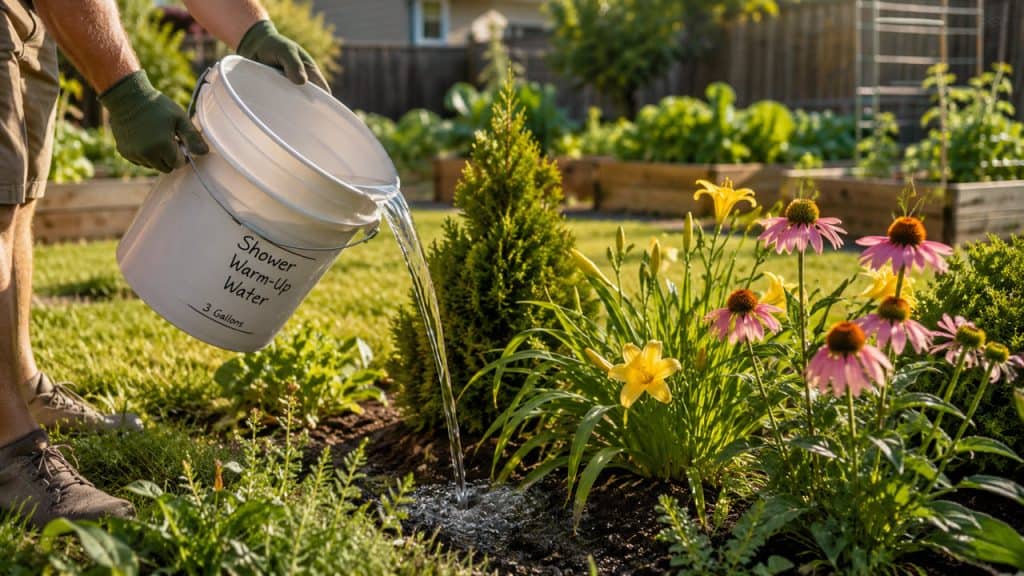
Pro Tip: I keep a clean bucket in the shower during summer. The water that runs before the shower heats up often fills a 3- to 5-gallon bucket, which is enough for two large containers or one thirsty shrub.
Safe Water Sources
The easiest sources require no plumbing changes. Place a bucket under the faucet while you wait for hot water, collect water during hand-washing, or scoop clean tub water after a bath.
Use bathroom water only when it looks reasonably clean and does not carry heavy oils, dyes, medications, strong fragrances, or disinfectants. A little mild soap residue may be fine for hardy ornamentals, but I still dilute it when I can.
Good options include:
- Cold water collected while waiting for the shower to warm up
- Water left in a basin after washing hands with mild soap
- Clean bathwater with minimal soap
- Water from rinsing a toothbrush cup or washing a small item by hand
- Water collected from a dehumidifier, if it has stayed clean and free of chemicals
If you already practice zero-waste gardening habits, bathroom water reuse fits right into that mindset. You are making one household resource work twice before it leaves your property.
Water to Keep Out
Never use water from toilets, bidets, or anything contaminated by human waste. Skip water from a tub or sink when someone used hair dye, bleach, heavy-duty cleaners, bath oils, bath bombs, medicated products, or strong antibacterial soap.
I also avoid water that contains a lot of shaving cream, toothpaste, makeup remover, acne treatments, or foot-soak products. These materials can add salts, fragrances, oils, or chemicals that do not belong in garden soil.
Do not collect water from a bathroom where someone has a contagious stomach illness, diarrhea, or a skin infection. In that situation, send the water down the drain and protect your household garden.
How to Reuse Bathroom Water for Gardening
This is a how-to guide because most gardeners do best with one safe, repeatable routine rather than a handful of complicated systems. I use the same basic method whether I am watering a row of daylilies, a boxwood hedge, or a few large patio pots.
1. Choose Your Garden Area First
Before you collect any water, decide where it will go. That single habit prevents the bucket from sitting too long in the bathroom or getting dumped onto the nearest plant without thought.
I reserve bathroom water for established, non-edible plants. In my own imaginary Zone 6 backyard example, I would use it on a border of coneflowers, black-eyed Susans, hostas, lilacs, and a row of young arborvitae. Those plants have roots below the soil surface and do not put edible leaves or fruit directly in contact with splashing water.
For food gardens, choose caution. I do not use graywater on leafy crops such as lettuce, kale, spinach, basil, or parsley. I also skip root crops like carrots, radishes, beets, and potatoes, since the harvest grows in soil that could receive the water.
If water scarcity pushes you to use it near edible plants, apply it only to the soil around established fruiting crops, never onto leaves or fruit. Even then, clean collected warm-up water is the better choice because it contains no soap.
Keep your main vegetable patch healthy with smart soil preparation; this guide on how to prepare soil for a vegetable garden can help your beds hold moisture longer.
Pro Tip: I label my collection bucket “Garden Only” with a permanent marker. That keeps it out of kitchen duty and reminds everyone in the house that it should not hold cleaning chemicals.
2. Collect Only Fresh, Lightly Used Water
Set a 3- to 5-gallon bucket in the shower or tub while the water heats. If you collect sink water, place a smaller basin in the sink and pour it into your larger garden bucket afterward.
A full 5-gallon bucket weighs more than 40 pounds, so do not force yourself to carry more than feels comfortable. I prefer a 2-gallon bucket for a deck or upstairs bathroom, especially when I need to walk down steps. Several smaller trips beat one strained back.
Use the water promptly. I recommend applying it within 24 hours, and the same day is even better. Fresh water smells normal and creates fewer sanitation concerns. Stored graywater can become stagnant quickly, especially in summer heat above 80 F.
Do not seal it in a container and forget it for several days. If the water smells sour, looks cloudy, or has an oily film, discard it down the drain instead of using it in the garden.
3. Dilute Soapy Water When Needed
The safest water has no soap at all. That is why shower warm-up water is my favorite source. If your collected water contains a small amount of mild soap, dilute it before using it around plants.
A simple rule works well: add one part lightly soapy water to one or two parts plain water. For example, if you have 1 gallon of slightly soapy hand-washing water, add 1 to 2 gallons of fresh water before applying it to an ornamental bed.
Why dilute? Many soaps contain salts. Salt buildup can make it harder for plant roots to absorb water, even when the soil looks moist. Over time, it may cause leaf-edge browning, poor growth, or a white crust on the soil surface.
Watch your plants. Roses, hydrangeas, azaleas, ferns, and many container plants can react faster to salt or alkaline residue than tough native perennials. If you grow Boston ferns, learn more about their moisture needs in this guide to caring for ferns and give them fresh water whenever possible.
Pro Tip: In my experience, “natural” or “plant-based” on a soap label does not automatically mean garden-safe. I still treat any soapy water as occasional water, not my garden’s everyday supply.
4. Apply Water Directly to the Soil
Pour bathroom water slowly onto the soil around the base of a plant. Keep it off leaves, flowers, and edible parts. Soil-level watering gives roots the moisture they need and avoids splashing residues across foliage.
For a mature shrub, pour the water in a wide circle beneath the outer branches, called the drip line. The drip line is where rainwater naturally falls from the leaf canopy, and it often sits above many active feeder roots. For a young shrub, water closer to the root ball but avoid dumping water against the main stem.
With perennials, divide 1 to 2 gallons among several plants rather than flooding one spot. In loose, well-drained soil, water should soak in steadily. If it puddles for more than a few minutes, slow down and split the bucket between more areas.
A 2- to 3-inch layer of shredded leaves, bark, or untreated straw helps the soil hold that moisture. Mulch also prevents fast evaporation during hot afternoons. If you are growing food crops, learn how to mulch your vegetable garden so you can reduce how often you need supplemental water.
5. Rotate Where You Water
Do not pour graywater onto the same small patch every day. Even mild soap residues can accumulate when they repeatedly hit one spot. I rotate between ornamental beds, shrubs, and non-edible containers through the week.
For example, the warm-up water from Monday’s shower may go to the hostas. Tuesday’s lightly soapy sink water, diluted with fresh water, can go around the base of daylilies. Wednesday’s water might go to a mature juniper or a patch of ornamental grasses.
Give each area a regular rinse with rainwater or clean tap water. Rain naturally flushes some salts deeper through the soil, while a deep watering with fresh water can help during a dry spell. This matters most in containers, where salts have nowhere else to go.
6. Check Soil and Plant Response
Healthy garden soil absorbs water, holds some moisture, and drains excess water without staying swampy. Check the soil 2 inches down with your finger before adding another bucket. If it feels cool and damp, move on to another bed.
Watch for warning signs over several weeks:
- Brown, crispy leaf edges
- White or pale crust on soil
- Plants that wilt despite damp soil
- Slow growth or yellowing leaves
- A sour smell in the soil
These signs do not always mean graywater caused the problem, but they tell you to pause bathroom-water use in that area. Switch to fresh water and water deeply once or twice to help flush the root zone.
Good soil structure makes every drop work harder. Building compost-rich beds is one of the most practical ways to reduce watering needs, so consider these garden soil tips for better health and yields as part of your long-term water-saving plan.
Pro Tip: I use bathroom water as a bonus, not a replacement for regular garden watering. The best results come from good soil, mulch, and a simple routine—not from stretching questionable water too far.
Best Plants for Bathroom Water
The best candidates are sturdy, established ornamental plants with roots in the ground. Once rooted in, many landscape plants handle occasional graywater better than delicate seedlings or plants grown for eating.
Ornamental grasses, daylilies, coneflowers, black-eyed Susans, bee balm, yarrow, sedum, and lilacs are practical choices. In Zones 4–7, these plants often tolerate heat, dry spells, and less-than-perfect watering conditions once established.
Evergreen shrubs such as juniper, boxwood, and arborvitae can also use plain shower warm-up water. Use lightly soapy water only occasionally, dilute it first, and rotate the watering area. Young shrubs need steady moisture, but their roots also need oxygen, so never let water collect around their trunks.
For containers, choose ornamentals with good drainage holes and use only clean water. A large pot dries quickly in July, especially on a sunny deck, but it also concentrates salts faster than a garden bed.
If you are gardening in a tight space, these ideas for a small-space edible garden can help you plan where clean water should go and where ornamental containers make more sense.
Plants and Places to Avoid
Keep bathroom water away from edible leaves, roots, and herbs that you harvest often. That includes lettuce, spinach, cilantro, basil, mint, chives, carrots, radishes, beets, and strawberries. Their low growth or direct soil contact makes clean water the safer choice.
Avoid watering newly planted seedlings with graywater. Young roots have little reserve strength, and tiny plants react quickly to salt or pH changes. Give new transplants clean water until they establish strong roots, usually for at least two to four weeks.
Do not pour graywater near wells, streams, ponds, drainage ditches, or low spots where runoff can travel. Keep it several feet from your home foundation too. Reusing water should support your garden, not create soggy soil or drainage trouble.
I also skip any plant that already looks stressed. A struggling hydrangea, a yellowing fern, or a wilted container basil needs predictable, clean water while it recovers.
Things to Keep in Mind
- Use it quickly: Apply collected bathroom water the same day, ideally within a few hours, so it does not become stale or smelly.
- Keep toilet water separate: Never reuse water from toilets, bidets, or sources contaminated with human waste.
- Favor ornamentals: Direct bathroom water toward established flowers, shrubs, trees, and non-edible landscape plants rather than edible crops.
- Avoid harsh products: Skip water containing bleach, disinfectants, hair dye, bath oils, strong fragrances, medicine, or heavy cleaners.
- Prevent salt buildup: Rotate watering areas, dilute mildly soapy water, and occasionally soak the soil with fresh water.
- Adjust for the season: In hot Zones 7–9 summers, use buckets early in the morning; in cool, rainy weather, do not add water unless the soil actually needs it.
Frequently Asked Questions
Can I reuse shower water for my vegetable garden?
Use only clean warm-up water from the shower for vegetables, and apply it directly to the soil. Avoid water with soap on leafy greens, herbs, root crops, and anything you eat raw. For the lowest-risk approach, save all soapy bathroom water for ornamentals.
Is bathwater safe for flowers?
Plain or lightly used bathwater can work for tough, established flowers when it contains no bleach, oils, dyes, or strong products. Dilute water that contains mild soap, then pour it onto the soil rather than foliage. Use it occasionally and rotate the plants you water.
How long can I store bathroom water before using it?
Use the bathroom water within 24 hours, preferably the same day. Warm, stored water can develop odors and bacteria quickly. If it smells bad, looks cloudy, or has an oily surface, discard it.
Can I use soapy sink water on plants?
You can use lightly soapy sink water on hardy ornamental plants if you dilute it with plain water. Do not make it your only water source, and do not apply it to edible crops. Watch for leaf browning or soil crust, which can signal salt buildup.
Can bathroom water harm garden soil?
Yes, frequent use of water containing soap or salts can harm soil over time. It may cause salt buildup that prevents roots from taking up water properly. Rotate watering areas and flush the soil with clean water regularly.
What is the easiest way to collect bathroom water?
Place a clean bucket in the shower while you wait for hot water. That water is usually free of soap, easy to collect, and useful for nearly any garden plant. A 3- to 5-gallon bucket is plenty for a small watering round.
Reusing bathroom water for gardening starts with collecting clean water, choosing the right plants, and applying it directly to the soil. Use fresh shower warm-up water whenever possible, save diluted soapy water for tough ornamentals, and rotate where you water to protect your garden soil. I hope you found this article helpful.
You May Also Like
- Create a sustainable garden at home
- Learn how to start a vegetable garden in your backyard
- Grow a thriving balcony herb garden
- Find practical garden cleaning tips
- Keep plants watered while you are on vacation

Hello there! I’m Elsa, and gardening is my passion. As an avid gardener, I created GardeningElsa.com to share my knowledge and experience with fellow enthusiasts. My website is a comprehensive resource for gardeners of all levels, offering expert advice on a wide range of topics, including plants, flowers, herbs, and vegetable gardening. Whether you’re a beginner looking to start your first garden or a seasoned pro seeking to expand your knowledge, GardeningElsa.com has something for everyone. Read more about me.
