
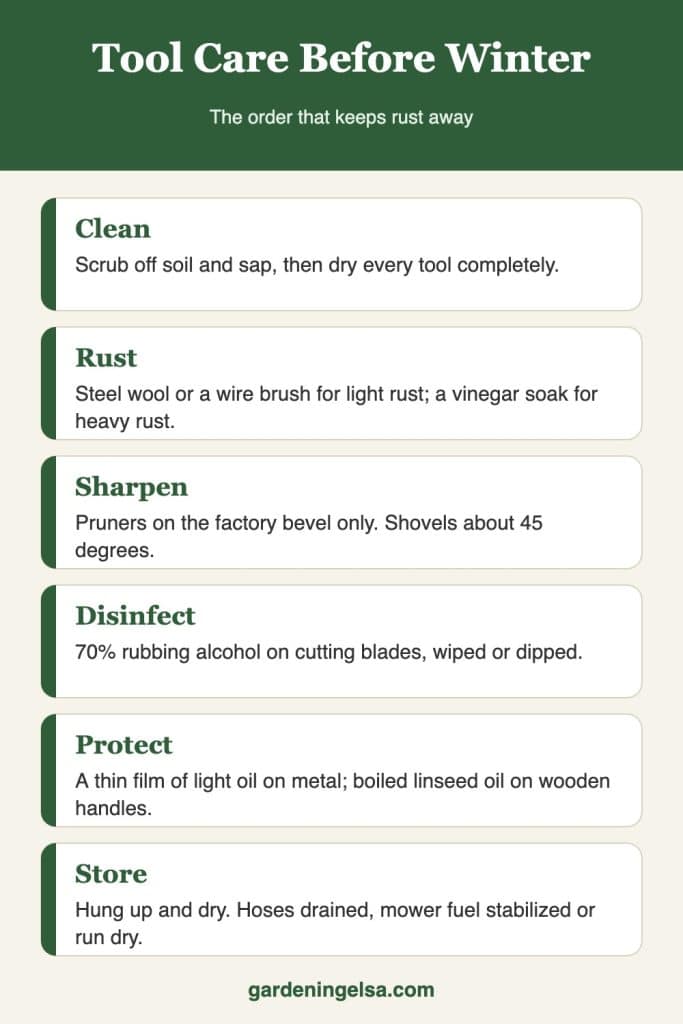
Winterizing garden tools is a moisture job before it is a sharpening job. Clean the soil off, dry the metal, give it a thin film of oil and hang everything off the floor, and the tools come out in spring the way they went in.
The rule: nothing goes on the wall wet, dirty or dull, because soil holds moisture against steel all winter and that is what turns into rust.
The Tool Care Numbers
| What to do | Target | What changes it |
|---|---|---|
| Scrub off soil | Bare metal, no caked dirt | Dried clay needs a soak first |
| Dry before oiling | Fully dry, 1 hour or more | Humid garages need longer |
| Heavy rust | Vinegar soak, a few hours to overnight | Check thin blades early |
| Pruner bevel | The factory angle, one side only | Never grind the flat back |
| Shovel bevel | About 45° | Keep the existing angle |
| Hoe bevel | 30 to 35° for general use | 45° for chopping, 20 to 30° for fine weeding |
| Blade disinfectant | 70% isopropyl alcohol | Bleach 1:9 needs a 30-minute soak and a rinse |
| Stored fuel | Stabilized, or run dry | Untreated gas can go stale in about 30 days |
Start with the dirt. A stiff brush and a hose clean most digging tools.
Dried clay and sap need more. A handheld wire brush with stainless bristles takes off caked soil, old sap and light rust in one pass, and it is the one cleaning tool I would buy if you only buy one.
Dry everything before the next step. Oil on a damp blade traps the water.
Remove Rust Before It Spreads
Rub light rust with fine steel wool or the wire brush until the metal is gray again.
Heavy rust is pitted and flaky. Soak the metal part in white vinegar, or equal parts vinegar and warm water, for a few hours to overnight, then scrub.
Check thin pruner blades after a few hours, because vinegar also etches clean steel if it sits too long.
Rinse, dry and oil it the same day, because bare steel fresh from vinegar rusts fast.
Sharpen on the Existing Bevel
Bypass pruners have one beveled blade, the curved one that passes the hook. Sharpen only that edge, at the angle the factory ground. A small diamond sharpener suits the job: it cuts hardened steel and fits the curve of the blade.

- Open the pruners fully, or take them apart if the pivot bolt comes out easily.
- Lay the diamond sharpener flat on the bevel, matching the existing angle.
- Stroke from the base of the blade to the tip, 10 to 15 strokes, until the whole edge is bright.
- Turn the blade over and make 1 or 2 strokes flat on the back to remove the burr.
- Wipe off the filings, oil the pivot and test the cut on a sheet of paper.
For shovels, spades and hoes, clamp the tool in a vise and use an 8 to 10 inch mill file on the top side of the edge.
Push the file away from you in long strokes and lift it on the way back, because a file cuts only on the push stroke. A shallower angle is sharper but dulls faster in rocky soil.
Disinfect Pruning Blades
Pruners carry fungal and bacterial disease from plant to plant, especially if you cut out diseased wood this year.
Wipe the blades with 70% isopropyl alcohol, or dip them for a few seconds. It works on contact and does not corrode steel. It is flammable, so do this away from a pilot light or space heater.
Field note: bleach at 1 part to 9 parts water also works, but it needs a 30-minute soak, weakens within hours of mixing and pits steel.
Oil Metal and Wooden Handles
Metal gets a thin coat of light oil, and wooden handles get boiled linseed oil. For metal, machine, camellia or mineral oil all work. Wipe on a film and wipe off the excess.

Wooden handles dry out and crack in winter air. Sand rough handles with 120-grit sandpaper.
Rub on the linseed oil with a rag, let it soak in for 15 to 30 minutes and wipe off whatever is still on the surface. Let it dry a day or two before you hang the tool.
Rags used with linseed oil can catch fire on their own, because the oil gives off heat as it cures. Never leave them in a pile or a trash can.
Hang or spread them flat outdoors to dry, weighted down, then keep them in a metal can with a tight lid, filled with water and a little detergent, until you can dispose of them.
Treat Fuel in Gas Equipment
Gasoline can start to break down in as little as 30 days, and stale fuel gums up a small engine’s carburetor over winter. Run the engine until it stops on its own so the tank and carburetor are dry.
Or fill the tank, add fuel stabilizer at the rate on the bottle and run the engine for a few minutes so treated fuel reaches the carburetor.

Check your owner’s manual first, because makers differ on which method they prefer. On four-stroke engines, change the oil now rather than in spring: warm the engine a few minutes, drain it and refill to the dipstick mark, because used oil carries acids and grit.
Bring cordless tool batteries indoors. Lithium-ion batteries keep best in a cool, dry room at about half charge, not in a garage that drops below freezing.
Drain Hoses and Sprayers
Anywhere winter brings a hard freeze, which includes most of Zone 8, freezing water is a bigger threat than rust.
Disconnect hoses from the spigot before the first hard freeze, drain them by raising one end and walking the water out, and coil them loosely.
A hose left on a spigot traps water in the faucet, and a freeze can split the pipe inside the wall.
Rinse pump sprayers three times, spray clean water through the nozzle and store them open and upside down, above freezing. Empty rain barrels too; our guide to rainwater harvesting for gardens covers the barrel setup.
How Much Room for Error
You can skip sharpening shovels and hoes every year if they still slice into soil easily.
You cannot skip drying, leave untreated gas in an engine for the winter or leave a hose on a spigot in a freeze. Each of those costs real money in spring.
The oiled-sand bucket is fine for a quick clean between jobs. I would not use it for winter storage, because sand holds moisture against steel, and never mix used motor oil into it.
Hang tools on a wall or rack, off the concrete. Keep them away from fertilizer bags and ice-melt salt, which pull moisture from the air and corrode steel nearby.
The Checklist for Tool Day
- Scrub soil and sap off every tool and dry it fully.
- Remove rust with steel wool or a vinegar soak.
- Sharpen pruners on their bevel and shovels at about 45 degrees.
- Wipe pruning blades with 70% alcohol.
- Oil all metal and treat wooden handles with boiled linseed oil.
- Drain hoses and sprayers and store them above freezing.
- Run small engines dry or stabilize the fuel.
The leaves you rake up during this cleanup are worth keeping: here is how to make leaf mold from fall leaves. For the rest of the fall list, see our garden cleaning tips and our guide to protecting plants from frost.
Technical Questions About Winterizing Garden Tools
How do I store a riding mower battery for winter?
Disconnect the negative cable first, then the positive. Unlike lithium-ion, a lead-acid battery should go into storage fully charged, because a flat one can freeze in an unheated garage. Keep it cool and dry, and top it up with a trickle charger every month or two.
Can I use WD-40 instead of oil?
It is useful right after cleaning, because it displaces water and loosens rust. It leaves a very thin film, though. Follow it with a light oil for winter storage.
How do I sharpen anvil pruners?
Most anvil pruner blades are beveled on both sides, like a knife. Sharpen both bevels evenly at their existing angle and leave the flat anvil alone. If the anvil is dented or grooved, replace it; many brands sell replacement parts.
How often should I sharpen pruners?
Once a year at minimum, and again mid-season if you prune a lot. If a pruner crushes a stem instead of slicing it, or leaves a torn strip of bark, it is due.
Is it worth having tools sharpened professionally?
For expensive pruners, chain saws or a badly nicked edge, yes. Many hardware stores and sharpening shops charge by the tool, usually far less than a new pair. Routine edges take minutes at home.

Hello there! I’m Elsa, and gardening is my passion. As an avid gardener, I created GardeningElsa.com to share my knowledge and experience with fellow enthusiasts. My website is a comprehensive resource for gardeners of all levels, offering expert advice on a wide range of topics, including plants, flowers, herbs, and vegetable gardening. Whether you’re a beginner looking to start your first garden or a seasoned pro seeking to expand your knowledge, GardeningElsa.com has something for everyone. Read more about me.