
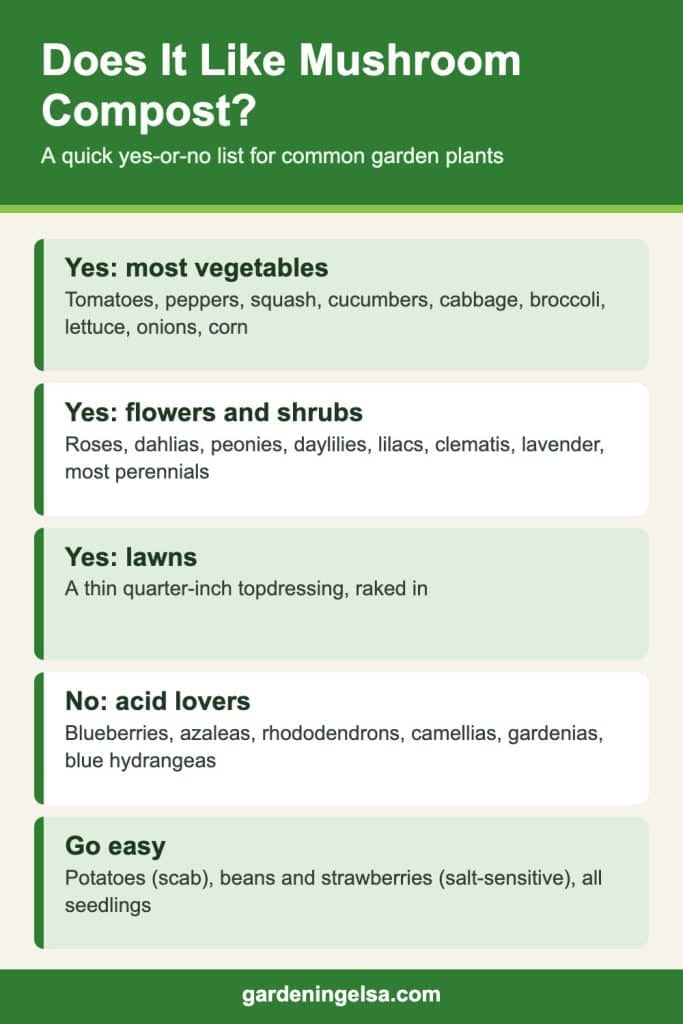
Most vegetables, flowers and lawns do well with mushroom compost. The plants that don’t are mainly acid lovers, like blueberries and azaleas, plus a few crops that are sensitive to salt.
It comes down to two traits: mushroom compost is slightly alkaline, and fresh batches can be salty. Here’s who benefits and who should skip it.
Check Your Soil First
If your soil is already alkaline, adding mushroom compost every year can push it too far, even for plants that normally like it. A cheap test tells you where you stand.
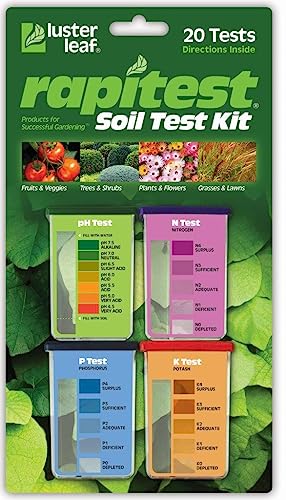
Check price on Amazon. Most vegetables and flowers are happiest between about pH 6.0 and 7.0.
Vegetables That Like Mushroom Compost
Most vegetables prefer a near-neutral pH and love the extra organic matter. These do especially well:
- Tomatoes and peppers: they appreciate the calcium, which helps prevent blossom end rot.
- Squash, pumpkins and cucumbers: heavy feeders that thrive in rich, loose soil.
- Cabbage, broccoli and kale: brassicas prefer soil that is not too acidic.
- Lettuce, onions and corn: steady growers that benefit from better soil structure.
Full details, including how much to use, are in using mushroom compost in a vegetable garden.
Flowers and Shrubs That Like It
- Roses: rich soil and a near-neutral pH suit them well.
- Dahlias: work it into the bed before planting tubers, not fresh around new shoots.
- Peonies, daylilies and most perennials: a spring topdressing keeps them vigorous.
- Lilacs, clematis and lavender: these actually prefer slightly alkaline soil.
Plants That Don’t Like Mushroom Compost
Acid-loving plants need a pH around 4.5 to 6. Mushroom compost pushes soil the other way, which can cause yellow leaves and poor growth.
- Blueberries
- Azaleas and rhododendrons
- Camellias and gardenias
- Blue hydrangeas (they may turn pink)
- Heathers and mountain laurel
Feed these with an acid-forming fertilizer such as Espoma Holly-tone instead, and mulch them with pine needles or bark.
Plants to Use It Carefully Around
Potatoes: higher soil pH encourages potato scab, so skip it in the potato bed.
Beans and strawberries: both are sensitive to salt. Use only well-aged compost, mixed in well ahead of planting.
Seedlings and seeds: never sow straight into fresh mushroom compost. Mix it into the soil a few weeks first.
How Much to Use
For beds, dig 2 to 3 inches into the top 6 to 8 inches of soil. After that, 1 inch each spring is plenty.
In pots, keep it to about a quarter of the mix. On lawns, a quarter-inch topdressing raked in is enough.
Signs You’ve Used Too Much
Crispy brown leaf edges, stunted seedlings or white crust on the soil point to excess salts. Water deeply a few times to flush them out.
Yellowing between the veins on shrubs can mean the pH has crept too high. Test the soil and hold off on more compost. My full mushroom compost guide covers pH and salts in detail.
Plant-by-Plant Questions
Is mushroom compost good for blueberries?
No. Blueberries need acidic soil, and mushroom compost is slightly alkaline. Use pine bark mulch and an acid fertilizer instead.
Is mushroom compost good for azaleas?
No. Like other acid lovers, azaleas can yellow and struggle as the soil pH rises.
Is mushroom compost good for flowers?
For most flowers, yes. Roses, dahlias, peonies and many perennials benefit. Skip it for acid-loving shrubs.
Is mushroom compost good for tomatoes?
Yes, when aged and mixed into the bed. The calcium helps, but tomatoes still need regular feeding.

Hello there! I’m Elsa, and gardening is my passion. As an avid gardener, I created GardeningElsa.com to share my knowledge and experience with fellow enthusiasts. My website is a comprehensive resource for gardeners of all levels, offering expert advice on a wide range of topics, including plants, flowers, herbs, and vegetable gardening. Whether you’re a beginner looking to start your first garden or a seasoned pro seeking to expand your knowledge, GardeningElsa.com has something for everyone. Read more about me.