
Lettuce is the crop I recommend most often to people who want fresh greens without a garden bed. It grows fast, stays compact, and forgives a lot of beginner mistakes.
If you’ve wondered how to grow hydroponic lettuce in a kitchen, basement, or spare closet, this guide covers it step by step.
I’ll walk you through picking varieties, choosing a system, starting seeds, and dialing in nutrients, pH, light, and temperature. You’ll also learn how to harvest for weeks and fix the problems that show up most often.
Why Lettuce Is Perfect for Hydroponics
Lettuce is perfect for hydroponics because it grows quickly, stays small, and needs a fairly mild nutrient solution. It also has no fruit to support, so even the simplest systems can grow it well.
Fast Growth and Low Demands
Most lettuce is ready about 30 to 45 days from seed. You can start picking baby leaves in just 3 to 4 weeks. That quick turnaround means you learn fast and see results before you lose interest.
Lettuce is a light feeder compared to tomatoes or peppers. It’s happy in a weaker solution, which makes mixing nutrients more forgiving. It also doesn’t need hand pollination, trellising, or pruning.
Because the plants stay compact, you can fit several heads in a small tote or countertop unit. That’s a big reason lettuce shows up on almost every list of the best plants for hydroponics.
What You Need to Get Started
You don’t need much gear to begin. My advice is to start with two basics and add equipment as you go.
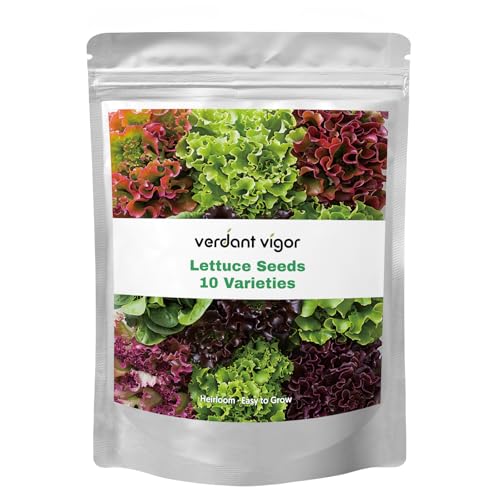
- A pack of lettuce seeds. Pick a loose-leaf or butterhead mix. Seeds are cheap, and one pack will give you many rounds of planting.
- A digital pH meter. pH is the number that trips up most beginners. A meter gives you a clear reading in seconds, so you can adjust before plants suffer.
Beyond that, you’ll want a hydroponic nutrient, a growing medium, net cups, an opaque container, and some light. If you’re brand new, my guide on how to start hydroponic gardening explains each piece in more detail.
Benefits Over Growing in Soil
Hydroponic lettuce often grows faster than soil-grown lettuce. Recirculating systems use far less water, and you won’t fight weeds or soilborne pests. Clean leaves are another perk, since there’s no grit to wash out.
There are tradeoffs, though. You’ll pay for setup and electricity, and you’ll need to check the system often.
Problems also move fast, such as when a pump fails or the power goes out. If you’re on the fence, read my breakdown of whether hydroponic is better than soil.
Best Lettuce Varieties to Grow
Loose-leaf and butterhead lettuces are the best choices for beginners. Romaine and crisphead types work too, but they take longer and are a little fussier.

Loose-Leaf Lettuce
Loose-leaf lettuce doesn’t form a tight head. It produces a rosette of open leaves you can pick a few at a time. That makes it ideal for cut-and-come-again harvesting.
It also matures quickly. You can start picking outer leaves while the plant is still young. Red and green types both do well, and mixing them makes a pretty salad.
- Fastest to first harvest
- Great for picking a few leaves at a time
- Tolerates small beginner mistakes well
Butterhead Lettuce
Butterhead lettuce forms soft, loose heads with tender, buttery leaves. It’s the type you often see sold with roots still attached at the grocery store. That’s no accident, since it grows beautifully in water.
Butterheads stay fairly compact. They’re a great fit for a countertop system or a small tote. You can harvest the whole head or pick outer leaves as it grows.

Romaine and Crisphead Lettuce
Romaine grows tall, upright heads with crunchy ribs. It does well hydroponically but needs more time and a bit more vertical space. Expect it toward the longer end of the 30-to-45-day range, or beyond.
Crisphead, the iceberg type, is the most challenging. It takes the longest to form a firm head and is sensitive to heat. I’d save it until you’ve grown a few easier rounds.
| Lettuce Type | Difficulty | Speed | Harvest Style |
|---|---|---|---|
| Loose-leaf | Easiest | Fastest | Cut-and-come-again or whole plant |
| Butterhead | Easy | Fast | Whole head or outer leaves |
| Romaine | Moderate | Slower | Whole head or outer leaves |
| Crisphead | Hardest | Slowest | Whole head |
Choosing a Simple System
The simplest system for lettuce is the Kratky method, which needs no pump or electricity for water. Deep water culture is a close second and gives a bit more control.
Kratky Method
Kratky is a passive system. You fill a container with nutrient solution and set plants in net cups so their roots reach the liquid. As the plants drink, the level drops and leaves an air gap the upper roots use to breathe.

There’s no pump to fail and nothing to plug in for the water. It works best for leafy greens and herbs, so lettuce is a natural match. Just don’t refill it to the brim, or you’ll drown the roots that adapted to the air gap.
- No pump, no air stone, no noise
- Very low cost
- Best for one quick crop of greens
Deep Water Culture
In deep water culture (DWC), roots hang in a nutrient solution that’s aerated by an air pump and air stone. The bubbles keep oxygen levels up, which supports fast root growth. Lettuce grows quickly and evenly in DWC.
You’ll top off the solution between changes and replace it every 1 to 2 weeks. The pump adds a little cost and noise.
It also adds a point of failure, so check it daily. If you’d like a build guide, see my post on setting up a small hydroponic system at home.

Other Options
Nutrient film technique (NFT) runs a thin film of solution through channels past the roots. It’s very efficient for lettuce, which is why many commercial growers use it. It’s less forgiving at home, since roots dry out fast if the pump stops.
Ebb and flow systems flood and drain a tray on a timer. Drip, wick, and countertop units are other options. Countertop units are the easiest plug-and-play choice, though they hold fewer plants.

| System | Pump Needed | Best For | Beginner Friendly |
|---|---|---|---|
| Kratky | No | Single crops of greens | Very |
| Deep water culture | Air pump | Fast, steady lettuce | Yes |
| NFT | Water pump | Larger lettuce setups | Moderate |
| Ebb and flow | Water pump | Mixed crops | Moderate |
| Countertop unit | Built in | Small kitchens | Very |
Whatever you pick, use an opaque reservoir. Light reaching the solution feeds algae. Also plug pumps and lights into GFCI outlets and use drip loops on every cord, since water and electricity sit close together.
Starting Lettuce Seeds
Start lettuce seeds in small plugs of growing medium, keep them moist under a humidity dome, and transplant once roots poke out the bottom. This usually takes about 1 to 3 weeks.
Choosing a Growing Medium
You have several good options for lettuce. Each one holds seeds in place and keeps them moist while roots form.
- Rockwool cubes. Very popular and easy to use. Soak them before sowing.
- Peat plugs. Simple and convenient for small batches.
- Coco coir. Holds moisture well and works in net cups.
- Clay pebbles and perlite. Better for supporting transplants than for starting tiny seeds.
Many growers start seeds in rockwool or peat plugs. Then they set the plug in a net cup and fill around it with clay pebbles for support.
Sowing and Germination
Lettuce seeds are small, so plant them shallowly. Drop one or two seeds into each plug and press them in lightly. Lettuce seed often germinates better with some light, so don’t bury it deep.

Cover the tray with a humidity dome to hold in moisture. Keep the plugs damp but not soaking. Lettuce germinates best in cool to moderate temperatures, so avoid hot spots near heaters.
Once seedlings sprout, give them light right away so they don’t stretch. Remove the dome gradually over a few days. If two seeds came up in one plug, snip the weaker one at the base.
Transplanting Seedlings
Seedlings are ready to move when roots poke out the bottom of the plug and the first true leaves open. True leaves look like small lettuce leaves, unlike the rounded first seed leaves. This usually happens within about 1 to 3 weeks.
Set each plug in a net cup so the bottom touches the solution or sits just above it. Feed young plants at quarter to half strength at first. For a deeper look at timing and care, read my guide to starting hydroponic seedlings.
Nutrients, pH and EC for Lettuce
Lettuce needs a complete hydroponic nutrient, a pH around 5.8 to 6.2, and a mild EC of roughly 0.8 to 1.6 mS/cm. Getting these three right solves most problems before they start.
Choosing and Mixing Nutrients
This is the most important part of learning how to grow hydroponic lettuce: use a real hydroponic nutrient. It should include calcium, magnesium, and micronutrients. Regular garden fertilizer is made for soil and won’t give water-grown plants everything they